
Sexual performance anxiety is more common than many men realize. It happens when worry, fear, or pressure starts affecting sexual confidence and physical response. A man may want to perform well, but the fear of not being able to do so can create the exact problem he is trying to avoid.
This condition can affect men of any age. It may happen before sex, during intimacy, or after one difficult experience. The good news is that sexual performance anxiety can be managed. With the right understanding, communication, lifestyle changes, and professional support, many men are able to rebuild confidence and enjoy a healthier intimate life.
What Is Sexual Performance Anxiety?
Sexual performance anxiety is the fear of not being able to satisfy a partner or perform sexually as expected. This fear may involve erection problems, premature ejaculation, delayed ejaculation, low desire, or fear of losing control during intimacy.
For some men, it starts after one disappointing experience. For others, it builds slowly due to stress, relationship issues, body image concerns, or pressure to be “perfect” in bed. Over time, the mind becomes focused on performance instead of pleasure and connection.
Normal nervousness can happen to anyone, especially in a new relationship or after a stressful period. But when the fear becomes repeated and starts affecting sexual function, it may become a cycle that needs attention.
How Sexual Performance Anxiety Creates A Negative Cycle
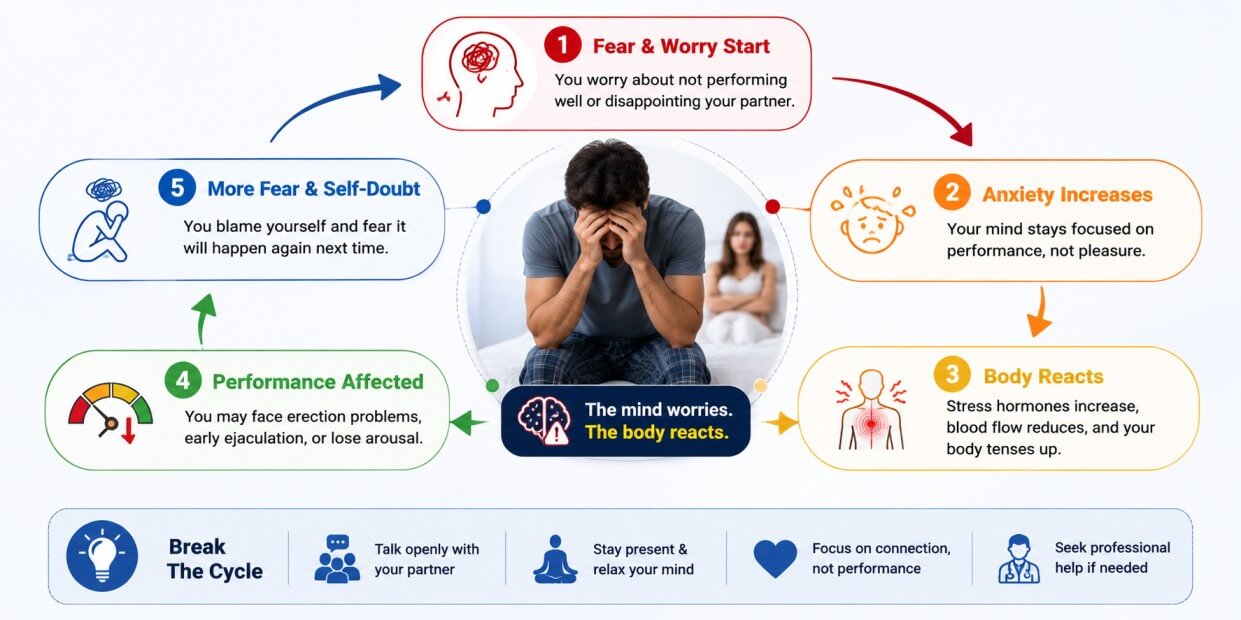
Sexual response depends on both the body and mind. When the mind feels relaxed, the body can respond naturally. But when anxiety takes over, the nervous system becomes alert and tense.
During anxiety, the body releases stress hormones. These can affect blood flow, muscle relaxation, breathing, and arousal. This is why a man may want intimacy but still struggle to get or maintain an erection.
After one difficult experience, the fear of it happening again can become stronger. The next time intimacy begins, the man may start checking himself constantly. He may think, “Will I get an erection?” or “What if I fail again?” This self-monitoring creates more pressure and makes the problem worse.
Common Causes Of Sexual Performance Anxiety
There is rarely one single cause. Sexual performance anxiety often comes from a combination of emotional, physical, and relationship factors.
One common cause is fear of erectile dysfunction. Even if a man has normal erections at other times, the fear of losing an erection during sex can create anxiety. This fear can become so strong that it affects natural arousal.
Pressure to satisfy a partner is another major factor. Many men feel they must last a certain amount of time, perform in a certain way, or always be ready for sex. These expectations can turn intimacy into a test instead of a shared experience.
Previous negative sexual experiences can also stay in the mind. A comment from a partner, an embarrassing moment, or a failed attempt can create fear. The mind may keep replaying that event and expect it to happen again.
Relationship problems can also contribute. Lack of trust, emotional distance, conflict, guilt, or poor communication can make intimacy stressful. When emotional safety is missing, sexual confidence may become weaker.
Poor body image is another cause. A man may worry about his weight, appearance, penis size, stamina, or age. These thoughts can pull attention away from pleasure and toward insecurity.
Pornography can also create unrealistic expectations. Many men compare themselves to what they see online, even though those scenes do not represent normal sexual experiences. This can increase pressure and reduce confidence.
General stress, depression, anxiety, diabetes, heart issues, hormonal problems, and some medicines may also play a role. That is why persistent sexual anxiety should not be ignored.
Signs And Symptoms Of Sexual Performance Anxiety
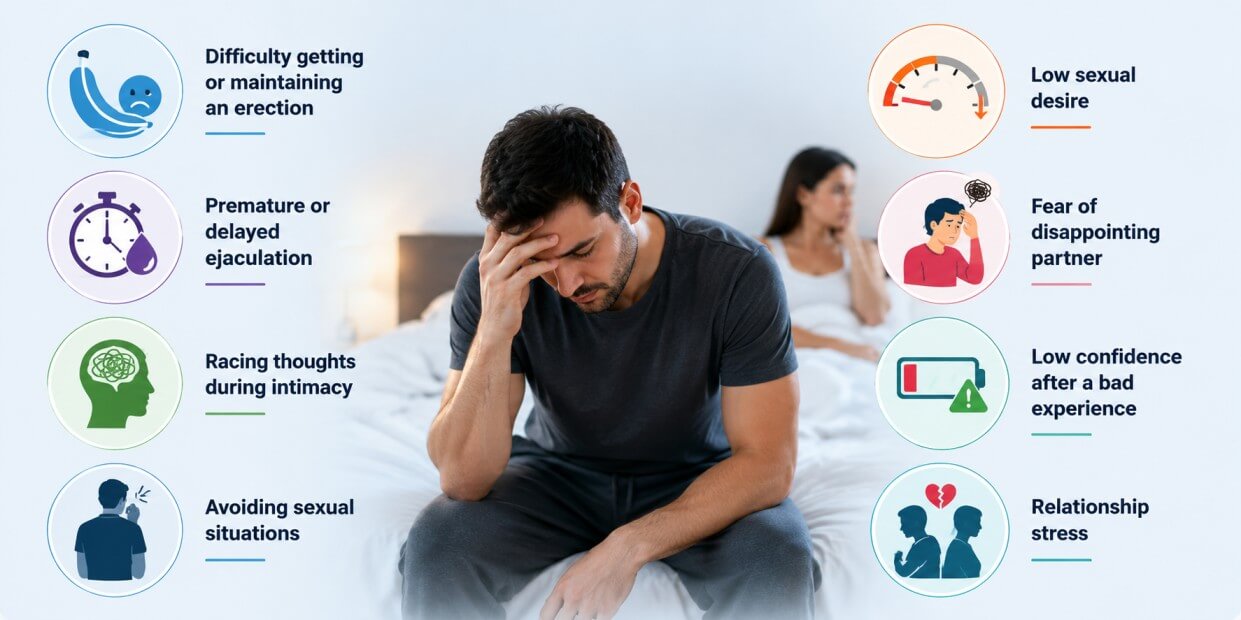
The symptoms may be different from person to person. Some men mainly experience erection problems, while others struggle with early ejaculation, low desire, or fear before intimacy.
Common symptoms include:
- Difficulty getting or maintaining an erection
- Premature ejaculation or delayed ejaculation
- Racing thoughts during intimacy
- Fear of disappointing a partner
- Avoiding sex or romantic situations
- Low confidence after one difficult experience
- Feeling tense, embarrassed, or ashamed
Some men also feel physical anxiety symptoms, such as fast heartbeat, sweating, shallow breathing, stomach tightness, or muscle tension. These symptoms can make intimacy feel stressful instead of enjoyable.
Can Sexual Performance Anxiety Cause Erectile Dysfunction?
Yes, sexual performance anxiety can cause erectile difficulties. When the brain is focused on fear, the body may not stay relaxed enough for a strong erection. This is often called psychological erectile dysfunction.
However, it is important to understand that erection problems can also have physical causes. Diabetes, high blood pressure, heart disease, low testosterone, obesity, smoking, alcohol use, and certain medications can all affect erections.
In many cases, both physical and psychological factors are present. A man may have a mild physical issue, then anxiety makes it worse. This is why proper medical evaluation is helpful, especially if the problem continues.
How To Overcome Sexual Performance Anxiety
Overcoming sexual performance anxiety takes patience. There is no need to force confidence overnight. The goal is to reduce pressure, improve communication, calm the mind, and rebuild trust in the body.
Shift Your Focus From Performance To Connection
One of the most helpful steps is to stop treating sex like a performance. Intimacy is not an exam, and it should not be measured only by erection, penetration, or orgasm.
Try to focus on closeness, touch, affection, and shared pleasure. When the goal changes from “I must perform” to “We are here to connect,” the pressure often becomes lighter.
This mindset change can help the body relax. It also helps both partners enjoy intimacy without making one physical response the center of everything.
Communicate Openly With Your Partner
Many men hide their anxiety because they feel embarrassed. But silence often increases pressure. A partner may misunderstand the situation and think there is a lack of attraction or interest.
A simple honest conversation can reduce fear. You can say that anxiety is affecting your confidence and that you want to work through it together. This can create emotional safety and reduce the burden of keeping the problem secret.
A supportive partner can help by removing pressure, giving reassurance, and focusing on comfort rather than performance.
Practice Mindfulness During Intimacy
Mindfulness means bringing your attention back to the present moment. During intimacy, performance anxiety often pulls the mind into fear. You may start thinking about what could go wrong instead of what is happening right now.
Deep breathing can help calm the nervous system. Slow your breathing and focus on the feeling of touch, warmth, closeness, or your partner’s voice. This helps reduce self-monitoring.
Even five to ten minutes of daily breathing practice can help train the mind. Over time, it becomes easier to stay present during intimacy.
Try Sensate Focus Exercises
Sensate focus is a method often used in sex therapy. It helps couples rebuild comfort by focusing on touch without the pressure of intercourse or orgasm.
In the beginning, the couple may agree to avoid intercourse for a short time. Instead, they focus on non-demand touching, such as holding, massage, kissing, or gentle exploration. The goal is to notice sensation without trying to achieve a specific result.
This approach can help the brain connect intimacy with safety again. It is especially useful when sex has started to feel stressful or full of pressure.
Challenge Negative Self-Talk
Sexual performance anxiety is often fueled by harsh thoughts. A man may think, “I am not good enough,” “This will happen again,” or “My partner will judge me.” These thoughts increase anxiety and make the body more tense.
Start replacing these thoughts with calmer and more realistic ones. For example, instead of saying, “I must be perfect,” say, “Intimacy is about connection, not perfection.” Instead of saying, “I will fail,” say, “I can slow down and stay present.”
This does not mean pretending the problem is not real. It means speaking to yourself in a way that helps healing instead of fear.
Improve Your Lifestyle
Sexual health is connected to overall health. Better sleep, regular exercise, and a balanced diet can support hormones, blood flow, mood, and energy.
Exercise is especially helpful because it reduces stress and improves confidence. Walking, strength training, yoga, or simple daily movement can make a difference over time.
It is also wise to reduce smoking, alcohol, and drug use. These can affect erections, stamina, mood, and anxiety. If you have diabetes, blood pressure, or weight concerns, managing these conditions can improve sexual function.
Limit Unrealistic Pornography Expectations
Pornography can create false ideas about sex. It may make men believe they must perform for a long time, always stay hard, or behave in a certain way. Real intimacy is different.
If pornography is increasing pressure, reducing it may help. This gives the brain more space to connect with real sensations, real emotions, and a real partner.
Healthy intimacy is not about copying what is seen online. It is about comfort, trust, communication, and mutual pleasure.
Professional Treatment Options
If anxiety continues, professional help can be very useful. A doctor can check whether there is a physical cause behind the symptoms. This may include checking blood pressure, diabetes, hormone levels, medication side effects, and general health.
Cognitive Behavioral Therapy can help men identify anxious thoughts and change the behaviors that keep the cycle going. It is especially helpful when fear, shame, or repeated negative thinking is involved.
Sex therapy can also help individuals and couples. It provides structured guidance for rebuilding confidence, improving communication, and reducing pressure during intimacy.
In some cases, medication may help. A doctor may prescribe medicines for erection support or treat an underlying medical condition. These medicines should only be used under medical supervision, especially for men with heart disease, blood pressure problems, or other health concerns.
What Not To Do If You Have Sexual Performance Anxiety
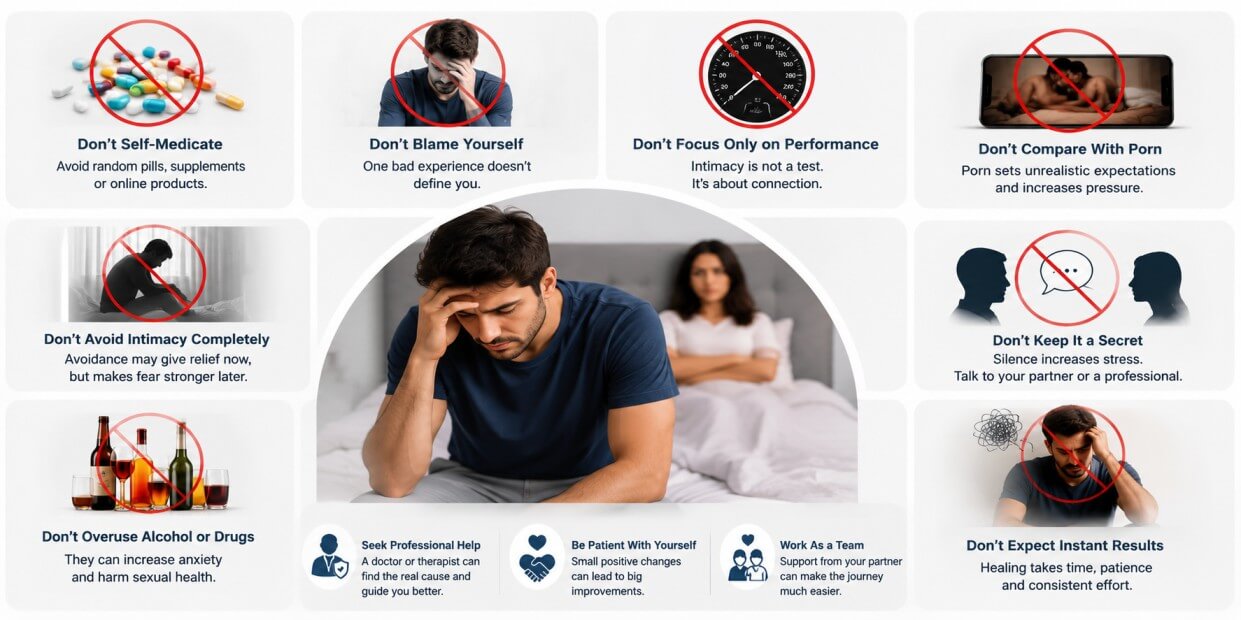
It is important to avoid habits that make the anxiety cycle worse. Do not blame yourself or treat one difficult experience as proof that something is permanently wrong.
Do not self-medicate with random pills, supplements, or online products. These may be unsafe or may hide an underlying medical problem.
Avoid comparing yourself with pornography or unrealistic stories. Also, do not avoid intimacy completely for a long time without addressing the issue. Avoidance may give short-term relief, but it often makes fear stronger.
When To See A Doctor
You should consider seeing a doctor if sexual performance anxiety continues for several weeks or months, causes repeated erection problems, affects your relationship, or creates serious stress.
You should also seek help if you have low desire, premature ejaculation, pain, infertility concerns, diabetes, heart disease, hormonal symptoms, or medication-related sexual changes.
Getting help does not mean you have failed. It means you are taking the issue seriously and choosing a healthier path.
Professional Care At Nasim Fertility Center
Nasim Fertility Center provides confidential care for men dealing with sexual performance anxiety, erectile dysfunction, premature ejaculation, male sexual weakness, and related concerns. Dr. Farooq Nasim Bhatti uses clinical evaluation, counseling, sex therapy, and medical treatment where needed to understand both psychological and physical causes. Patients can seek guidance through physical consultation in Lahore, Islamabad, and Faisalabad, as well as online consultation for privacy and convenience.
Final Thoughts
Sexual performance anxiety is common, but it can feel very personal and stressful. It may affect confidence, relationships, and sexual satisfaction, but it does not mean that a man is weak or permanently damaged.
The most important step is to break the cycle of fear. Focus on connection instead of performance, speak honestly with your partner, take care of your health, and seek professional help when needed. With the right support, sexual confidence can return, and intimacy can become more relaxed, healthy, and enjoyable again.
Frequently Asked Questions
How Do I Get Rid Of Sexual Performance Anxiety?
The best way is to reduce pressure, communicate with your partner, practice mindfulness, improve lifestyle habits, and seek professional help if the problem continues. Many men improve with a combination of emotional support, therapy, and medical guidance.
Can Sexual Performance Anxiety Cause Erectile Dysfunction?
Yes, anxiety can affect erections by increasing stress and reducing relaxation. However, erection problems can also have physical causes, so a medical checkup is important if the issue is repeated.
Can Women Experience Sexual Performance Anxiety?
Yes, women can also experience sexual anxiety. It may show as fear, low desire, difficulty with arousal, pain, or worry about pleasing a partner. The emotional cycle can be similar.
What Is The Root Cause Of Sexual Performance Anxiety?
The root cause may be fear of failure, past negative experiences, relationship stress, body image concerns, general anxiety, pornography expectations, or physical health problems. Many people have more than one cause.
Does Cialis Help With Performance Anxiety?
Cialis may help some men with erection confidence, but it does not treat the emotional root of anxiety. It should only be used after medical advice, especially if there are heart or blood pressure concerns.
Can Performance Anxiety Go Away Without Medication?
Yes, many men improve without medication through communication, mindfulness, therapy, lifestyle changes, and reducing pressure around intimacy. Medication may be useful in some cases, but it is not always required.