
When someone faces a private sexual health concern, the first question is often not just “What is the problem?” but “Who should I consult?” In Pakistan, many people search for a sexologist, urologist, and hakeem when they experience mardana kamzori, premature ejaculation, erectile dysfunction, low desire, infertility, or relationship-related sexual stress.
A sexologist and a hakeem may both deal with sexual or reproductive concerns, but their qualifications, diagnosis methods, treatment approach, and safety standards are very different. Understanding this difference can help you choose the right professional instead of wasting time on guesswork, self-medication, or unverified treatments.
What Is A Sexologist?
A sexologist is a specialist who deals with sexual health, sexual function, sexual behavior, intimacy concerns, and reproductive-related issues. A clinical sexologist may come from a medical, psychological, psychiatric, urological, or counselling background, depending on training and qualifications.
For medical sexual problems, it is important to consult someone who can understand both the physical and psychological sides of the issue. Problems like erectile dysfunction, premature ejaculation, male infertility, low libido, non-consummated marriage, and sexual anxiety often need more than one type of assessment.
A qualified sexologist does not simply give a “strength medicine.” The goal is to understand why the problem is happening and then create a treatment plan according to the patient’s symptoms, health history, marriage situation, and emotional condition.
What Does A Sexologist Do?
A sexologist listens to the patient’s complete history and asks questions about symptoms, duration, stress, marriage, lifestyle, medical conditions, and previous treatments. This helps separate a temporary issue from a long-term sexual dysfunction.
A sexologist may guide the patient through counselling, sex therapy, behavioral techniques, medical treatment, relationship guidance, and lab testing where needed. For example, a man with premature ejaculation may need anxiety management, timing control techniques, or medicine depending on the cause.
Similarly, a patient with erectile dysfunction may need evaluation for diabetes, blood pressure, low testosterone, stress, relationship pressure, or blood flow issues. Without proper diagnosis, the patient may keep trying temporary products without treating the real cause.
What Is A Hakeem?
A hakeem is a practitioner of traditional Eastern or Unani medicine. Many hakeems focus on herbal remedies, dietary adjustments, body temperament, general weakness, digestive balance, and natural tonics. Some patients prefer hakeems because they feel traditional medicine is more natural or culturally familiar.
Hakeem treatment may include herbs, oils, powders, tonics, diet plans, or lifestyle advice. Some people approach a hakeem for general weakness, vitality concerns, or traditional “mardana taqat” complaints.
This does not mean every hakeem is unsafe or every traditional remedy is harmful. The main concern is that sexual health problems can sometimes be linked with serious medical causes. If there is no proper diagnosis, the real issue may remain untreated.
Sexologist Vs Hakeem: The Main Difference
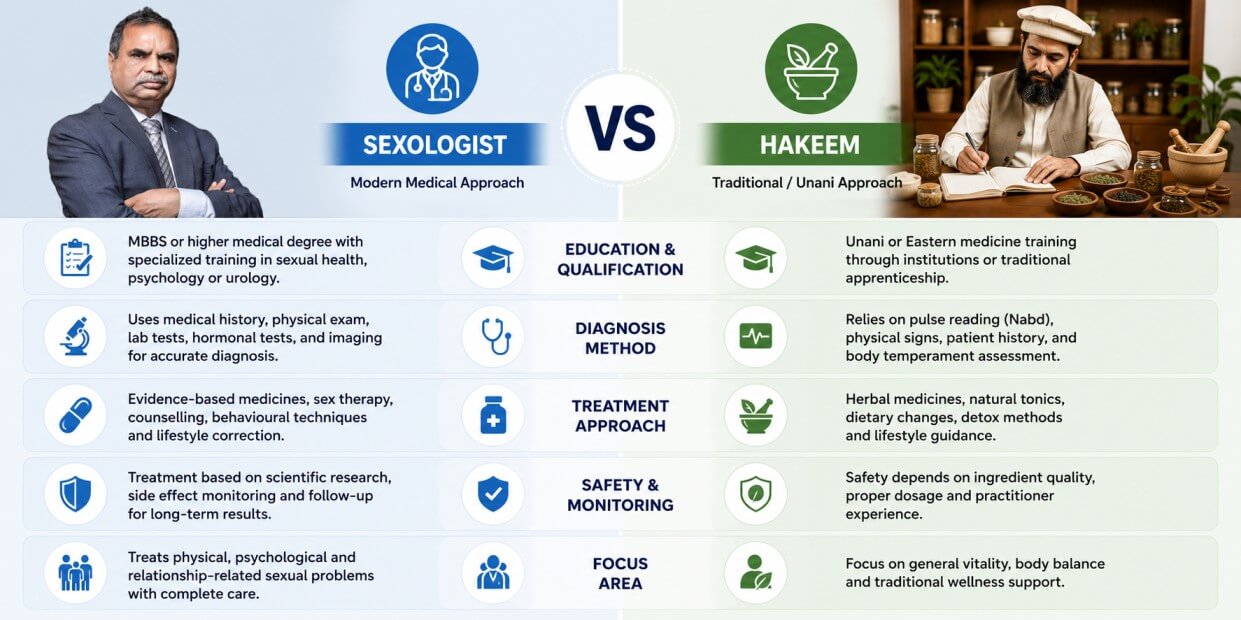
The biggest difference between a sexologist and a hakeem is the method of diagnosis and treatment. A sexologist usually works through medical history, symptoms, psychological factors, physical health, and testing when needed. A hakeem usually works through traditional assessment, herbs, diet, and natural formulations.
A sexologist may check whether erectile dysfunction is related to diabetes, high blood pressure, low testosterone, depression, anxiety, medication side effects, or relationship stress. A hakeem may focus more on weakness, heat or cold balance, digestion, diet, and herbal support.
Both may talk about sexual health, but the level of medical testing, safety monitoring, and evidence-based treatment can be very different.
Education And Qualification
A medical sexologist may have an MBBS degree, further sexual medicine training, psychology or counselling training, board certification, or experience in sexual dysfunction treatment. In medical cases, this qualification matters because sexual problems often overlap with hormones, fertility, mental health, heart health, diabetes, and relationship concerns.
A hakeem may be trained in Unani or Eastern medicine through a formal institution, apprenticeship, or traditional practice. The quality of care depends on the practitioner’s training, honesty, experience, and whether they know when to refer a patient for medical testing.
For mild wellness support, some patients may prefer traditional guidance. But for persistent erectile dysfunction, premature ejaculation, infertility, pain, or non-consummated marriage, a medically trained professional is usually the safer first choice.
Diagnosis: Why It Matters Before Treatment
Many men make the mistake of treating every sexual problem as “kamzori.” In reality, sexual dysfunction can have different causes. Erectile dysfunction may be linked with diabetes, blood pressure, obesity, smoking, heart disease, low testosterone, anxiety, or relationship problems.
Premature ejaculation may be related to performance anxiety, penile sensitivity, thyroid issues, habit patterns, stress, or lack of control training. Male infertility may need semen analysis, hormone testing, and proper reproductive assessment.
If diagnosis is skipped, the patient may use sprays, oils, capsules, or herbal tonics for months without improvement. In some cases, the actual disease may become worse because the patient delayed medical help.
Treatment Approach: Evidence-Based Care Vs Traditional Remedies
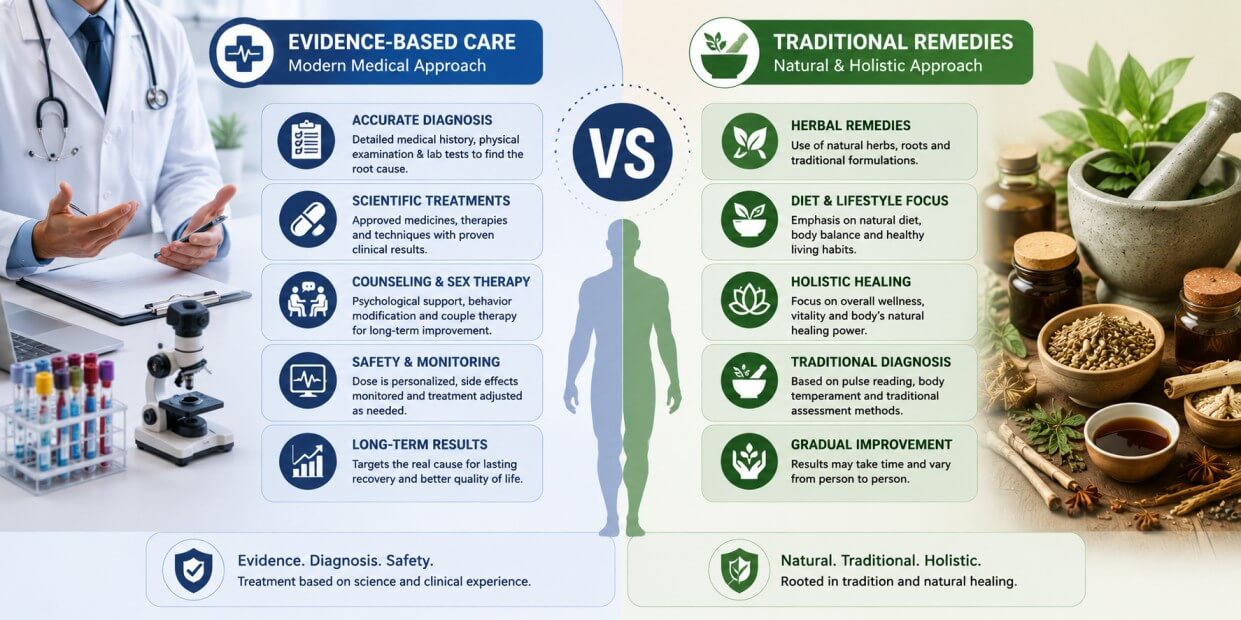
A sexologist may use counselling, sex therapy, behavioral exercises, medical treatment, couple guidance, lifestyle correction, and lab-based evaluation. The treatment is usually selected according to the cause, not just the symptom.
For example, sex therapy can help patients who have performance anxiety, fear, shame, low confidence, or non-consummated marriage. In other cases, medicine may be needed, but only after checking the patient’s health history.
A hakeem may recommend herbal remedies, dietary changes, massage oils, tonics, or traditional formulas. Some patients may feel temporary improvement, but risk increases when ingredients are unknown, dosage is unclear, or products contain hidden strong medicines.
Safety Concerns With Self-Medication
One of the biggest risks in sexual health treatment is self-medication. Many men buy capsules, powders, sprays, or “mardana taqat” products after seeing advertisements or hearing from friends. Some products may contain hidden ingredients that affect blood pressure, heart function, liver, kidneys, or erection quality.
This is especially risky for men with diabetes, heart disease, high blood pressure, kidney issues, anxiety medicine use, or other long-term conditions. A product that works for one person may harm another.
A safe treatment plan should include proper history, privacy, realistic expectations, clear dosage, follow-up, and medical monitoring when needed.
When Should You Consult A Sexologist Instead Of A Hakeem?
You should consider a qualified sexologist when the problem is persistent, affecting your marriage, causing stress, or linked with a medical condition. Sexual health is not only about timing or strength. It includes emotional comfort, physical function, fertility, confidence, and relationship satisfaction.
A sexologist is usually the better choice if you have:
- Erectile dysfunction or weak erection
- Premature ejaculation or lack of control
- Low sexual desire
- Male infertility or abnormal semen results
- Non-consummated marriage
- Pain during intercourse
- Performance anxiety
- Diabetes-related sexual weakness
- Hormonal imbalance symptoms
- Repeated failure after self-treatment
If the issue is only general tiredness or lifestyle weakness, diet and general wellness may help. But if the problem continues, medical assessment should not be delayed.
Is A Urologist A Sexologist?
A urologist and a sexologist are not exactly the same, though their work can overlap. A urologist mainly treats urinary tract problems, prostate concerns, kidney or bladder issues, and male reproductive organ conditions. A sexologist focuses more broadly on sexual function, desire, timing, performance, psychological factors, intimacy, and relationship-related sexual concerns.
For erection problems caused by blood flow, prostate disease, urinary symptoms, or anatomical concerns, a urologist may be needed. For anxiety-related sexual dysfunction, premature ejaculation, non-consummated marriage, couple concerns, or sexual confidence issues, a sexologist can be very helpful.
In many cases, the best care comes when the right specialist understands both medical and emotional aspects of the patient’s condition.
Why “Guaranteed Cure” Claims Are A Red Flag
Sexual health treatment should be private, respectful, and realistic. Any practitioner who promises a guaranteed cure without diagnosis should be approached carefully. Sexual problems have different causes, so one formula cannot work for every patient.
Be careful if someone offers secret medicine, refuses to explain ingredients, pressures you to buy expensive packages, avoids medical tests, or uses fear-based language. Also be cautious of anyone who says every issue is only weakness or every problem will be solved with one capsule.
A trustworthy practitioner explains the possible causes, treatment options, expected timeline, precautions, and follow-up plan.
How Dr. Farooq Nasim Bhatti Helps Patients
At Nasim Fertility Center, Dr. Farooq Nasim Bhatti provides confidential consultation for male sexual dysfunction, erectile dysfunction, premature ejaculation, infertility, non-consummated marriage, and related couple concerns. His approach combines medical assessment, counselling, sex therapy, and treatment planning according to the patient’s condition. With clinics in Lahore, Islamabad, and Faisalabad, and online consultation options, patients can discuss sensitive concerns in a private and professional setting.
Sexologist Or Hakeem For Mardana Kamzori?
Male weakness is a general term, and many patients use it for different problems. Some mean weak erection, some mean early discharge, some mean low sexual desire, and others mean infertility or general tiredness.
If the problem is weak erection, low stamina during intercourse, early discharge, or difficulty completing intercourse, a sexologist is usually the better choice. These symptoms need proper diagnosis and medical guidance.
If the issue is only tiredness, poor diet, or general body weakness, lifestyle changes may help. But if sexual performance is affected again and again, do not depend only on tonics or unverified products.
Sexologist Or Hakeem For Premature Ejaculation?
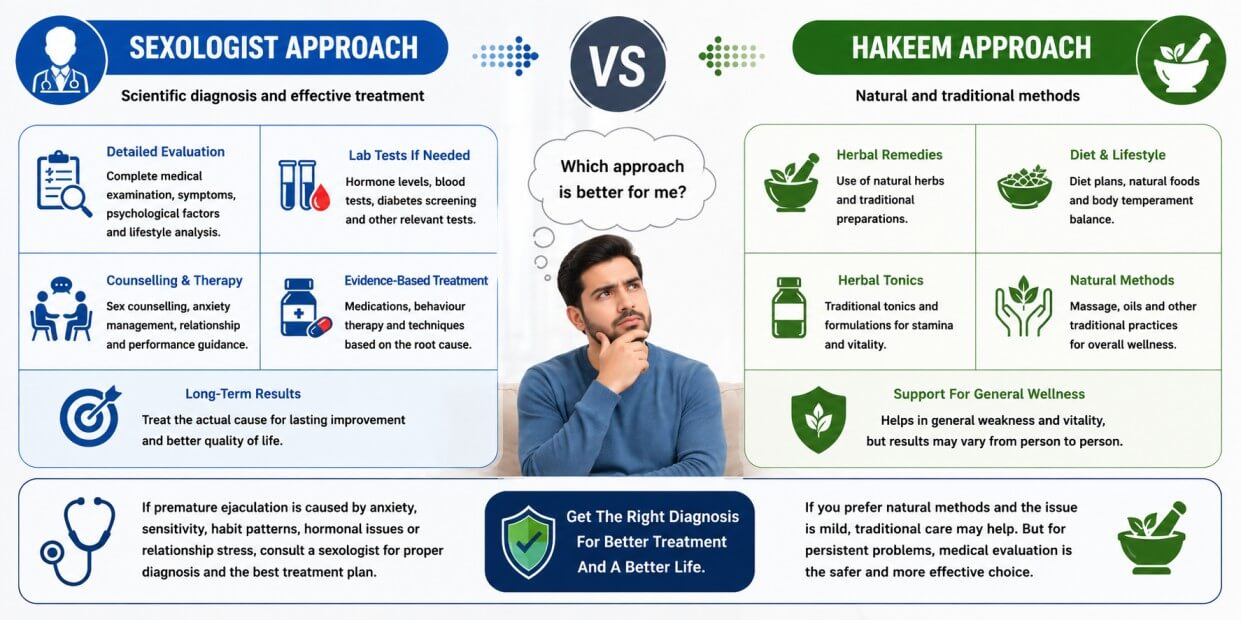
Premature ejaculation is not always caused by weakness. It may be linked with anxiety, sensitivity, lack of control training, thyroid issues, relationship stress, or old habit patterns. This is why the same herbal tonic or delay spray does not work for everyone.
A sexologist can help identify whether the issue is lifelong, newly developed, situational, or related to erection problems. Treatment may include behavioral methods, counselling, medication, or couple guidance.
A hakeem may offer traditional remedies, but if the issue is frequent, severe, or causing marital stress, diagnosis-based care is a better option.
Sexologist Or Hakeem For Infertility?
Infertility should not be treated blindly. Male infertility may involve low sperm count, poor motility, abnormal morphology, hormonal issues, varicocele, infection, lifestyle factors, or unexplained causes. A patient may need semen analysis, hormone evaluation, and a proper fertility plan.
Traditional remedies may claim to improve strength, but infertility needs measurable testing. If a couple is trying to conceive and pregnancy is not happening, medical evaluation should be done for both partners.
For couples dealing with male factor concerns, IUI treatment may be discussed after proper assessment, depending on the case.
Conclusion
A sexologist and a hakeem are not the same. A hakeem may provide traditional or herbal wellness support, while a sexologist focuses on sexual health through diagnosis, counselling, medical treatment, therapy, and follow-up care.
For persistent sexual dysfunction, erectile dysfunction, premature ejaculation, infertility, non-consummated marriage, pain, anxiety, or relationship-related sexual problems, a qualified sexologist is usually the better first choice. The safest treatment is not the one that promises quick results, but the one that identifies the real cause and treats it responsibly.
Frequently Asked Questions
What Does A Sexologist Do?
A sexologist helps diagnose and treat sexual health problems such as erectile dysfunction, premature ejaculation, low libido, sexual anxiety, non-consummated marriage, infertility-related concerns, and relationship-based sexual difficulties.
Is A Sexologist A Doctor?
A sexologist may be a medical doctor, psychologist, psychiatrist, therapist, or trained sexual health professional. For medical sexual problems, it is better to consult a qualified doctor with sexual health training.
Is A Urologist A Sexologist?
No, they are different specialists, but their work can overlap. A urologist focuses on urinary and male reproductive organ problems, while a sexologist focuses on sexual function, performance, desire, timing, and intimacy concerns.
Should I Visit A Hakeem Or Sexologist For Mardana Kamzori?
If the problem is persistent, affects intercourse, causes stress, or is linked with diabetes, low testosterone, infertility, weak erection, or premature ejaculation, a qualified sexologist is usually the safer option.
Can A Hakeem Treat Premature Ejaculation?
Some hakeems may offer traditional remedies, but premature ejaculation can have psychological, neurological, hormonal, or sensitivity-related causes. Proper diagnosis is important if the issue continues.
Can A Sexologist Treat Erectile Dysfunction?
Yes, a sexologist can help with erectile dysfunction, especially when it is linked with anxiety, relationship stress, hormonal issues, lifestyle, diabetes, or sexual performance concerns.
How Do I Know If A Practitioner Is Qualified?
Check qualifications, clinic details, experience, privacy standards, patient reviews, diagnosis method, and whether they explain treatment clearly. Avoid anyone offering secret formulas or guaranteed results without assessment.