
A man has sex several times within a short period and notices that his next erection is slower, softer, or more difficult to maintain. It is easy to interpret this as erectile dysfunction and start worrying that too much sex has caused permanent sexual weakness.
Frequent sex, however, does not normally cause permanent erectile dysfunction (ED). The penis does not become permanently weak because it has been “used too much,” and ejaculation does not drain a man of his ability to have erections. What can happen after repeated sexual activity is temporary fatigue, a longer recovery period, reduced immediate desire, or difficulty becoming fully aroused again.
The distinction matters. A weaker erection after repeated intercourse is very different from persistent erectile dysfunction that continues when a man is rested and sexually interested.
Can Too Much Sex Cause Erectile Dysfunction?
There is no medically established number of times a man can have sex before it causes erectile dysfunction. Sexual frequency varies considerably between men and couples depending on age, health, desire, relationship circumstances, and individual recovery time.
Having sex frequently does not wear out the penis or permanently damage the mechanisms responsible for an erection. Erections depend on healthy blood flow, nerves, hormones, sexual stimulation, and psychological arousal. Normal sexual activity does not exhaust these systems permanently.
What sometimes causes confusion is what happens immediately after orgasm. A man may have had a strong erection during the first encounter but struggle to achieve the same erection again soon afterward. This is usually part of normal sexual recovery rather than evidence of permanent ED.
Why Can Erections Feel Weaker After Frequent Sex?
The body does not necessarily respond identically every time a man has sex. If sexual activity is repeated within a short period, several temporary changes can affect the next erection.
Understanding these changes can prevent a normal recovery process from turning into unnecessary anxiety.
The Refractory Period
After orgasm and ejaculation, men enter a recovery phase known as the refractory period. During this time, getting another erection may be difficult or temporarily impossible.
The duration is different for every man. A younger man may recover relatively quickly, while recovery can take longer with increasing age. Sleep, general health, stress, medications, alcohol, and how frequently sexual activity has occurred can also influence recovery.
Needing more time before another erection does not automatically mean you have ED.
Physical And Sexual Fatigue
Sex is a physical activity. Multiple sexual encounters over a short period can leave the body tired, particularly when combined with inadequate sleep, work stress, dehydration, or other physical demands.
Sexual arousal may also be lower immediately after repeated orgasms. You may require more stimulation than you did during the first encounter, or simply not feel interested in having sex again immediately. That is not the same as losing erectile function.
Temporary Changes In Sensitivity
Repeated stimulation can temporarily change how sensitive sexual stimulation feels. As a result, the same type of stimulation that produced an erection earlier may not create the same response immediately afterward.
This is another reason why judging erectile health based on a second, third, or subsequent sexual encounter within a short period can be misleading.
Performance Anxiety
A temporary weak erection can become a bigger problem when a man starts worrying about it.
For example, a man has intercourse several times and then cannot achieve another strong erection. He begins thinking, “Have I become sexually weak?” During the next encounter, instead of focusing on intimacy and arousal, he repeatedly checks whether his erection is becoming hard enough.
That fear can interfere with sexual arousal. Performance anxiety is a genuine contributor to erection difficulties, and worrying about ED can sometimes help create the very difficulty a man is afraid of.
Temporary Sexual Fatigue Vs. Erectile Dysfunction
Temporary erection difficulty tends to occur in a particular situation. You may have had sex recently, be physically tired, have consumed alcohol, be under significant stress, or simply not feel sufficiently aroused. Once the body has recovered, erections return to their usual pattern.
Erectile dysfunction is different. ED involves repeated difficulty getting or maintaining an erection firm enough for satisfactory sexual activity. It can occur even when a man has had adequate rest and genuinely wants to have sex.
If erection problems continue rather than resolving after recovery, it is worth investigating the underlying cause. Our detailed guide to erectile dysfunction and its treatment explains how physical, hormonal, vascular, and psychological factors can affect erection quality.
Does Frequent Ejaculation Make A Man Sexually Weak?
This is an especially important question in Pakistan, where misconceptions about semen loss and “mardana kamzori” can create considerable anxiety.
Normal ejaculation does not permanently drain a man’s sexual strength. The body continues producing semen and sperm, and having intercourse does not permanently reduce the ability to develop an erection.
A man may certainly feel relaxed or physically tired after ejaculation. If he ejaculates repeatedly over a short period, he may also need longer before he feels sexually interested again. These temporary experiences should not be confused with permanent sexual weakness.
This distinction is important because fear surrounding ejaculation, masturbation, or semen loss can itself contribute to psychosexual anxiety. Men who have developed persistent worries about sexual performance may benefit from professional sex therapy and psychosexual counselling rather than repeatedly testing their erections.
Can Having Sex Every Day Cause ED?
For a healthy man who wants to have sex every day and feels physically comfortable doing so, daily intercourse does not automatically cause erectile dysfunction.
There is no universal “correct” number of times a couple should have sex per week. What feels normal for one couple may be excessive for another. Age, libido, physical health, relationship circumstances, work, sleep, and recovery all influence sexual frequency.
Instead of counting how many times you have sex, pay attention to how your body responds. If sexual activity is causing persistent exhaustion, pain, genital irritation, injury, loss of interest, or interference with normal life, reducing the frequency and allowing adequate recovery is reasonable.
Can Regular Sexual Activity Be Good For Erectile Function?
The idea that normal sexual activity gradually wears out erectile function is not supported by how erections work. Erectile health is closely connected with cardiovascular health, blood flow, nerve function, hormones, and psychological well being.
Research involving older men has even found an association between more regular intercourse and a lower incidence of erectile dysfunction compared with very infrequent intercourse. This does not mean that having more sex is a treatment for ED, nor does it establish a required weekly frequency.
It does, however, challenge the common belief that a man’s sexual organs become permanently weaker simply because he has regular intercourse.
What Actually Causes Erectile Dysfunction?
If frequent sex is not usually the cause, persistent erection problems require a closer look at the man’s overall health.
ED can have physical, psychological, lifestyle, and relationship related causes. More than one factor can be present at the same time. Common contributors include:
- Diabetes and poorly controlled blood sugar
- High blood pressure and cardiovascular disease
- High cholesterol and impaired blood flow
- Obesity and physical inactivity
- Hormonal disorders, including low testosterone in some men
- Smoking and excessive alcohol consumption
- Certain prescription medications
- Stress, depression, relationship problems, and performance anxiety
This is why describing every erection problem as “mardana kamzori” can be misleading. Sexual weakness can mean different things to different men. The sexual weakness treatment guide explains how weak erections, low desire, premature ejaculation, fatigue, and anxiety need to be distinguished before deciding on treatment.
Can Too Much Masturbation Cause Erectile Dysfunction?
Masturbation does not normally cause permanent erectile dysfunction simply because ejaculation occurs. Similar to intercourse, however, repeated masturbation within a short period can leave a man temporarily less responsive to further sexual stimulation.
The situation becomes more complicated when a man develops guilt, fear, compulsive habits, unrealistic sexual expectations, or anxiety about masturbation. In these cases, the psychological relationship with sexual activity can affect partnered sexual performance.
A man who can achieve erections normally during masturbation but repeatedly struggles with a partner may have a different pattern from someone who has difficulty getting erections in every situation. That distinction can be useful during a professional assessment.
How Long Should You Rest After Frequent Sex?
There is no single recovery time that applies to every man.
Some men are ready for sexual activity again relatively quickly, while others need several hours or longer. Recovery generally changes with age and can also be influenced by sleep, fitness, stress, alcohol, medication, general health, and how many times the person has recently ejaculated.
Rather than trying to meet a fixed time limit, allow sexual desire and natural arousal to return. If your erections return to normal after adequate rest, temporary difficulty following repeated intercourse is unlikely by itself to indicate persistent ED.
When Is A Weak Erection A Sign Of Erectile Dysfunction?
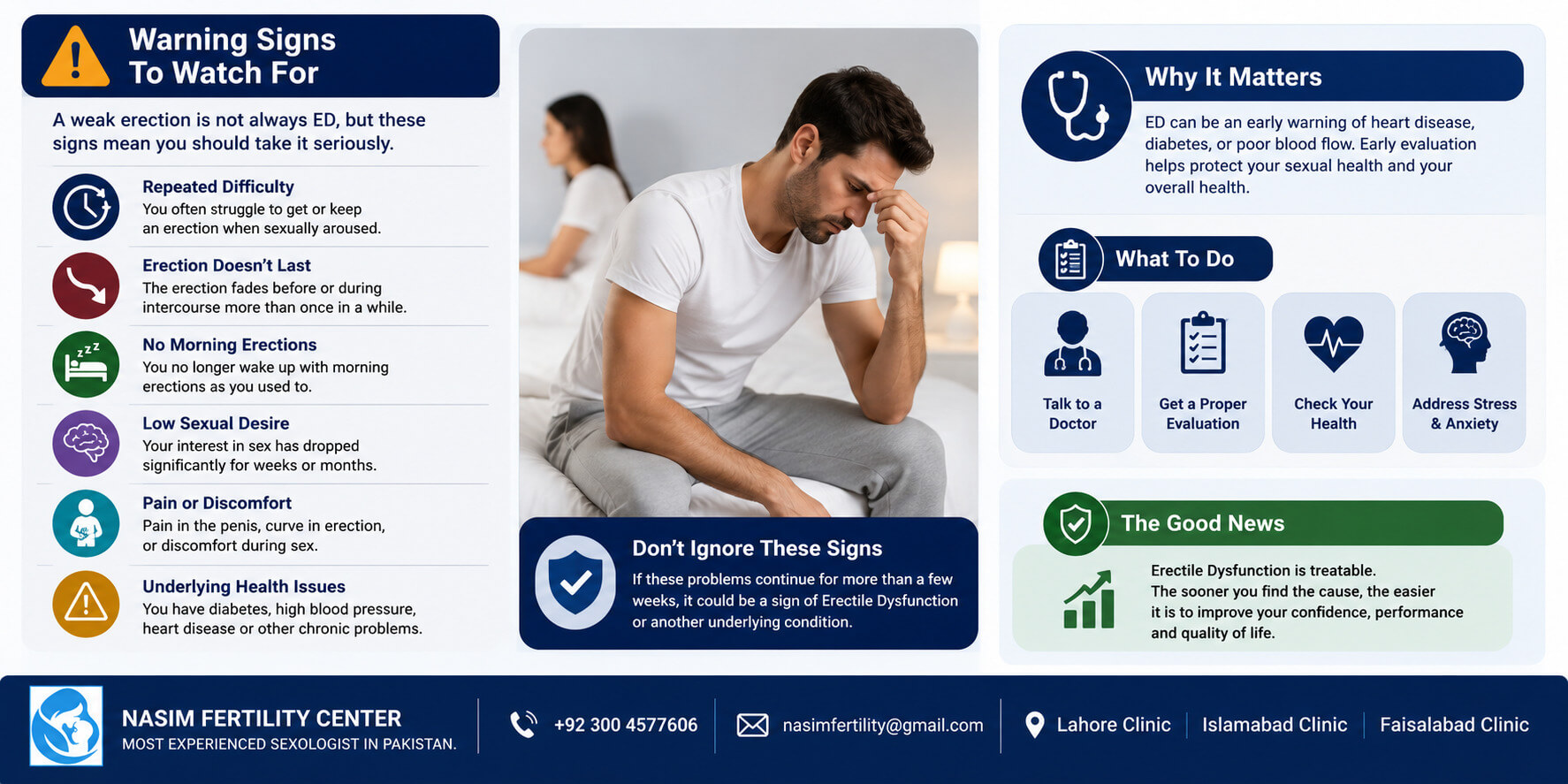
An occasional weak erection is common and should not immediately cause alarm. Persistent or recurring changes deserve more attention, particularly when they happen regardless of sexual frequency.
Consider speaking with a doctor if:
- You repeatedly struggle to get an erection when sexually aroused
- Your erection frequently disappears before or during intercourse
- The problem continues even after adequate rest
- Your usual morning or spontaneous erections have noticeably changed
- Sexual desire has significantly decreased
- You have diabetes, hypertension, cardiovascular disease, or another relevant medical condition
ED can sometimes provide an early reason to investigate broader vascular or metabolic health. Repeated symptoms should therefore not simply be blamed on having too much sex.
How Is Erectile Dysfunction Evaluated?
Proper evaluation begins by understanding what is actually happening. A doctor may ask when the erection problem began, whether it occurs every time or only in certain circumstances, whether morning erections are present, and whether the problem occurs during masturbation as well as partnered sex.
Medical history is also important. Diabetes, blood pressure, cardiovascular risk, medications, hormonal symptoms, smoking, alcohol use, stress, sleep, and relationship factors may all provide clues.
Depending on the situation, further examination or testing may be appropriate. The purpose is not merely to confirm that an erection is weak. It is to identify why the problem is happening.
Erectile Dysfunction Treatment Depends On The Cause
There is no single treatment that is right for every man with ED. A man whose erection problem is primarily related to performance anxiety may need a very different approach from someone whose difficulty is caused by diabetes or impaired penile blood flow.
Treatment may involve improving cardiovascular health, exercising regularly, managing weight, stopping smoking, controlling diabetes or hypertension, reviewing medications, addressing hormonal abnormalities, or using appropriate ED treatment under medical supervision.
Psychological and relationship factors should not be ignored. Nasim Fertility Center’s approach to sexual dysfunction treatment includes assessment of both medical and psychosexual factors because erection problems can involve the body, mind, and relationship at the same time.
A Clinical Perspective From Dr. Farooq Nasim Bhatti
Men sometimes become worried after one or two weaker erections and immediately conclude that frequent intercourse or ejaculation has permanently damaged their sexual ability. The more useful clinical question is whether the difficulty disappears after adequate recovery or continues repeatedly in different sexual situations.
Dr. Farooq Nasim Bhatti has more than 30 years of experience in sexual medicine and treats erectile dysfunction and other sexual health concerns through a cause focused approach that may include medical assessment, sex therapy, counselling, pharmacotherapy, lifestyle modification, and partner involvement where appropriate. Consultations are available through Nasim Fertility Center in Lahore, Islamabad, and Faisalabad, while men elsewhere in Pakistan can also use a confidential online sexologist consultation.
The Bottom Line
Too much sex does not normally cause permanent erectile dysfunction. If an erection feels weaker after repeated intercourse, your body may simply need time to recover. Fatigue, the refractory period, lower immediate arousal, and performance pressure can temporarily change erection quality.
If erection difficulties continue after adequate rest or repeatedly occur when you are sexually interested, do not assume that you have simply had “too much sex.” Persistent ED deserves proper assessment so that cardiovascular, metabolic, hormonal, lifestyle, medication related, and psychological causes can be identified and treated appropriately.
Frequently Asked Questions
Can A Man Get ED From Too Much Sex?
Frequent sex does not normally cause permanent erectile dysfunction. Repeated sexual activity can temporarily result in fatigue, reduced arousal, or difficulty getting another erection because the body needs time to recover.
Can Having Sex Every Day Cause Erectile Dysfunction?
Having sex every day does not automatically cause ED. Sexual frequency should depend on desire, comfort, health, and recovery rather than a fixed number of times per week.
Can Frequent Ejaculation Cause Erectile Dysfunction?
Normal ejaculation does not permanently damage erectile function. After repeated ejaculation, however, a man may temporarily require more time or stimulation before achieving another erection.
Why Is My Erection Weaker After Having Sex Several Times?
The refractory period, physical fatigue, reduced immediate sexual desire, and temporary changes in sensitivity can all make subsequent erections weaker. Performance anxiety can also contribute if you become worried about the change.
Does Semen Loss Cause Erectile Dysfunction?
Normal semen loss through ejaculation does not permanently weaken the penis or cause ED. Persistent erection problems should be evaluated for other physical or psychological causes.
Is Erectile Dysfunction Temporary Or Permanent?
It can be either, depending on the cause. Some erection problems improve after addressing stress, lifestyle, medication, or an underlying medical condition. Other cases may require ongoing treatment.
Is There A Permanent Cure For Erectile Dysfunction?
There is no universal permanent cure because ED has many possible causes. Some underlying causes can be corrected or substantially improved, while others can be effectively managed with appropriate treatment.
Can A Man With Erectile Dysfunction Satisfy His Partner?
Yes. Sexual satisfaction is not limited to penetration or erection firmness. Communication, affection, other forms of intimacy, and appropriate treatment for the underlying ED can all contribute to a satisfying sexual relationship.