
Infertility is usually discussed as a reproductive health problem, but its effects can extend far beyond the difficulty of becoming pregnant. Months or years of trying to conceive, medical investigations, unsuccessful treatment cycles, and uncertainty about the future can place considerable emotional pressure on both partners.
For some couples, infertility affects confidence, communication, intimacy, social relationships, and everyday life. Understanding these effects is important because infertility is not a personal failure, and emotional distress during the fertility journey deserves attention alongside medical care.
How Does Infertility Affect Mental Health?
Trying to conceive can create a repeated cycle of hope and disappointment. A couple may feel optimistic around ovulation or fertility treatment and then experience sadness when a pregnancy test is negative or another menstrual cycle begins.
Over time, this uncertainty can contribute to anxiety, low mood, grief, frustration, and emotional exhaustion. The experience differs from person to person, and having difficult emotions does not automatically mean someone has a mental health disorder.
Anxiety and Constant Worry
Infertility can make the future feel uncertain. People may worry about test results, age, treatment success, finances, pregnancy chances, or whether they will ever become parents.
Fertility appointments and waiting periods can make these thoughts difficult to switch off. Some people find themselves constantly researching symptoms or becoming anxious before every test or appointment.
Depression and Persistent Sadness
Repeated unsuccessful attempts to conceive can sometimes lead to prolonged sadness and hopelessness. Activities that previously felt enjoyable may become less interesting, particularly when everyday situations remind someone of pregnancy or parenthood.
Persistent sadness, sleep problems, loss of interest, or difficulty functioning normally should not simply be dismissed as part of infertility. Professional mental health support may be appropriate when these feelings become overwhelming.
Grief, Guilt, and Self-Blame
Infertility can involve a type of grief that people around the couple do not always recognize. Someone may be grieving the family they expected to have, a planned timeline for parenthood, or unsuccessful fertility treatment.
Self-blame can make this experience harder. A man may feel he has failed his wife after receiving an abnormal semen analysis, while a woman may blame herself when a female fertility factor is identified. Infertility should instead be approached as a medical issue that requires appropriate evaluation.
The Impact of Infertility on Women’s Mental Health
Women can experience considerable emotional pressure during infertility. In addition to uncertainty about conception, they may undergo blood tests, ultrasound examinations, hormonal treatments, and fertility procedures while continuing with normal family and professional responsibilities.
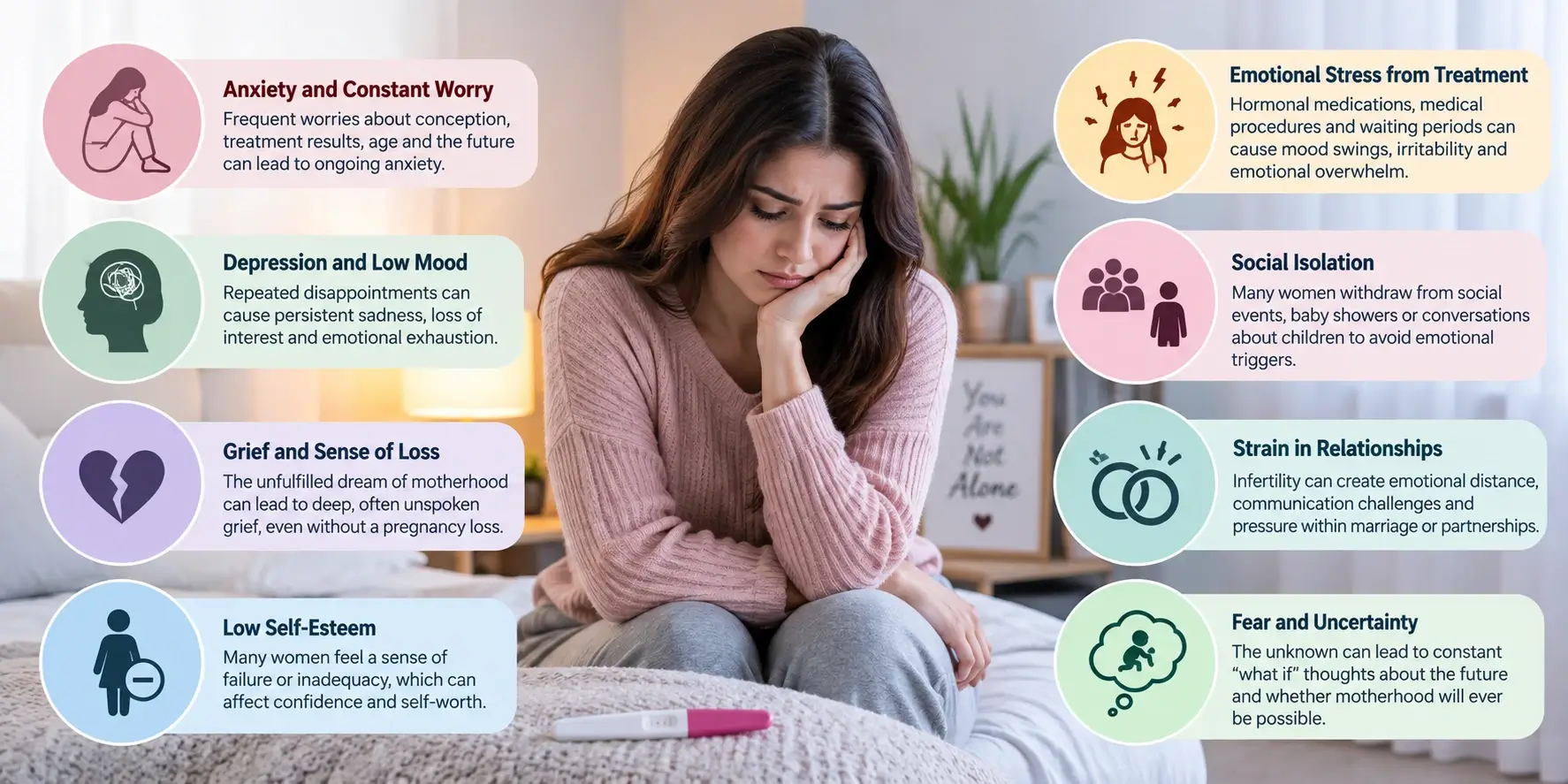
Social expectations can add another layer of stress. Questions about pregnancy, comparisons with other women, or pressure from relatives may create shame and isolation. These experiences can be particularly difficult when people incorrectly assume that infertility must be caused by the woman.
How Infertility Affects Men’s Mental Health
Men can also experience anxiety, sadness, embarrassment, and loss of confidence because of infertility. However, some men find it difficult to discuss these feelings openly and may respond by becoming quiet or emotionally withdrawn.
Male fertility concerns can also become connected with ideas about masculinity and sexual performance. Conditions affecting sperm production are not the same as sexual dysfunction. A proper male infertility evaluation can help identify potential medical factors rather than relying on assumptions or self-diagnosis.
How Infertility Can Affect a Marriage or Relationship
Partners do not always cope with infertility in the same way. One person may want to discuss every appointment and result, while the other may prefer to process emotions privately. Neither response necessarily means that one partner cares more than the other.
Problems can develop when these differences are interpreted as rejection or lack of support. Medical costs, decisions about fertility treatment, pressure from relatives, and repeated disappointment can add further strain.
Communication Can Become Difficult
Conversations between partners can gradually become dominated by ovulation dates, laboratory results, medications, and treatment plans. Normal conversations and shared activities may receive less attention.
Setting aside some time when fertility is not the main subject can help couples maintain other parts of their relationship. Difficult treatment decisions should also be discussed together rather than leaving one partner to carry the responsibility.
Blame and Resentment Can Develop
Infertility may involve a male factor, female factor, combined factors, or sometimes no immediately identifiable explanation. Discovering a possible cause can unintentionally lead to guilt or blame within a relationship.
Approaching diagnosis as a shared health challenge can reduce this pressure. Couples experiencing difficulty conceiving may benefit from understanding the common causes of infertility before assuming that either partner is responsible.
How Infertility Can Affect Sex and Intimacy
Trying for a baby can change the meaning of sex within a relationship. Intercourse that was previously spontaneous may become scheduled around ovulation and fertile days. Some couples begin to feel that sex has become a task rather than an expression of intimacy.
Performance pressure can also affect sexual function. A man who feels he must have intercourse at a particular time may experience erection difficulties or anxiety, while either partner may experience reduced sexual desire because of stress.
When persistent erection problems develop, an assessment for erectile dysfunction can help determine whether psychological, physical, or combined factors are involved rather than automatically blaming infertility.
Do Couples Break Up Due to Infertility?
Infertility can place significant pressure on a relationship, but it does not mean separation is inevitable. Couples respond differently depending on their communication, existing relationship dynamics, financial circumstances, family environment, and access to support.
For some couples, openly acknowledging that both partners are experiencing the situation differently can reduce conflict. Counseling may also provide a neutral space to discuss grief, treatment decisions, intimacy, and disagreements about how long to continue trying.
The Social Impact of Infertility
Infertility can affect friendships and family relationships as well as marriage. Pregnancy announcements, baby showers, children’s birthdays, and repeated questions about starting a family can become emotionally difficult.
Some couples gradually withdraw from social events to avoid these situations. Temporary boundaries can be helpful, but prolonged isolation can make emotional distress worse.
Social pressure may include:
- Repeated questions about when the couple will have children
- Unwanted fertility advice from relatives or friends
- Blaming one partner without medical evidence
- Comparisons with siblings, friends, or other couples
- Stigma surrounding infertility or fertility treatment
Couples should feel able to decide how much information they want to share. They do not owe relatives or friends detailed explanations about their reproductive health.
Primary and Secondary Infertility Can Both Be Difficult
People sometimes assume that infertility only affects couples who have never conceived. Secondary infertility occurs when someone has previously conceived but later experiences difficulty becoming pregnant again.
This can be confusing because previous fertility does not guarantee that conception will happen easily in the future. Age, sperm quality, ovulation problems, reproductive health conditions, and other factors can change over time.
Why Is It Taking Longer to Conceive My Second Baby?
Taking longer to conceive a second child does not automatically indicate a serious fertility problem. However, persistent difficulty may warrant an evaluation, particularly when there are known reproductive health concerns or increasing age.
Couples should avoid comparing their current experience with how quickly a previous pregnancy occurred. Each attempt to conceive happens under different biological circumstances.
Does Stress Cause Infertility?
Infertility can clearly cause stress, but saying that stress alone causes infertility oversimplifies a complex medical issue. Telling someone to “just relax” can also make them feel responsible for not becoming pregnant.
Fertility can be influenced by multiple male and female factors. Stress management can improve emotional wellbeing and may make the fertility journey easier to manage, but it should not replace appropriate medical investigation when a couple is struggling to conceive.
How to Cope With the Emotional Effects of Infertility
Coping does not mean pretending infertility is easy. It means finding ways to protect mental wellbeing and the relationship while medical questions are being addressed.
Couples can benefit from communicating without assigning blame, maintaining activities unrelated to fertility, setting boundaries with relatives, and protecting intimacy from becoming entirely focused on conception. Exercise, adequate sleep, time with supportive people, and breaks from constant fertility discussions can also help.
Psychological counseling may be particularly valuable when anxiety, depression, relationship conflict, or grief becomes difficult to manage independently.
How to Support Your Wife Through Infertility
Support does not always mean finding an immediate solution. Listening without minimizing your partner’s feelings can be more helpful than repeatedly offering advice. Attending appointments when possible and sharing treatment decisions can also prevent one partner from feeling that she is carrying the entire burden.
Husbands should not ignore their own emotions either. Supporting a wife through infertility does not require a man to hide his sadness or anxiety. Healthy communication allows both partners to acknowledge what they are experiencing.
Fertility Evaluation and Support at Nasim Fertility Center
Couples who are struggling to conceive may need both compassionate communication and appropriate medical evaluation. Nasim Fertility Center provides confidential fertility and sexual health consultations under Dr. Farooq Nasim Bhatti, with assessment of male and female factors that may be contributing to difficulty conceiving. Couples can seek guidance through clinics in Lahore, Islamabad, and Faisalabad, with treatment recommendations based on their individual reproductive health concerns.
When Should You Seek Professional Help?
Emotional support should be considered when infertility begins affecting normal daily functioning, sleep, work, relationships, or overall quality of life. Persistent depression, severe anxiety, overwhelming hopelessness, major relationship conflict, or prolonged social withdrawal deserve professional attention.
Medical fertility evaluation and psychological support serve different purposes, and some couples may benefit from both. Seeking emotional support does not mean someone is unable to cope. It provides additional tools for managing a genuinely demanding experience.
Moving Through Infertility Together
Infertility is not simply a medical diagnosis involving conception. It can influence emotional wellbeing, confidence, intimacy, relationships, and how couples see their future together.
Neither partner should be treated as responsible or inadequate because conception is difficult. Appropriate fertility evaluation, open communication, mutual support, and professional psychological care when needed can help couples manage both the medical and emotional sides of infertility.
Frequently Asked Questions
How Does Infertility Affect You Mentally?
Infertility can contribute to stress, anxiety, sadness, grief, guilt, reduced self-esteem, and social isolation. Emotional responses vary considerably, and not everyone with infertility develops a mental health condition.
Can Infertility Cause Depression and Anxiety?
Some people experiencing infertility develop significant symptoms of anxiety or depression, particularly after repeated unsuccessful attempts or fertility treatments. Persistent symptoms should be discussed with an appropriate healthcare professional.
How Does Infertility Affect a Marriage?
Infertility may affect communication, finances, intimacy, sexual relationships, and decisions about treatment. Partners may also cope differently, which can create misunderstandings if those differences are not discussed openly.
Can Infertility Affect Sex and Intimacy?
Yes. Timed intercourse and pressure to conceive can reduce spontaneity and increase performance anxiety. Some couples experience reduced desire, erection difficulties, or emotional distance during prolonged fertility treatment.
How Does Infertility Affect Men Emotionally?
Men may experience anxiety, embarrassment, sadness, frustration, or concerns about masculinity, particularly when a male fertility factor is identified. Some men express these feelings through withdrawal rather than discussing them directly.
How Can I Support My Wife Through Infertility?
Listen to her concerns, avoid blame, participate in important appointments when possible, and make fertility decisions together. It is also important to maintain emotional and physical closeness outside the process of trying to conceive.
When Should We Consider Infertility Counseling?
Counseling may be useful when fertility problems are causing persistent anxiety, depression, grief, communication problems, sexual difficulties, or serious relationship conflict.