

Hormone testing for male infertility helps doctors understand whether the brain, pituitary gland and testicles are communicating properly. These hormones control testosterone production, sperm development, sexual desire and several other functions connected with male reproductive health.
A hormonal blood test is usually recommended when a semen analysis shows a low sperm count, poor sperm movement or no sperm in the semen. However, hormone testing does not replace semen analysis. Doctors normally interpret blood test results together with the patient’s symptoms, medical history and physical examination.
What Is Hormone Testing For Male Infertility?
Hormone testing is a simple blood test that measures the reproductive hormones involved in sperm and testosterone production. Most tests can be completed with a routine blood sample taken from a vein.
The results can help identify whether infertility is related to the testicles or to the signals sent by the brain and pituitary gland. Hormone testing may also uncover thyroid problems, raised prolactin levels or the effects of medicines and external testosterone use.
Why Are Hormones Important For Male Fertility?
Sperm production depends on a communication system known as the hypothalamic-pituitary-testicular axis. The hypothalamus in the brain sends signals to the pituitary gland, which then releases hormones that control the testicles.
Follicle-stimulating hormone supports sperm production, while luteinizing hormone stimulates the testicles to produce testosterone. Testosterone is essential for normal male development, sexual desire and sperm maturation inside the testicles.
When any part of this communication system is disturbed, sperm production may decline. This is why hormone levels can provide important information during a male infertility evaluation.
When Is Hormone Testing Recommended?
Not every man needs a complete hormone panel as the first fertility test. A doctor may recommend hormone testing when semen results, symptoms or physical findings suggest a possible hormonal problem.
Testing is commonly considered when a man has:
- A low sperm count or no sperm in semen
- Poor sperm movement or severe sperm abnormalities
- Low sexual desire or erectile difficulties
- Small or underdeveloped testicles
- Symptoms of low testosterone
- Unexplained infertility
- A history of testosterone, steroid or hormone use
Men with azoospermia or severe oligospermia often require hormone testing as part of a wider diagnostic process. Further evaluation may include ultrasound, repeat semen analysis and selected genetic tests.
Male Fertility Blood Test List
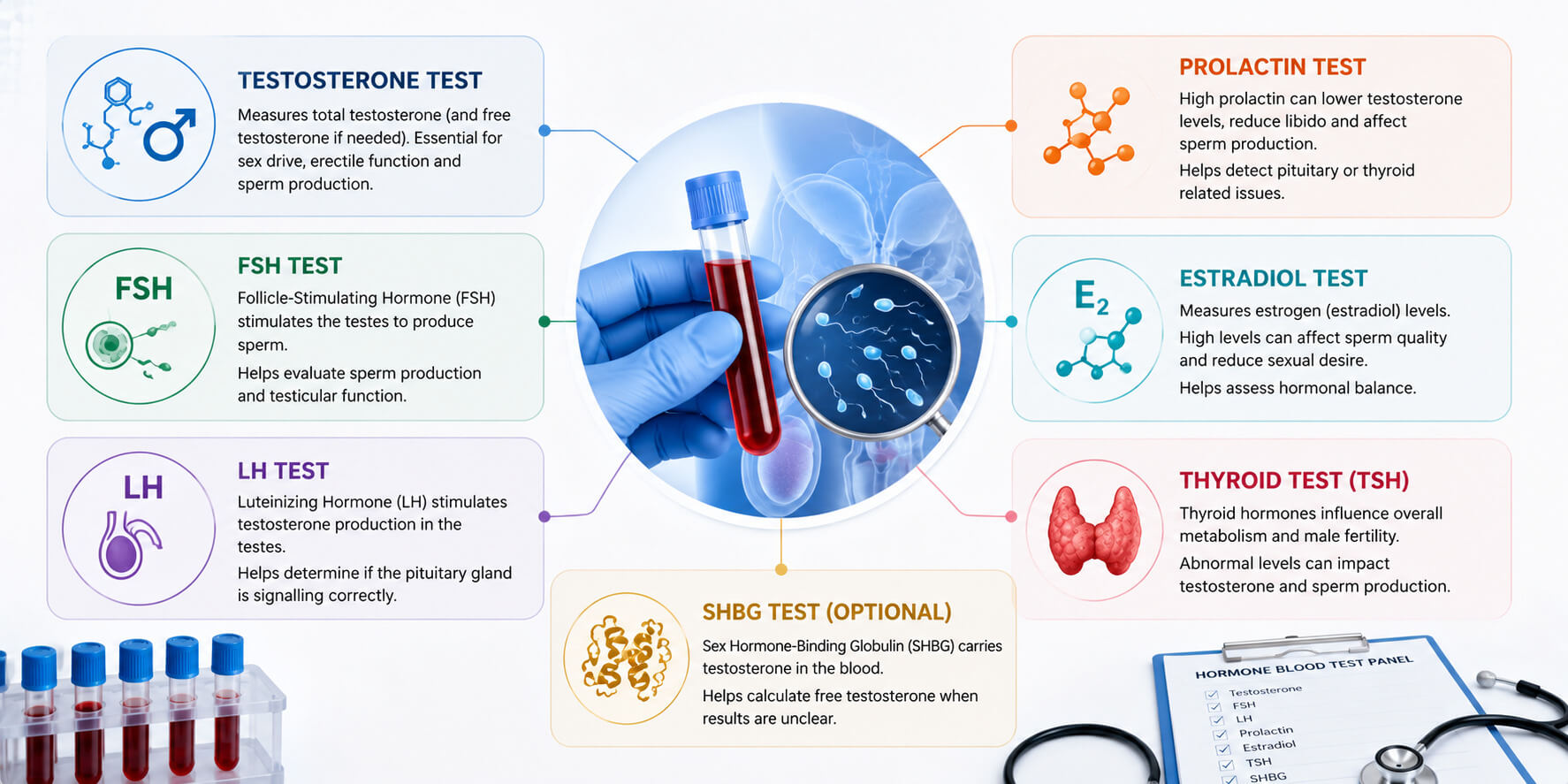
A male fertility blood test may include several hormones. The exact panel depends on the patient’s symptoms, semen results and medical history.
Testosterone Test
Testosterone is the main male sex hormone. It supports sexual desire, erectile function, muscle development and sperm production within the testicles.
Total testosterone is usually measured first. A doctor may also request free testosterone or sex hormone-binding globulin when total testosterone does not match the patient’s symptoms.
A low level may be linked with pituitary problems, testicular dysfunction, obesity, chronic illness, certain medicines or poor sleep. However, low testosterone alone does not confirm infertility, and a normal blood level does not guarantee normal sperm production.
Follicle-Stimulating Hormone Test
Follicle-stimulating hormone, commonly known as FSH, is released by the pituitary gland. It signals the testicles to support sperm production.
A high FSH level with a very low sperm count may suggest that the testicles are not responding normally. This can occur with primary testicular damage, genetic conditions, previous chemotherapy, radiation or severe sperm-production problems.
A low FSH level may indicate that the pituitary gland or hypothalamus is not sending enough stimulation. Normal FSH does not completely rule out a fertility problem, so it must be reviewed with semen results.
Luteinizing Hormone Test
Luteinizing hormone, or LH, stimulates cells in the testicles to produce testosterone. Its interpretation is especially useful when testosterone is low.
Low testosterone with high LH may point towards reduced testicular function. Low testosterone with low or inappropriately normal LH may suggest a problem involving the pituitary gland, hypothalamus, chronic illness or certain medicines.
Prolactin Test
Men normally have a small amount of prolactin. Abnormally high prolactin can suppress testosterone production and affect sexual desire, erections and fertility.
Raised prolactin may be associated with some medicines, thyroid disorders or pituitary conditions. A high result may need to be repeated, especially if stress or other temporary factors could have influenced it.
Estradiol Test
Men require a small amount of estradiol for normal health, but an imbalance may affect reproductive hormones. High estradiol can be linked with obesity, liver conditions, certain medicines or increased conversion of testosterone into estrogen.
Estradiol testing is not required for every man. It is usually considered when symptoms, body composition or other hormone results suggest an imbalance.
Thyroid And SHBG Tests
Thyroid-stimulating hormone may be checked if a man has unexplained fatigue, weight changes, temperature sensitivity or symptoms suggesting thyroid disease.
Sex hormone-binding globulin, or SHBG, carries testosterone in the blood. Measuring it can help doctors estimate free testosterone when the total testosterone result is difficult to interpret.
Typical Male Fertility Hormone Levels
Reference ranges differ between laboratories, countries and testing methods. The following figures are common examples rather than fixed diagnostic cut-offs.
| Hormone | Common Adult Range | Main Role |
| Total Testosterone | About 300–1,000 ng/dL | Supports sexual function and sperm development |
| FSH | About 1–12 mIU/mL | Stimulates sperm production |
| LH | About 1.7–8.6 IU/L | Stimulates testosterone production |
| Prolactin | Commonly below 15–20 ng/mL | Helps regulate reproductive hormones |
| Estradiol | Often below 40–50 pg/mL | Supports hormonal balance in small amounts |
A result should always be compared with the range printed by the testing laboratory. Age, collection time, current health, medicines and body weight may all affect hormone levels.
What Do Abnormal Hormone Results Mean?
Hormone results are interpreted as patterns rather than isolated numbers. One abnormal result does not automatically identify the cause of infertility.
High FSH With A Low Sperm Count
High FSH may mean that the pituitary gland is working harder to stimulate testicles that are not responding effectively. This pattern can be seen in primary testicular failure and severe sperm-production disorders.
It may also appear after testicular injury, infection, chemotherapy or radiation. Depending on the semen results, doctors may recommend genetic assessment or discuss sperm-retrieval options.
Low FSH And Low LH
Low FSH and LH may suggest reduced signalling from the hypothalamus or pituitary gland. This is sometimes called secondary or hypogonadotropic hypogonadism.
Unlike many forms of primary testicular failure, selected hormonal signalling disorders may respond to specialist-prescribed treatment. A complete evaluation is required before starting any medicine.
Low Testosterone With High Or Low LH
Low testosterone with high LH can suggest that the testicles are not producing enough testosterone despite strong stimulation from the pituitary gland.
Low testosterone with low or normal LH may indicate a brain or pituitary problem, obesity, illness, medicine effects or suppression caused by external testosterone.
High Prolactin Or Estradiol
High prolactin may reduce testosterone and contribute to low libido or erectile problems. Doctors may review medicines, thyroid function and pituitary symptoms before deciding whether further testing is needed.
High estradiol may disturb the balance between testosterone and estrogen. Weight management, medicine review and treatment of an underlying condition may form part of the care plan.
Can Hormone Levels Be Normal In Male Infertility?
Yes. A man can have normal hormone results and still experience infertility. Hormone blood tests do not measure sperm movement, shape, concentration or DNA quality.
Fertility can also be affected by a varicocele, infection, blockage, genetic condition or abnormal sperm morphology. Men with reduced sperm motility may also have normal hormone levels.
This is why hormone testing must be interpreted alongside semen analysis rather than used as a stand-alone fertility test.
Hormone Testing And Semen Analysis
A semen analysis measures semen volume, sperm concentration, total sperm count, sperm movement and sperm shape. It shows what is present in the semen at the time of testing.
Hormone testing explores why sperm production may be affected. For example, a man with a low sperm count and high FSH may have a different underlying problem from someone with a low sperm count and low FSH.
Because sperm numbers naturally vary, a doctor may recommend more than one semen sample before confirming a persistent abnormality.
How To Prepare For A Male Hormone Blood Test
Testosterone is commonly checked in the morning because levels naturally rise and fall during the day. Many doctors prefer collection between approximately 7 AM and 10 AM, although laboratory instructions may vary.
Before the test, tell your doctor about all prescription medicines, supplements, bodybuilding products, testosterone injections and anabolic steroids. Do not stop prescribed treatment without medical advice.
Fasting is not always required, but patients should follow the instructions provided by the laboratory. Poor sleep, acute illness and significant stress can also affect some hormone results.
Can Testosterone Therapy Reduce Fertility?
External testosterone can significantly reduce sperm production. Testosterone injections, gels, pellets and anabolic steroids may cause the brain to reduce FSH and LH signals to the testicles.
As a result, the testicles may produce fewer sperm or stop producing detectable sperm. This is especially important for men who want children but are considering testosterone replacement therapy.
Men trying to conceive should not begin or stop testosterone treatment without speaking to a fertility specialist. Treatment for low testosterone in a man seeking pregnancy may differ from treatment used when fertility is not a goal.
Hormone Treatment For Male Infertility
Hormone treatment depends on the cause. The aim is not simply to increase testosterone on a laboratory report but to restore the hormonal signals needed for sperm production where possible.
Some men with low pituitary hormone signals may benefit from doctor-supervised medicines that stimulate testicular function. Raised prolactin may require a medicine review, thyroid treatment or specialist management of a pituitary condition.
When primary testicular damage is present, hormonal medicines may not restore normal sperm production. In such cases, the couple may be guided towards sperm retrieval, IUI, IVF or ICSI depending on the complete findings.
Lifestyle Factors That Affect Male Hormones
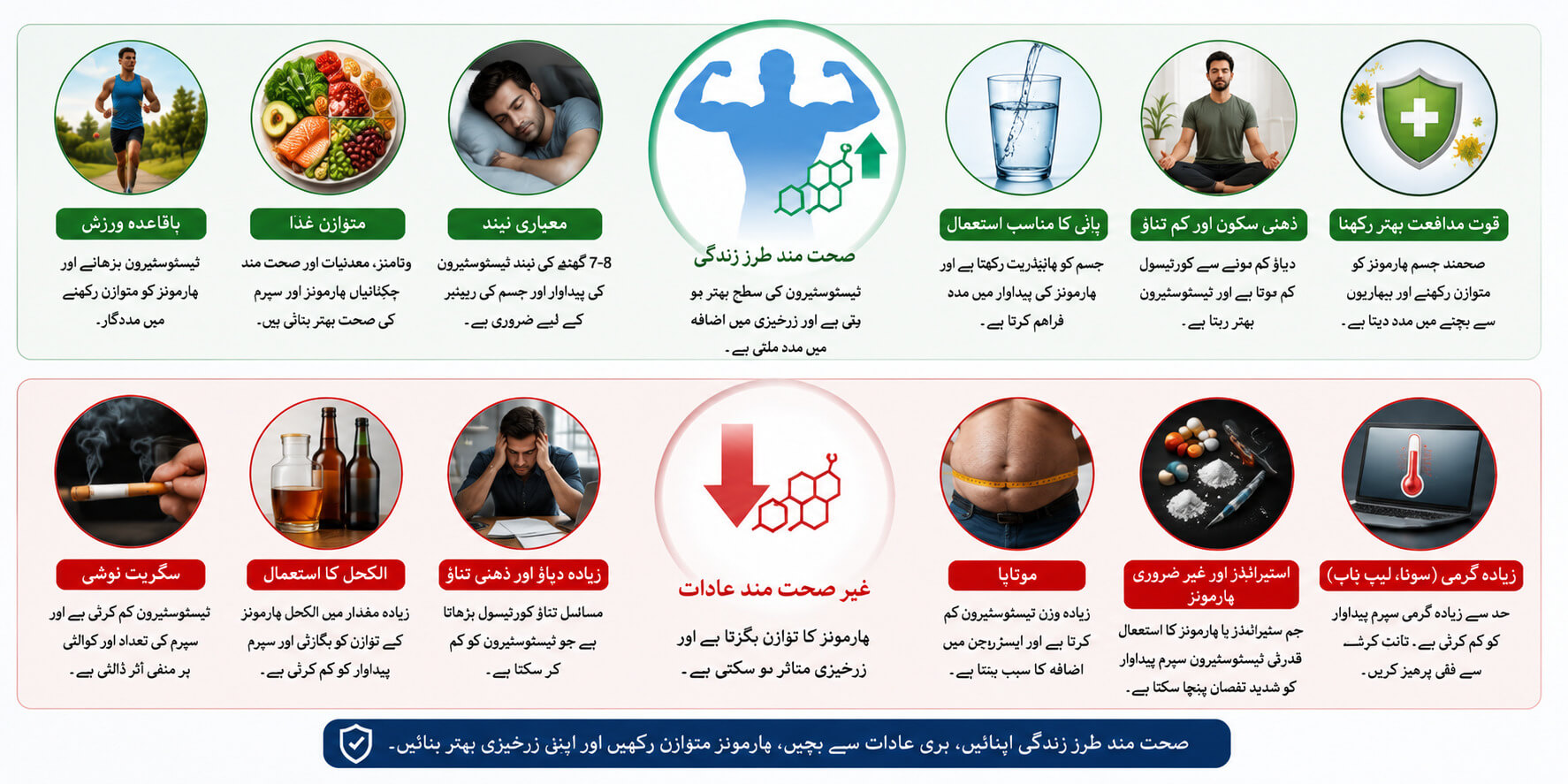
Lifestyle improvements can support reproductive health, although they cannot correct every hormonal, genetic or structural cause of infertility.
Maintaining a healthy weight, sleeping adequately, exercising regularly and avoiding smoking can support hormone balance. Men should also avoid anabolic steroids, recreational drugs and unnecessary hormone supplements.
Chronic diabetes, obesity, severe stress and some prescription medicines may influence reproductive hormones. Any medication concerns should be discussed with the prescribing doctor rather than making changes independently.
Additional Tests After Abnormal Results
Further testing depends on the hormone pattern and semen findings. A doctor may recommend a repeat morning testosterone test, repeat semen analysis, scrotal ultrasound or physical examination.
Men with no sperm or an extremely low count may need genetic testing for male infertility. Pituitary imaging may be considered when high prolactin or other symptoms suggest a gland-related problem.
Male Infertility Care At Nasim Fertility Center
Nasim Fertility Center provides male infertility assessment under the guidance of Dr. Farooq Nasim Bhatti, MBBS, DABS (USA) and FAACS (USA), who has more than 31 years of professional experience. Evaluation may include semen analysis, hormone interpretation, male-factor assessment and genetic counselling where appropriate. Consultations are available at clinics in Lahore, Islamabad and Faisalabad, along with confidential online consultation options for patients in other locations.
When Should You See A Fertility Specialist?
A specialist consultation is recommended when pregnancy has not occurred after regular unprotected intercourse, especially when semen analysis is abnormal.Men should also seek an evaluation if they have no sperm, a very low sperm count, reduced sexual desire, erection or ejaculation problems, small or painful testicles, previous undescended testicles, testicular injury, chemotherapy exposure or a history of testosterone or steroid use.
Final Takeaway
Hormone testing can reveal whether the brain, pituitary gland and testicles are communicating properly to support testosterone and sperm production. It is particularly useful when semen analysis shows a low sperm count, no sperm or other severe abnormalities.
Results should always be interpreted with semen findings, symptoms, medical history and examination. Men should avoid using testosterone, fertility medicines or hormone supplements without specialist guidance, as the wrong treatment can further reduce sperm production.
Frequently Asked Questions
What Is The Main Hormone Test For Male Infertility?
FSH and total testosterone are commonly included in the initial assessment. LH, prolactin, estradiol, thyroid hormones or SHBG may be added based on symptoms and initial results.
Can A Blood Test Confirm Male Infertility?
A blood test can identify hormonal problems but cannot diagnose every cause of male infertility. Semen analysis, medical history and physical examination remain essential.
What FSH Level Indicates Male Infertility?
There is no single FSH level that confirms infertility. A raised level may suggest impaired sperm production, but it must be interpreted against the laboratory range and semen results.
Does Low Testosterone Mean A Man Is Infertile?
Not necessarily. Low testosterone may affect reproductive function, but fertility cannot be determined from testosterone alone. Some infertile men have normal testosterone, while some men with low testosterone still produce sperm.
Can High Testosterone Cause Infertility?
Naturally higher testosterone and externally supplied testosterone are not the same. Testosterone injections, gels and anabolic steroids can suppress FSH and LH and sharply reduce sperm production.
Can Hormonal Male Infertility Be Treated?
Some hormonal causes respond well to targeted treatment, particularly when the problem involves reduced pituitary signalling. Other conditions may require assisted reproductive treatment.
How Much Does A Male Fertility Hormone Test Cost?
The cost depends on the laboratory, city and number of hormones included. Additional charges may apply for semen analysis, ultrasound, genetic testing and specialist consultation.