
Depression can affect much more than your mood. It can change your interest in sex, make physical arousal more difficult, interfere with erections or orgasm, and leave you feeling too tired or emotionally disconnected for intimacy. For some people, sexual difficulties are among the changes they first notice when their mental health begins to decline.
There is another complication. Some antidepressant medications can also affect sexual function. This can make it difficult to know whether low sex drive, erectile dysfunction, delayed orgasm, or another problem is coming from depression itself, the medication used to treat it, or a combination of factors.
Understanding that connection is important because losing interest in sex does not necessarily mean losing interest in your partner. Depression affects the way the brain experiences pleasure, motivation, energy, confidence, and emotional connection, all of which contribute to a healthy sex life.
What Is the Connection Between Depression and Sex?
Sexual desire begins in the brain. Mood, emotions, hormones, neurotransmitters, physical health, relationships, and sexual stimulation all contribute to the sexual response. Depression can interfere with several parts of this process at the same time.
One of the defining features of depression can be a reduced ability to experience pleasure. Activities that once felt enjoyable may no longer produce the same emotional response. Sex can be affected in exactly the same way. A person may still love and feel attracted to their partner but have little motivation or desire for sexual activity.
Depression can also bring fatigue, sleep disturbances, poor concentration, low self-esteem, anxiety, and feelings of worthlessness. When several of these symptoms occur together, intimacy can become difficult both emotionally and physically.
How Does Depression Affect Your Sex Life?
Depression does not affect everyone’s sexuality in exactly the same way. Some people mainly experience a loss of desire, while others want sex but find that their body does not respond as expected.
Depression Can Lower Your Sex Drive
Low libido is one of the most noticeable ways depression can affect sex. You may stop thinking about sex, rarely initiate intimacy, or find that sexual stimulation no longer produces the interest it previously did.
This can be confusing for both partners. The person experiencing depression may wonder why their desire has disappeared, while their partner may interpret the change as rejection. In reality, reduced libido can be part of the broader loss of interest and pleasure associated with depression.
Depression Can Make Sexual Arousal More Difficult
Wanting emotional closeness does not always mean the body will become physically aroused. Depression can disrupt the mental and physical processes involved in sexual response.
Men may experience difficulty getting or maintaining an erection. Women may experience reduced lubrication or difficulty becoming sufficiently aroused. When this happens repeatedly, worry about sexual performance can add another layer of anxiety to an already difficult situation.
Depression Can Contribute to Erectile Dysfunction
Depression and erectile dysfunction can be closely connected. Depression may reduce sexual desire and interfere with arousal, while anxiety about erections can make it even harder to respond naturally during sex.
A cycle can develop in which one unsuccessful sexual experience creates fear about the next encounter. The man begins monitoring his erection rather than responding naturally to stimulation, increasing performance anxiety and making another difficulty more likely.
Erectile difficulties should not automatically be attributed to depression, however. Diabetes, cardiovascular problems, hormonal disorders, medications, smoking, and other factors can also contribute. Men experiencing persistent erection problems can read more about the causes and available options on our erectile dysfunction treatment page.
Depression Can Affect Ejaculation and Orgasm
Sexual dysfunction related to depression is not limited to erections or desire. Some people have difficulty reaching orgasm even when they can become aroused.
Men may experience delayed ejaculation or difficulty ejaculating at all. Women may take considerably longer to reach orgasm or may be unable to climax. Even when orgasm occurs, it may feel less pleasurable than it did previously.
When these changes begin suddenly or persist, they deserve proper assessment rather than being dismissed as stress.
Fatigue Can Make Intimacy Feel Like Work
Depression can be physically exhausting. Getting through normal daily activities may already require considerable effort, leaving little energy for initiating or participating in sex.
Poor sleep can make the situation worse. Someone who feels constantly tired may still value intimacy but simply lack the physical and emotional energy to engage in it. This is another reason a partner should not automatically interpret reduced sexual activity as a loss of affection.
Can Depression Completely Kill Your Sex Drive?
For some people, depression causes a moderate reduction in sexual desire. For others, interest in sex can almost disappear. There is no single pattern that applies to everyone.
A major change in libido should still be considered in context. Depression is one possible cause, but low testosterone, thyroid disorders, chronic illness, relationship difficulties, stress, medications, and other health conditions may also reduce sexual desire.
If your sex drive has changed significantly, especially without an obvious reason, a medical assessment can help determine whether depression is the main factor or whether something else also needs attention.
How Depression Affects Sexual Confidence
Depression can change how a person sees themselves. Someone who previously felt confident may begin feeling unattractive, inadequate, undesirable, or ashamed of their body.
These thoughts can follow them into the bedroom. Instead of focusing on pleasure and connection, they may worry about how they look, whether they will perform properly, or whether their partner is satisfied.
For men, this self-monitoring can become particularly important when erection problems are involved. Fear of losing an erection can itself interfere with arousal, creating a combination of depression, low confidence, and performance anxiety.
When psychological factors are contributing to sexual difficulties, sex therapy and counseling can help address sexual fears, performance pressure, communication difficulties, and other factors affecting the sexual response.
How Depression Can Affect Intimacy and Relationships
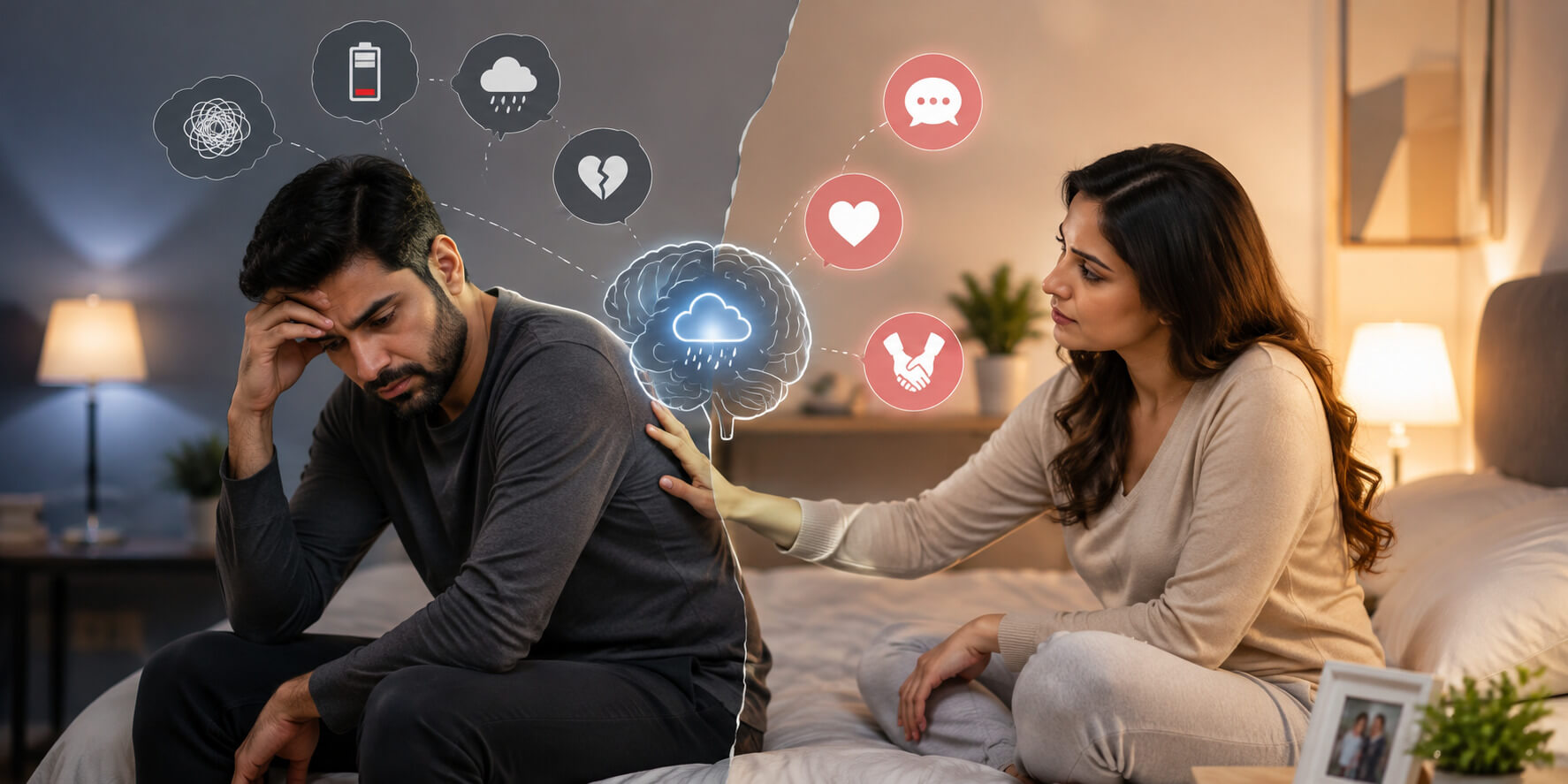
Sexual changes caused by depression affect more than the individual experiencing them. A partner may begin wondering, “Are they no longer attracted to me?” or “Is something wrong with our relationship?”
That misunderstanding can create distance. One person feels pressured to have sex when they do not feel capable of it, while the other feels repeatedly rejected. Resentment, guilt, anxiety, and avoidance can gradually replace intimacy.
Communication is particularly important here. Explaining that reduced desire may be related to depression can help separate the sexual symptom from feelings about the relationship.
Intimacy also does not have to mean intercourse every time. Affection, conversation, hugging, holding hands, and nonsexual physical closeness can help couples remain connected while depression is being addressed.
Can Antidepressants Affect Your Sex Life?
Yes. This is one of the more complicated parts of the relationship between depression and sexual health. Depression itself can cause sexual dysfunction, but some medications used to treat depression can also produce sexual side effects.
Selective serotonin reuptake inhibitors, commonly called SSRIs, are particularly associated with sexual changes in some patients. Possible effects include:
- Reduced sexual desire
- Difficulty becoming aroused
- Erectile difficulties
- Delayed ejaculation
- Vaginal dryness
- Difficulty reaching orgasm
Not everyone taking an antidepressant develops these effects. The experience can vary according to the medication, dosage, individual response, other health conditions, and additional medications being taken.
Is It Depression or the Antidepressant?
The timing of the sexual problem provides useful information. If low libido or sexual dysfunction existed before treatment started, depression itself may be contributing. If sexual function changed noticeably after starting or changing medication, the medication may be playing a role.
Sometimes both are involved. A person may already have reduced desire from depression and then notice delayed orgasm after beginning treatment.
A clinician may consider when the symptoms began, the medication being used, its dosage, other medicines, physical health, hormonal factors, relationship circumstances, and the person’s previous sexual functioning. This is more useful than simply assuming one cause.
Should You Stop Antidepressants If They Affect Your Sex Life?
Do not suddenly stop a prescribed antidepressant because you are experiencing sexual side effects. Abruptly stopping certain antidepressants can cause withdrawal symptoms and may also allow depression to worsen.
Instead, tell the clinician prescribing your medication exactly what has changed. Sexual side effects can be difficult to discuss, but they are medically relevant and should not be hidden out of embarrassment.
Depending on your individual situation, the prescribing clinician may review the medication, dosage, timing, or other treatment possibilities. These decisions need to consider your mental health as well as your sexual health.
Can Your Sex Drive Return After Depression?
Sexual desire and function can improve as depression improves, particularly when depression itself is the main cause. There is no universal recovery timeline, however.
Some people notice their interest in sex returning gradually as their mood and energy improve. Others continue to experience sexual problems because medication, anxiety, relationship difficulties, hormones, or another medical condition is also involved.
The important point is not to assume that sexual dysfunction has become permanent. If depression improves but low libido, erection difficulties, delayed ejaculation, or orgasm problems remain, those symptoms can be assessed separately.
How Are Depression Related Sexual Problems Treated?
Treatment depends on what is actually causing the problem. Simply treating an erection or trying to increase libido without addressing significant depression may leave an important part of the problem unresolved.
Treating Depression
Depression deserves appropriate care in its own right. Treatment may involve psychotherapy, medication, lifestyle support, or a combination recommended by a qualified mental health professional.
Improving depression can also improve energy, motivation, self-esteem, interest in pleasurable activities, and relationship engagement. For some people, sexual function improves alongside these changes.
Reviewing Medication With Your Doctor
If sexual problems began after starting an antidepressant, discuss them with the clinician managing your medication. Do not adjust the dose or switch medications independently.
Your doctor can consider the importance of the medication, your response to treatment, the severity of the side effects, and other relevant health factors before deciding whether any change is appropriate.
Addressing the Sexual Dysfunction
Persistent sexual symptoms may need their own assessment. Erectile dysfunction, low libido, delayed ejaculation, orgasm difficulties, or sexual pain should not automatically be blamed on depression without considering other causes.
A sexual health assessment may explore medical history, medications, mental health, relationship circumstances, sexual experiences, performance anxiety, and relevant physical conditions.
Sex Therapy and Counseling
Sex therapy can be useful when sexual anxiety, negative beliefs, communication problems, performance pressure, or relationship tension are maintaining the difficulty.
Nasim Fertility Center provides assessment and counseling for sexual dysfunction through Dr. Farooq Nasim Bhatti, including concerns involving low desire, erectile dysfunction, ejaculation difficulties, performance anxiety, and relationship related sexual problems. Patients can consult in Lahore, Islamabad, and Faisalabad, with online consultation also available for those who cannot visit a clinic.
How Couples Can Stay Connected
Depression can test a relationship, but turning sex into another source of pressure usually makes intimacy more difficult. Both partners benefit from understanding that depression related loss of desire is not necessarily a judgment on the relationship.
Try discussing sexual changes at a calm time rather than immediately after a rejected sexual advance. Focus on what each person is experiencing rather than assigning blame.
Affection and closeness can continue without requiring every intimate moment to lead to intercourse. Reducing pressure may also make it easier for sexual interest to return naturally as the person begins feeling better.
When Should You Talk to a Doctor?
Occasional changes in sexual desire are common. Professional assessment becomes more important when the change persists, causes significant distress, or begins affecting your relationship.
Consider seeking medical advice if you experience persistent low libido, recurrent erection problems, difficulty ejaculating or reaching orgasm, pain during sex, sexual changes after starting medication, or uncertainty about whether depression is actually causing the problem.
Depression itself should also receive appropriate mental health care. If someone is experiencing thoughts of self-harm or suicide, they should seek urgent professional or emergency support rather than waiting for a routine sexual health consultation.
Depression and Sexual Health Can Be Addressed Together
Depression can affect desire, erections, arousal, ejaculation, orgasm, confidence, and intimacy, but these changes do not automatically mean your sex life is permanently damaged. Understanding whether the problem comes from depression, medication, another medical condition, or several factors together is the first step toward appropriate care.
Sexual health is part of overall health. If a change in sexual function is persistent or distressing, discussing it openly with the appropriate healthcare professional can help identify the cause while ensuring that both your mental health and sexual well-being receive the attention they deserve.
Frequently Asked Questions
Can Depression Cause a Low Sex Drive?
Yes. Depression can reduce interest and pleasure in activities that previously felt rewarding, including sex. Fatigue, low self-esteem, anxiety, and emotional withdrawal can further reduce libido.
Can Depression Cause Erectile Dysfunction?
Depression can contribute to erectile dysfunction by affecting desire, arousal, confidence, and sexual focus. Persistent ED should still be medically evaluated because physical conditions and medications can also cause erection problems.
Can Depression Make It Hard to Reach Orgasm?
Yes. Some people with depression experience delayed or absent orgasm. Antidepressant medications can also contribute, so determining when the problem started is important.
Can Depression Make You Lose Attraction to Your Partner?
Reduced sexual desire during depression does not necessarily mean attraction or love has disappeared. Depression can reduce interest in pleasurable activities generally, including sexual activity.
Can Antidepressants Cause Sexual Dysfunction?
Some antidepressants can cause sexual side effects, including low libido, arousal difficulties, delayed ejaculation, erectile problems, or difficulty reaching orgasm. The effects vary considerably between individuals.
Will My Sex Drive Return After Depression?
It can. Many people experience improvement in sexual desire as their depression improves. Persistent symptoms may need further assessment for medication effects, physical causes, anxiety, or relationship factors.
How Can I Help a Depressed Spouse With Low Sex Drive?
Avoid treating reduced desire as a personal rejection or pressuring your spouse into sex. Encourage appropriate treatment, communicate openly, and maintain affection and emotional closeness without making intercourse an obligation.
Should I Stop My Antidepressant If It Causes Sexual Problems?
No prescribed antidepressant should be stopped suddenly without discussing it with the clinician managing your treatment. Tell your doctor about the sexual side effects so they can consider the safest options for your individual situation.