
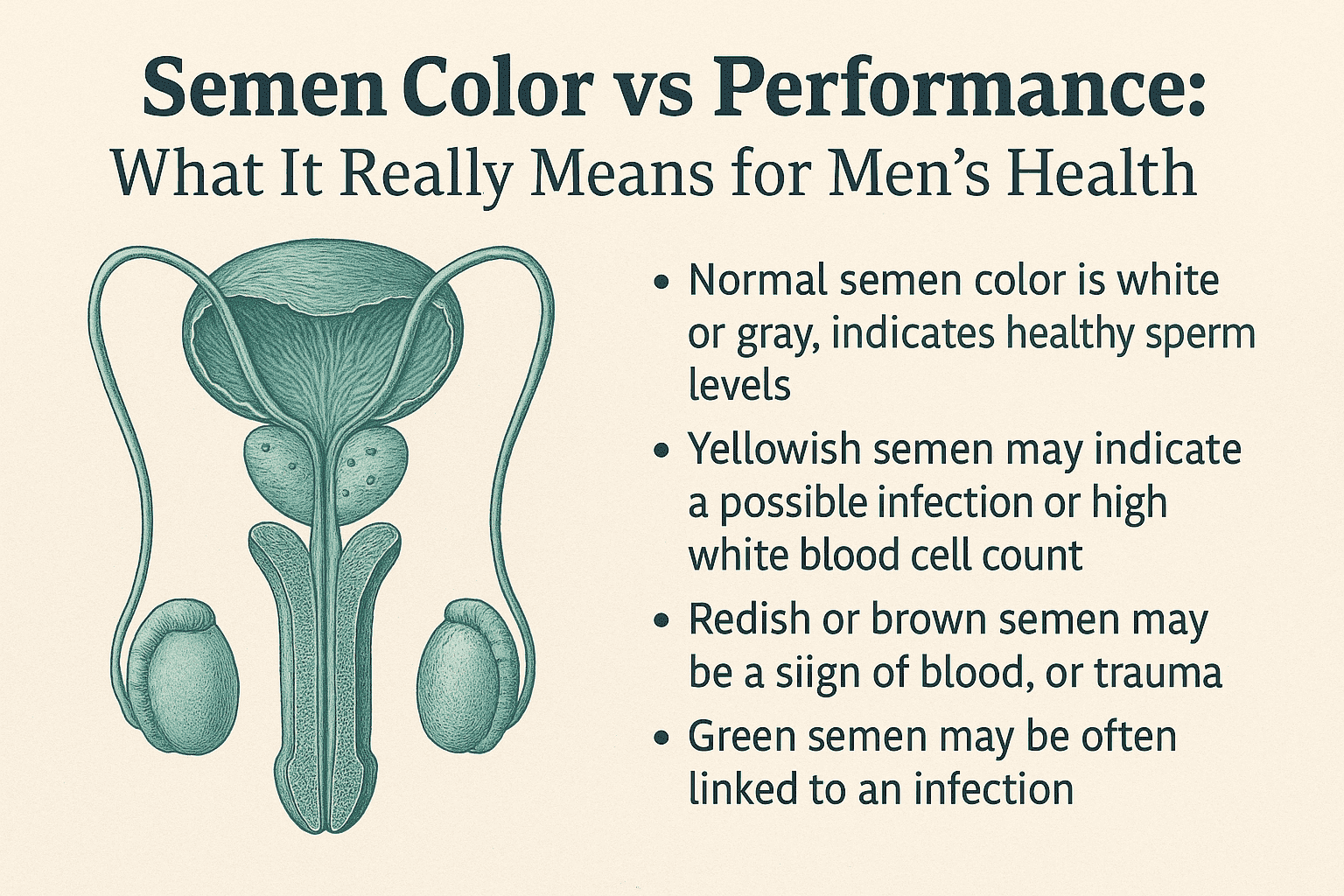
Many men become concerned when they notice changes in semen color. It is one of the most searched topics on Google and is commonly discussed on Reddit and Quora. Although semen color can provide clues about reproductive or prostate health, it does not directly measure sexual performance. However, the underlying conditions that cause color changes can influence stamina, erections, libido, and fertility.
This guide explains what different semen colors mean, how they relate to performance, when to seek help, and why consulting an experienced sexual health expert like Dr. Farooq Nasim Bhatti can provide clarity and proper care.
What Is the Normal Color of Healthy Semen?
Healthy semen is usually whitish or light gray. It appears cloudy and thick immediately after ejaculation, then becomes more liquid within 15–30 minutes. Its texture comes from proteins, enzymes, minerals, and sperm.
Minor variations in shade are normal and often linked to diet, hydration, or ejaculation frequency.
Does Semen Color Reflect Sexual Performance?
The color of semen does not directly reflect performance. Sexual performance depends on blood flow, hormone levels, psychological factors, and prostate function.
However, the conditions that change semen color can affect performance. Infections may cause pain or low libido. Hormonal imbalances may reduce stamina. Prostate inflammation can affect erections. Understanding the cause is more important than focusing on the color itself.
What Different Semen Colors Mean
Below is a simple breakdown of common semen color categories and their medical relevance.
White or Gray Semen
This is considered normal and healthy. It suggests adequate sperm production, balanced hormones, and normal prostate function. Typically, no action is needed unless other symptoms are present.
Yellow or Green Semen
Yellow or green semen indicates urine mixing, infection, or inflammation. Prostatitis, urinary tract infections, or sexually transmitted infections can cause this discoloration. Jaundice and leukocytospermia may also produce similar shades.
These conditions often cause burning during urination, pelvic discomfort, or pain with ejaculation. When these symptoms appear, sexual performance may decline due to discomfort or reduced libido.
Clear or Watery Semen
Clear or watery semen can occur when ejaculation happens frequently. It may also suggest low sperm count, certain nutritional deficiencies, or hormonal imbalance.
Performance is not always affected, but fertility may be reduced if this pattern becomes consistent. A semen analysis can help identify the cause.
Pink, Red, or Brown Semen
These colors indicate the presence of blood, a condition known as hematospermia. Fresh blood appears red or pink, while older blood appears brown or rust-colored.
Causes include infections, prostate inflammation, high blood pressure, injuries, or previous prostate procedures. However, not always dangerous, persistent blood in semen requires evaluation. Conditions affecting the prostate often influence stamina and erectile quality.
Black Semen
Black semen is rare. It is usually due to old blood that has oxidized. It may also relate to severe infection, heavy metal exposure, or spinal cord injury. Medical assessment is essential if this occurs.
Does Semen Color Predict Fertility?
Semen color does not reliably determine fertility. Fertility is influenced by sperm count, motility, morphology, and overall semen quality. Only a semen analysis can provide accurate fertility information.
However, certain color changes may indicate issues that influence fertility. Watery semen may signal a low sperm count, while yellow semen due to leukocytes may mean inflammation damaging sperm.
Lifestyle Factors That Affect Semen Color and Performance
Hydration, diet, stress levels, frequency of ejaculation, alcohol consumption, and sleep all influence semen appearance and sexual performance. Certain foods, particularly those high in sulfur, may slightly tint semen. Dehydration can thicken it. Stress and poor sleep affect hormones and libido.
Temporary changes are common. Persistent changes should be evaluated.
When Is a Color Change Concerning?
Medical attention is recommended when:
- Semen color remains abnormal for more than a week
- There is pain during ejaculation
- There is burning while urinating
- Semen has a foul odor
- Fever, chills, or swelling accompany the change
- Black, red, or brown semen reappears consistently
These symptoms often indicate treatable conditions such as infections or inflammation.
Myths vs Facts About Semen Color and Performance
Many men believe that thick semen means greater fertility or sexual power, while clear semen indicates weakness. These beliefs are inaccurate. Color and thickness fluctuate naturally. Only clinical evaluation can determine hormonal or reproductive health.
Another misconception is that red semen always means cancer. Most cases originate from benign inflammation or infections.
| Myth | Reality |
| Yellow semen = bad performance | Not always. Could be urine or diet. |
| Thick semen = better fertility | False. Very thick semen can harm sperm movement. |
| Clear semen = weak man | False. Often due to frequent ejaculation. |
| Red semen means cancer | Rarely true, but should be checked. |
| Color indicates testosterone | No, only tests can measure that. |
About Dr. Farooq Nasim Bhatti: Expert in Male Sexual & Reproductive Health
Dr. Farooq Nasim Bhatti is a well-known sexologist and specialist in male reproductive health. With extensive experience in treating conditions such as erectile dysfunction, premature ejaculation, infertility, prostatitis, and semen abnormalities, he provides patients with accurate diagnoses and effective treatment plans.
He combines modern medical knowledge with personalized care, ensuring that each patient understands the cause behind their symptoms.
Men who experience consistent changes in semen color, reduced performance, or discomfort during ejaculation often benefit from a consultation with Dr. Farooq Nasim Bhatti.
His approach focuses on identifying underlying issues rather than treating symptoms alone, helping patients restore confidence, performance, and overall sexual well-being.
FAQs About Semen Color and Performance
Is yellow semen always an infection?
No. It may be due to urine mixing or certain foods. Persistent yellow color requires evaluation.
Does watery semen weaken performance?
Not always. It may indicate frequent ejaculation or low sperm count rather than performance issues.
Can diet change semen color?
Yes. Foods like garlic, onions, and turmeric can cause slight yellowing.
Is red or brown semen dangerous?
Often, it is due to minor inflammation. Persistent or painful symptoms require professional examination.
Can stress affect semen color?
Indirectly. Stress affects hormones and overall sexual health, which may influence texture and quality.
Does ejaculation frequency affect color?
Yes. Frequent ejaculation may produce clearer semen. Infrequent ejaculation may produce thicker semen.
Conclusion
Semen color naturally varies, and most changes are temporary. While color alone does not indicate sexual performance, the underlying conditions behind the change can influence libido, erections, fertility, and overall sexual health. Understanding these signs helps men respond early and avoid complications.
If semen color changes persist or are accompanied by discomfort, consulting an experienced specialist such as Dr. Farooq Nasim Bhatti ensures proper diagnosis and treatment. Early assessment leads to better outcomes and improved confidence in sexual health.
References:
World Health Organization (WHO). (2021). WHO laboratory manual for the examination and processing of human semen (6th ed.). Geneva: WHO.
https://www.who.int/publications/i/item/9789240030787Mayo Clinic Staff. (2023). Discolored semen: What does it mean? Mayo Clinic.
https://www.mayoclinic.org/healthy-lifestyle/mens-health/expert-answers/discolored-semen/faq-20058363Mayo Clinic Staff. (2023). Blood in semen (hematospermia) — Causes. Mayo Clinic.
https://www.mayoclinic.org/symptoms/blood-in-semen/basics/causes/sym-20050603Suh, Y., Gandhi, J., Joshi, G., et al. (2017). Etiologic classification, evaluation, and management of hematospermia. Translational Andrology and Urology, 6(5), 959–972.
https://tau.amegroups.org/article/view/15603Akhter, W., Khan, F., & Chinegwundoh, F. (2013). Should every patient with hematospermia be investigated? A critical review. Central European Journal of Urology, 66(1), 79–82.
https://doi.org/10.5173/ceju.2013.01.art25Fuse, H., Komiya, A., & Nozaki, T. (2011). Hematospermia: etiology, diagnosis, and treatment. Reproductive Medicine and Biology, 10(3), 153–159.
https://doi.org/10.1007/s12522-011-0087-4Lee, G. (2015). Chronic prostatitis: A possible cause of hematospermia. World Journal of Men’s Health, 33(2), 103–108.
https://doi.org/10.5534/wjmh.2015.33.2.103Zargooshi, J., Nourizad, S., Vaziri, S., et al. (2014). Hemospermia: long-term outcome in 165 patients. International Journal of Impotence Research, 26(3), 83–86.
https://doi.org/10.1038/ijir.2013.40Khodamoradi, K., Khosravizadeh, Z., & Jalili, C. (2020). Laboratory and clinical management of leukocytospermia and hematospermia: A review. Research and Reports in Urology (Review article; full text available via PubMed Central).
https://pmc.ncbi.nlm.nih.gov/articles/PMC7290265/Henkel, R. (2024). Leukocytospermia and/or bacteriospermia: Impact on male infertility. Journal of Clinical Medicine, 13(10), 2841.
https://doi.org/10.3390/jcm13102841Anamthathmakula, P., Winfrey, V. P., & Yanagimachi, R. (2020). Mechanism of semen liquefaction and its potential for a novel non-hormonal contraceptive approach. Biology of Reproduction, 103(5), 1029–1044.
https://doi.org/10.1093/biolre/ioaa075Cleveland Clinic. (2023). Blood in semen (hematospermia): Causes & treatment.
https://my.clevelandclinic.org/health/symptoms/blood-in-semen-hematospermiaHealthline Editorial Team. (2023). Semen color chart: Gray, green, brown, texture changes & more. Healthline.
https://www.healthline.com/health/mens-health/semen-color-chart
Disclaimer
This information is for educational purposes and not the treatment. For treatment, you need to consult the doctor.

Dr. Farooq Nasim Bhatti (MBBS, FAACS – USA, Diplomate: American Board of Sexology, CST, HSC – Hong Kong, CART – Malaysia & China) is a qualified medical sexologist with 30+ years of experience. He has presented 21+ research papers internationally and treats sexual dysfunction through sex therapy, counseling, and pharmacotherapy to restore natural sexual function without temporary medication.

Regain Confidence with Our ED Solutions
Explore effective treatments for erectile dysfunction. Take charge of your intimacy today.