
Sexual problems after marriage are more common than many couples expect. A husband may struggle to get or maintain an erection, ejaculation may happen earlier than expected, penetration may be difficult, or one partner may feel pain, fear, or very little sexual desire.
For newly married couples in Pakistan, these problems can feel especially stressful because there may be strong expectations around the wedding night, pregnancy, and sexual performance. One difficult experience does not mean that either partner has a permanent sexual problem. What matters is whether the difficulty continues, causes distress, or makes intimacy increasingly difficult.
Is It Normal To Have Sexual Problems After Marriage?
Some difficulty during the first few sexual experiences can happen even when both partners are physically healthy. Marriage may be the first time a person has attempted intercourse, so excitement, nervousness, lack of experience, tiredness, and fear of disappointing a spouse can all affect sexual response.
A single episode of erection loss, early ejaculation, or difficulty with penetration should not immediately be interpreted as impotence or infertility. The concern becomes more important when the problem continues over repeated attempts or begins to affect confidence and the relationship.
Some couples also enter marriage with unrealistic expectations about what intercourse should look like. This can create pressure to perform rather than allowing both partners time to become comfortable with each other.
The Most Common Sexual Problems After Marriage
Sexual difficulties can involve the husband, wife, or both partners. In many cases, physical and psychological factors overlap, so understanding the actual problem is the first step toward appropriate treatment.
Performance Anxiety
Performance anxiety is one of the most common problems among newly married men. A man may become so focused on whether he will get an erection, satisfy his wife, or last long enough that anxiety itself interferes with sexual response.
This can create a cycle. One unsuccessful attempt causes worry, the worry increases before the next attempt, and the next sexual encounter becomes even more difficult. Men dealing with this pattern may benefit from understanding how psychogenic sexual dysfunction can affect otherwise healthy sexual function.
Erectile Dysfunction After Marriage
Some men can achieve an erection during masturbation or while waking in the morning but lose it when intercourse is attempted. Others may get an erection initially but lose firmness before penetration.
When this happens only in certain situations, anxiety can be an important factor. However, persistent erection problems can also be related to diabetes, blood pressure, circulation, hormones, medications, smoking, obesity, or other health conditions.
Repeated erection difficulty deserves proper assessment rather than immediately assuming the problem is psychological. Men with persistent symptoms can explore the possible causes and treatment options for erectile dysfunction.
Premature Ejaculation After Marriage
Another common concern is ejaculating before penetration or very soon afterward. This is particularly distressing for newly married men who may already be worried about sexual performance.
Early ejaculation during the first few encounters can happen because of excitement or nervousness. It becomes more concerning when ejaculation repeatedly occurs earlier than desired and the man feels little control over it.
Persistent symptoms may require behavioral, psychological, or medical treatment depending on the cause. The condition is different from erectile dysfunction, although both can occur together. More specific treatment information is available for premature ejaculation.
Difficulty Having Intercourse
Some couples are unable to achieve penetration even after repeated attempts. This is sometimes described as an unconsummated marriage.
Possible causes can include erection difficulty, ejaculation before penetration, severe performance anxiety, pain, fear, vaginismus, or limited understanding of how intercourse works. More than one factor may be present at the same time.
When intercourse remains impossible despite repeated attempts, blaming either partner is rarely helpful. A proper evaluation can identify whether the primary difficulty is male, female, psychological, physical, or a combination of factors. ManHealth also provides more detailed information about non-consummated marriage and the different reasons it may occur.
Pain During Intercourse
Pain during intercourse should not simply be accepted as something a woman must tolerate after marriage. Some initial discomfort can occur, but persistent or severe pain requires attention.
Pain may be associated with inadequate arousal, vaginal dryness, muscular tension, infection, inflammation, or another gynecological condition. Fear of pain can also cause the pelvic muscles to tighten, which makes penetration even more difficult.
If pain is severe, recurrent, or accompanied by bleeding, discharge, irritation, or other symptoms, appropriate gynecological assessment may be needed.
Vaginismus
Vaginismus occurs when the muscles around the vaginal opening tighten involuntarily during attempted penetration. A woman may genuinely want intercourse but still find penetration extremely painful or impossible.
This reaction is not simply a matter of refusing to relax. Fear, anxiety, previous painful experiences, or other psychological and physical factors may contribute.
Repeatedly forcing intercourse can increase fear and make the problem worse. Professional assessment and appropriate therapy are often more helpful than continuing painful attempts.
Low Sexual Desire
Low sexual desire can affect either husband or wife. Stress, exhaustion, depression, anxiety, medication, hormonal changes, relationship tension, pain during intercourse, and fear of pregnancy can all reduce interest in intimacy.
A difference in desire between partners does not automatically mean there is a lack of attraction or love. However, if one partner consistently avoids intimacy or experiences a major change in sexual desire, the underlying cause should be considered.
Why Sexual Problems Can Start Soon After Marriage In Pakistan
Many Pakistani couples receive little reliable sexual education before marriage. As a result, they may enter marriage with unrealistic expectations or information based on friends, social media, pornography, or unverified advice.
Pressure Around The Wedding Night
There can be an expectation that intercourse must happen successfully on the first night. In reality, both partners may be exhausted, anxious, uncomfortable, or unfamiliar with each other physically.
Treating the wedding night like a performance test can make sexual problems more likely.
Pressure To Conceive Quickly
Some couples face pressure to become pregnant soon after marriage. This can turn intimacy into an obligation rather than a shared experience.
When every sexual encounter feels connected to conception, men may develop performance anxiety and women may feel additional emotional pressure.
Lack Of Privacy
Living with extended family can make privacy difficult for newly married couples. Fear of being heard, interrupted, or judged can interfere with arousal and relaxation.
These environmental pressures are often overlooked even though they can significantly affect sexual confidence.
Pornography And Unrealistic Expectations
Pornography can create unrealistic ideas about erection duration, intercourse length, orgasm, bodies, and sexual performance.
Real intimacy does not follow a scripted pattern. Comparing a spouse or personal performance with pornography can increase anxiety, dissatisfaction, and pressure for both partners.
How To Know If The Problem Needs Treatment
Not every difficult sexual experience requires medical treatment. Occasional erection loss, early ejaculation, reduced desire, or difficulty with penetration can happen while a couple is still becoming comfortable together.
Evaluation becomes more important when the problem:
- Happens repeatedly
- Prevents intercourse
- Causes significant pain
- Creates fear or avoidance of intimacy
- Affects confidence or the relationship
- Is accompanied by other physical symptoms
The longer persistent sexual difficulties are ignored, the more anxiety can build around future encounters.
Can Medical Conditions Cause Sexual Problems After Marriage?
Marriage may simply be the first time an underlying health problem becomes noticeable. Sexual function depends on the brain, nerves, hormones, blood vessels, and emotional wellbeing.
Diabetes can affect nerves and circulation. High blood pressure and cardiovascular disease can reduce blood flow. Hormonal problems may affect desire and erections, while depression, anxiety, and some medications can interfere with sexual response.
This is why persistent sexual difficulties should not automatically be blamed on nervousness, masturbation, or “weakness.”
What Should Newly Married Couples Do First?
The first step is to reduce pressure. Sexual intimacy should not become a test that either partner must pass.
Couples can benefit from giving themselves adequate privacy and time, communicating openly about discomfort or anxiety, avoiding forced penetration, and not judging the relationship based on one or two difficult encounters.
Men should also avoid starting random delay sprays, sexual enhancement tablets, herbal products, or unverified “mardana taqat” medicines without knowing what is causing the problem. Self medication can mask symptoms without addressing the actual issue.
What If Intercourse Still Has Not Happened?
If penetration has remained impossible after repeated attempts, it is better to seek assessment than continue guessing.
The husband may be experiencing erection loss, very early ejaculation, or severe anxiety. The wife may be experiencing pain, vaginismus, or fear. Sometimes both partners contribute to the difficulty without realizing it.
A detailed evaluation can identify where the problem is occurring and which type of treatment is appropriate.
How Are Sexual Problems After Marriage Diagnosed?
A consultation usually begins with a medical and sexual history. The doctor may ask when the problem started, whether it happens every time, whether erections occur normally at other times, how ejaculation occurs, and whether pain or fear is present.
Medical conditions, medications, stress, relationship factors, and lifestyle may also be discussed. Blood tests or other investigations are not necessary for every patient, but they may be recommended when there is a reason to suspect an underlying physical condition.
Treatment Depends On The Actual Problem
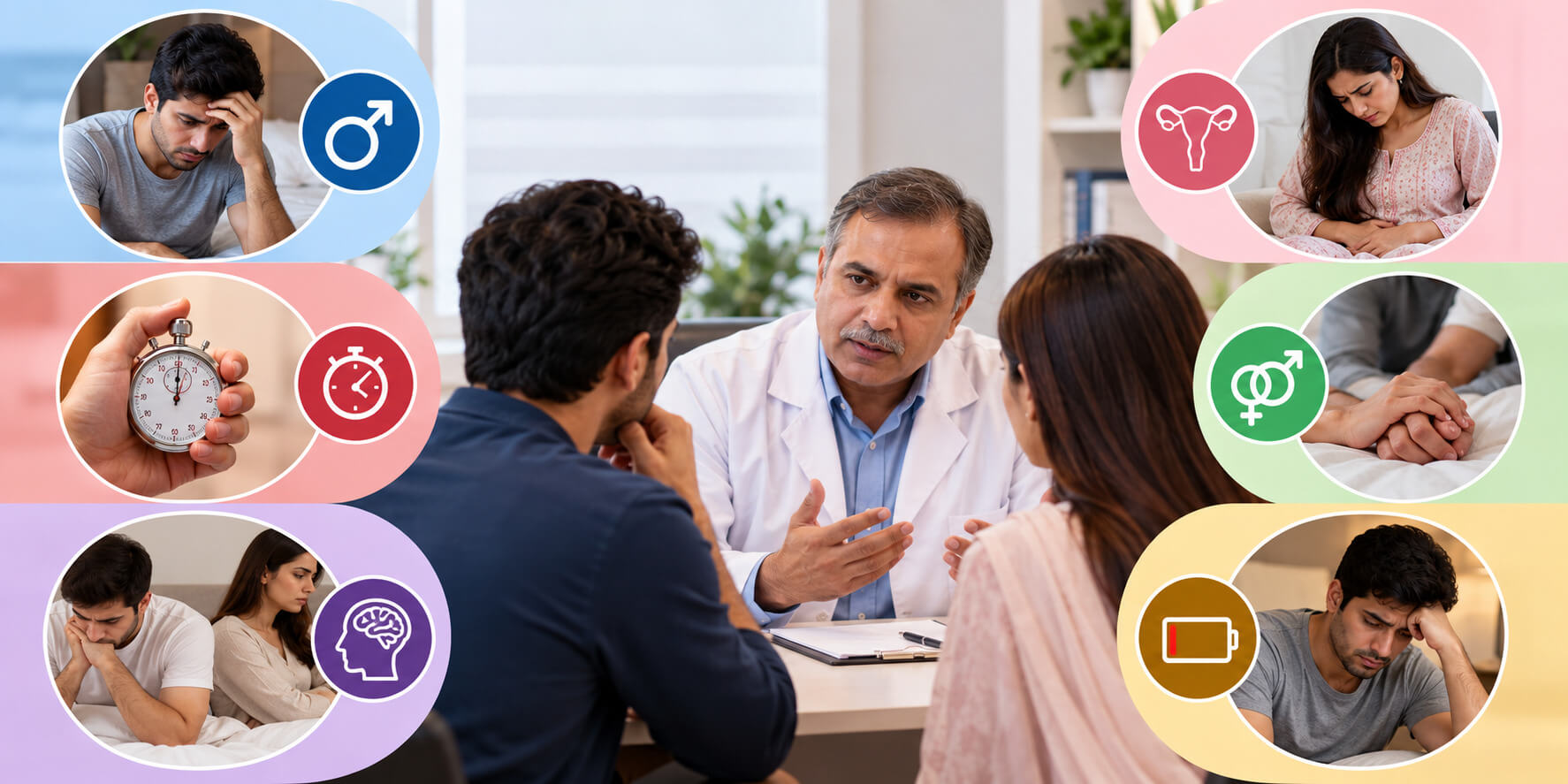
There is no single medicine that treats every sexual problem after marriage. Treatment should be based on the specific cause.
Erectile dysfunction may require treatment of medical conditions, lifestyle changes, anxiety management, or medication. Premature ejaculation may improve with behavioral methods, counselling, or appropriate medical treatment.
Performance anxiety may respond well to education and psychological support, while vaginismus or painful intercourse may require gynecological, pelvic floor, or psychosexual assessment depending on the cause.
For broader concerns involving sexual function, couples can also review how sexual dysfunction in Pakistan may be assessed and treated based on the underlying problem.
Can Sexual Problems After Marriage Affect Fertility?
Sexual dysfunction and infertility are not the same condition.
A couple may be fertile but unable to conceive because intercourse is not taking place successfully. Severe erectile dysfunction, ejaculation before penetration, vaginismus, or an unconsummated marriage can make natural conception difficult even when sperm and reproductive health are otherwise normal.
If intercourse is occurring normally but pregnancy has not occurred after an appropriate period of trying, fertility assessment may then be considered separately.
When Should You Consult A Sexologist?
Medical advice is worth considering when erection problems, early ejaculation, severe performance anxiety, low sexual desire, or difficulty completing intercourse continue over repeated attempts.
Couples should also seek appropriate help when sexual problems are causing arguments, avoidance, distress, or fear around intimacy.
For female symptoms such as persistent pain, unusual bleeding, recurrent discharge, or suspected gynecological problems, evaluation by an appropriate women’s health specialist may also be necessary.
Confidential Help For Sexual Problems After Marriage
Dr. Farooq Nasim Bhatti provides assessment and treatment for male sexual health concerns including erectile dysfunction, premature ejaculation, performance anxiety, sexual dysfunction, and difficulty consummating marriage. Patients looking for confidential medical guidance can consult through ManHealth, with consultation options available for men seeking care through the sexologist in Lahore service and other ManHealth locations in Pakistan. The focus is on identifying the actual cause of the problem rather than relying on assumptions or unverified sexual enhancement treatments.
Sexual Problems After Marriage Are Often Treatable
Sexual difficulty after marriage does not automatically mean that something is permanently wrong with the husband, wife, or relationship. Many problems improve once anxiety is reduced and the actual cause is identified.
One difficult experience should not create panic, but repeated erection problems, premature ejaculation, pain, inability to have intercourse, or persistent low desire should not be ignored either. Proper assessment can help distinguish temporary adjustment difficulties from a condition that needs treatment and give couples a clearer way forward.
Frequently Asked Questions
Is It Normal To Have Sexual Problems Just After Marriage?
Some difficulty can happen during the first few sexual encounters because of nervousness, tiredness, excitement, or lack of experience. Persistent problems that continue over repeated attempts should be assessed.
Why Can A Man Get An Erection Normally But Lose It With His Wife?
Performance anxiety is one possible explanation, particularly when erections are normal at other times. However, repeated erection loss can also have physical causes, so persistent symptoms should not automatically be assumed to be psychological.
Does Failing To Perform On The First Night Mean Impotence?
No. One unsuccessful attempt does not diagnose erectile dysfunction. Stress, fatigue, anxiety, privacy concerns, and unfamiliarity with intercourse can all affect sexual performance.
Why Do I Ejaculate Before Penetration After Marriage?
High excitement and performance anxiety can cause very early ejaculation, particularly during the first sexual experiences. If it happens repeatedly and causes distress, premature ejaculation may need assessment.
Can Performance Anxiety Cause Erectile Dysfunction?
Yes. Anxiety can interfere with arousal and make it difficult to get or maintain an erection even when there is no major physical problem.
Why Is Intercourse Painful For My Wife?
Pain may be related to insufficient arousal, vaginal dryness, muscular tightening, fear, infection, or another gynecological condition. Persistent pain should be medically evaluated rather than ignored.
What If Penetration Is Not Possible After Marriage?
Difficulty with penetration may involve erectile dysfunction, premature ejaculation, vaginismus, pain, anxiety, or more than one factor. Repeated unsuccessful attempts are a reason to seek professional assessment.
Can Sexual Problems After Marriage Cause Infertility?
Sexual problems do not automatically mean infertility. However, if intercourse cannot take place successfully, conception may become difficult even when both partners are otherwise fertile.
Should Both Husband And Wife Be Evaluated?
In some situations, yes. Sexual problems after marriage may involve either partner or a combination of factors, so assessment should be based on the symptoms rather than assuming one person is responsible.