
Many men believe that erectile dysfunction always means low testosterone. This is a common misunderstanding. Testosterone is important for male sexual health, but it is not the only factor that controls erections.
Testosterone mainly affects sex drive, energy, mood, and sexual interest. Erections depend more on blood flow, nerve signals, heart health, diabetes control, stress, sleep, and medication use. Low testosterone can make erectile dysfunction worse in some men, but it rarely causes ED by itself.
Understanding this difference is important. If a man treats every erection problem as a testosterone problem, he may miss the real cause. The right treatment starts with proper evaluation, not guesswork.
The Quick Answer: Low Testosterone Can Contribute To ED
Low testosterone can contribute to erectile dysfunction, especially when a man also has low sexual desire, tiredness, low mood, or fewer morning erections. But low testosterone is usually not the only reason a man cannot get or maintain an erection.
A man can have normal testosterone and still have ED. This often happens when blood flow is poor, diabetes is not controlled, blood pressure is high, stress is severe, or medicines are affecting sexual function.
A man can also have low testosterone but still get erections. This is why testosterone testing should be done carefully. Symptoms and blood test results both matter.
How Erections Actually Work
An erection starts in the brain. When a man feels sexual desire or stimulation, the brain sends signals through the nerves to the penis. These signals help blood vessels relax so more blood can enter the erectile tissue.
When enough blood enters the penis and stays there, the erection becomes firm. If blood flow is weak, nerves are damaged, or blood does not stay trapped properly, erection quality can suffer.
This is why ED is often linked with vascular health. Conditions like diabetes, high blood pressure, high cholesterol, smoking, obesity, and heart disease can affect the blood vessels that support erections.
What Testosterone Does For Male Sexual Health
Testosterone plays a major role in libido. Libido means sexual desire or interest in sex. When testosterone is low, a man may not feel the same sexual motivation as before.
Testosterone also supports mood, energy, muscle mass, bone strength, and general male health. Some men with low testosterone feel tired, irritable, weak, or less confident.
Testosterone may also support some natural erection pathways in the body, but it does not work like Viagra or sildenafil. Viagra-type medicines improve blood flow response. Testosterone mainly improves hormone-related symptoms when testosterone is truly low.
Low Testosterone Symptoms That May Appear With ED
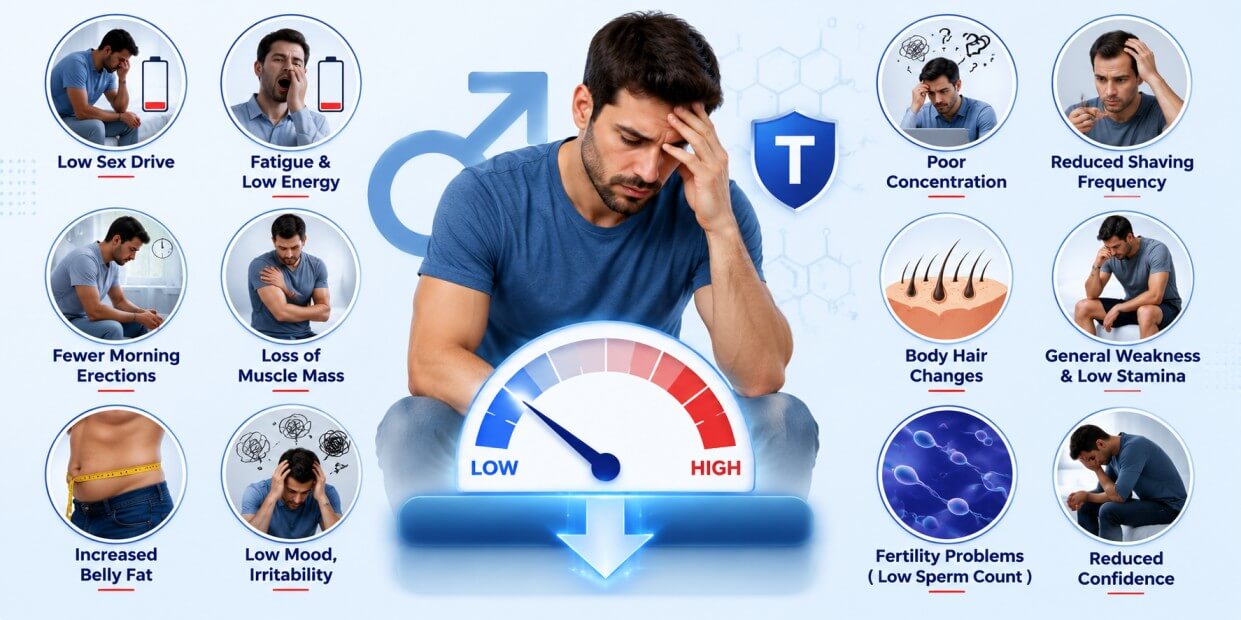
Low testosterone is more likely to be involved when erectile dysfunction comes with other symptoms. ED alone is not enough to confirm low testosterone.
Common symptoms may include:
- Low sex drive
- Fatigue and low energy
- Fewer morning erections
- Low mood or irritability
- Loss of muscle mass
- Increased belly fat
- Poor concentration
- Fertility problems in some men
If a man has ED but his sexual desire is normal, testosterone may not be the main issue. If he has ED plus low libido, tiredness, and reduced morning erections, hormone testing may be useful.
Why Men With Normal Testosterone Can Still Have ED
Many men with normal testosterone levels still experience erectile dysfunction. This can feel confusing, but it is very common. Erections need healthy blood vessels and strong nerve communication.
Diabetes is one of the most common causes of ED because it can damage blood vessels and nerves. High blood pressure and high cholesterol can also reduce blood flow to the penis.
Stress and anxiety can also affect erections. Some men get an erection alone but lose it during intercourse because they feel pressure to perform. Relationship tension, fear of failure, and depression can all make ED worse.
Certain medicines can also affect erections. These may include some blood pressure medicines, antidepressants, sleep medicines, and other drugs. A doctor can review the medication history and decide what may be contributing.
Can High Testosterone Cause Erectile Dysfunction?
Naturally high testosterone is not usually a direct cause of erectile dysfunction. However, problems can happen when men use testosterone injections, gym steroids, or hormone boosters without medical supervision.
Unmonitored testosterone use can disturb the body’s natural hormone balance. It can also reduce sperm production, shrink the testicles, increase acne, worsen sleep apnea, and affect mood.
In some men, excess testosterone may convert into estrogen. If hormones are not monitored properly, sexual function can become worse instead of better. This is why testosterone should never be used casually for ED.
Which Is Better For ED: Viagra Or Testosterone?
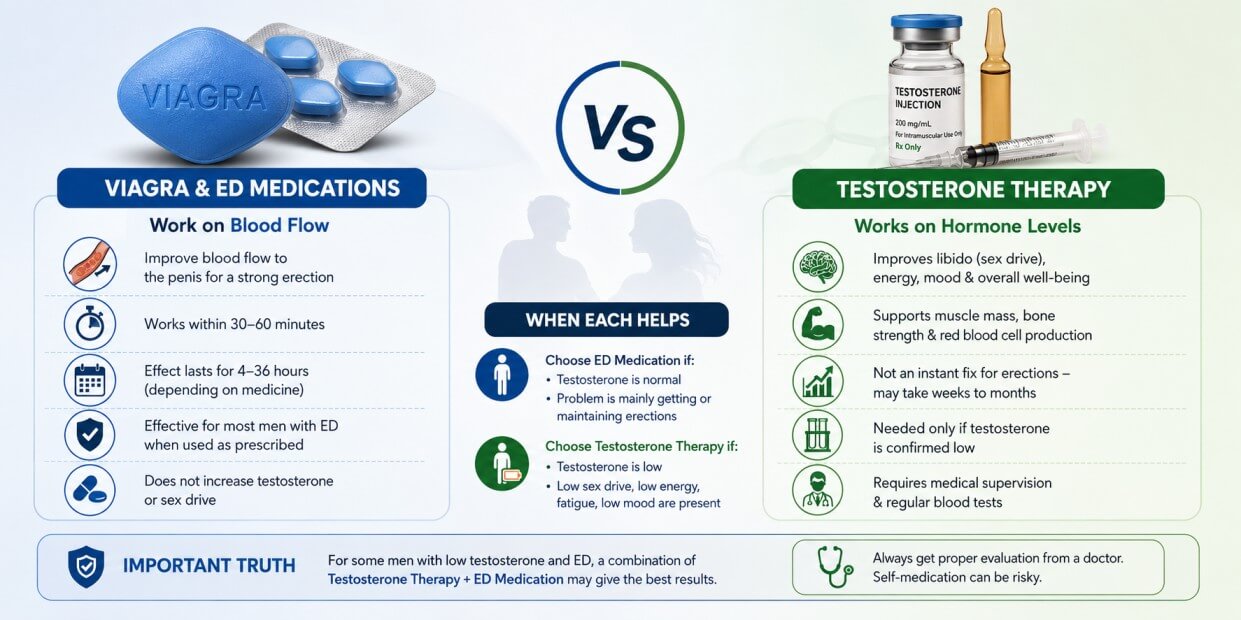
Viagra, sildenafil, tadalafil, and similar medicines help improve the blood flow response needed for erections. These medicines are commonly used for erectile dysfunction when they are safe for the patient.
Testosterone treatment is different. It is only considered when a man has confirmed low testosterone along with symptoms. If testosterone levels are normal, testosterone therapy usually will not fix ED.
For some men with both low testosterone and ED, a doctor may use a combined approach. Testosterone may improve libido, while ED medicine may help erection firmness. This decision should always be made after testing and medical evaluation.
Can Testosterone Make ED Medication Work Better?
Some men with low testosterone do not respond well to ED medicines. In selected cases, correcting low testosterone may improve the response to medicines like sildenafil or tadalafil.
This does not mean every man with ED needs testosterone. It means men with confirmed low testosterone may need hormone correction as part of a wider treatment plan.
The key is diagnosis. If the real cause is diabetes, blood pressure, smoking, anxiety, or medication side effects, testosterone alone will not solve the problem.
Testosterone Dose In Erectile Dysfunction
There is no single testosterone dose for erectile dysfunction. The right dose depends on blood test results, symptoms, age, medical history, fertility goals, and follow-up monitoring.
Self-medication is risky. Testosterone can reduce sperm production and may affect fertility. This is especially important for men who still want children.
A doctor may monitor testosterone levels, blood count, prostate health when needed, cholesterol, liver health, and symptoms during treatment. Without monitoring, testosterone use can create new health problems.
How To Test Testosterone Correctly
Testosterone should usually be checked in the morning, when levels are higher. A single random test may not be enough. If the result is low, the doctor may repeat the test to confirm it.
In some cases, free testosterone may also be checked. Other tests may include LH, FSH, prolactin, thyroid function, blood sugar, cholesterol, and vitamin levels depending on symptoms.
A proper diagnosis is not based on one number only. A man’s symptoms, physical health, sexual history, medicines, and lab results should all be reviewed together.
How To Increase Testosterone Naturally For Better Sexual Health
Some lifestyle changes can help improve testosterone and erectile function, especially when the problem is linked with weight, poor sleep, stress, or metabolic health.
Weight loss can help overweight men improve testosterone levels and erection quality. Regular exercise, especially resistance training, can support hormone health and blood flow.
Sleep is also important. Poor sleep and sleep apnea can lower testosterone and worsen ED. Men who snore heavily, wake up tired, or feel sleepy during the day should discuss sleep issues with a doctor.
A balanced diet also matters. Protein, healthy fats, vegetables, fruits, and enough minerals support general health. Smoking, heavy alcohol use, and inactive lifestyle can make ED worse over time.
Does Ejaculating Every Day Lower Testosterone?
Daily ejaculation does not permanently lower testosterone. Some men worry that frequent ejaculation causes weakness, low testosterone, or ED, but ejaculation frequency alone is usually not the cause.
Short-term hormone changes can happen in the body, but they do not mean a man has testosterone deficiency. If a man has ED, the cause is more likely related to blood flow, anxiety, health conditions, sleep, or habits.
However, if frequent masturbation is linked with compulsive porn use, loss of interest in a partner, or performance anxiety, the issue may be behavioral and psychological rather than hormonal.
Common Questions Men Ask Online
Many men on online forums ask why they have ED when their testosterone is normal. This is common because erection quality depends on more than hormones. Blood flow, nerves, stress, and relationship confidence all matter.
Some men say testosterone improved their sex drive but did not fully fix erections. This can happen because libido and erection firmness are not the same thing. A man may want sex more but still need treatment for blood flow or anxiety.
Others report that erections became worse after starting testosterone or steroids. In such cases, hormone imbalance, wrong dose, poor monitoring, fertility suppression, or an untreated health problem may be involved.
Online discussions can be helpful for emotional support, but they cannot replace medical evaluation. ED is personal, and the cause can be different for every man.
When To See A Doctor For ED And Testosterone Concerns
A man should see a doctor if Erectile Dysfunction lasts for more than three months, happens often, or causes stress in married life. ED can sometimes be an early warning sign of diabetes, high blood pressure, or heart disease.
Medical advice is also important if ED comes with low libido, fatigue, infertility concerns, loss of morning erections, depression, or anxiety. Men who started testosterone or steroids and then developed ED should also get checked.
If there is pain, penile curvature, injury, or urinary symptoms, medical care should not be delayed. Early diagnosis often makes treatment easier and more effective.
How Nasim Fertility Center Helps Men With ED And Hormone Concerns
Nasim Fertility Center provides confidential consultation for erectile dysfunction, low libido, Premature Ejaculation, male infertility, and hormone-related sexual health concerns. Dr. Farooq Nasim Bhatti evaluates each patient through proper history, symptoms, and relevant testing instead of treating every ED case as the same problem. Patients can consult at Lahore, Islamabad, and Faisalabad clinics, with privacy-focused care and online consultation options where appropriate.
Conclusion
Testosterone matters, but erectile dysfunction is not always a testosterone problem. Low testosterone can reduce sex drive, energy, and arousal, and it may worsen erections in some men. Still, most erection problems involve blood flow, nerves, diabetes, blood pressure, stress, medicines, or lifestyle factors.
The best approach is proper testing and diagnosis. When the real cause is clear, treatment becomes safer and more effective.
Frequently Asked Questions
Does Testosterone Have Anything To Do With Erectile Dysfunction?
Yes, testosterone can affect erectile function indirectly. It mainly supports libido, arousal, mood, and energy. Erections depend more on blood flow and nerve signals.
Can Low Testosterone Cause Erectile Dysfunction?
Low testosterone can contribute to ED, especially when sex drive is also low. But it rarely causes ED by itself. Other health factors are often involved.
Can You Have ED With Normal Testosterone Levels?
Yes. Many men with normal testosterone have ED because of diabetes, blood pressure, cholesterol, smoking, stress, anxiety, medicines, or relationship issues.
Which Is Better For ED, Viagra Or Testosterone?
Viagra-type medicines help blood flow. Testosterone is only used when low testosterone is confirmed with symptoms. They treat different problems.
Can Taking Testosterone Cause Erectile Dysfunction?
Unmonitored testosterone or steroid use can disturb hormone balance and fertility. If ED starts after testosterone use, a doctor should review the case.
How Long Does Viagra Increase Testosterone?
Viagra does not meaningfully increase testosterone. It helps improve erection response for a limited time by supporting blood flow.
What Testosterone Level Causes ED?
There is no single testosterone number that explains ED for every man. Symptoms, repeated morning blood tests, and overall health all matter.
Should I Take Testosterone For ED?
Only take testosterone if a doctor confirms low testosterone and decides it is safe for you. It is not a general ED treatment and can affect fertility.