
Many men think of erectile dysfunction as a problem that only affects intimacy. They focus on performance, timing, confidence, or relationship stress. While those concerns are real, erectile dysfunction can sometimes point to something bigger happening inside the body.
In some cases, erectile dysfunction [مردانہ کمزوری] may be one of the earliest signs that blood flow is not as healthy as it should be. Because an erection depends heavily on proper circulation, changes in erectile function can sometimes reflect problems that also affect the heart and blood vessels. That does not mean every man with ED has heart disease. It does mean the symptom should not be ignored.
At Nasim Fertility Center, many patients come in asking for help with erections, performance, and confidence. During evaluation, it is often important to look beyond the immediate symptom and understand whether there may be underlying vascular, hormonal, psychological, or lifestyle-related causes. In some men, ED becomes an important clue that their overall health needs attention too.
Why Erectile Dysfunction And Heart Health Are Connected
An erection is not just a sexual event. It is also a circulation event. When a man becomes sexually aroused, blood vessels relax and allow more blood to flow into the penis. If blood flow is reduced, restricted, or inconsistent, getting or maintaining an erection can become difficult.
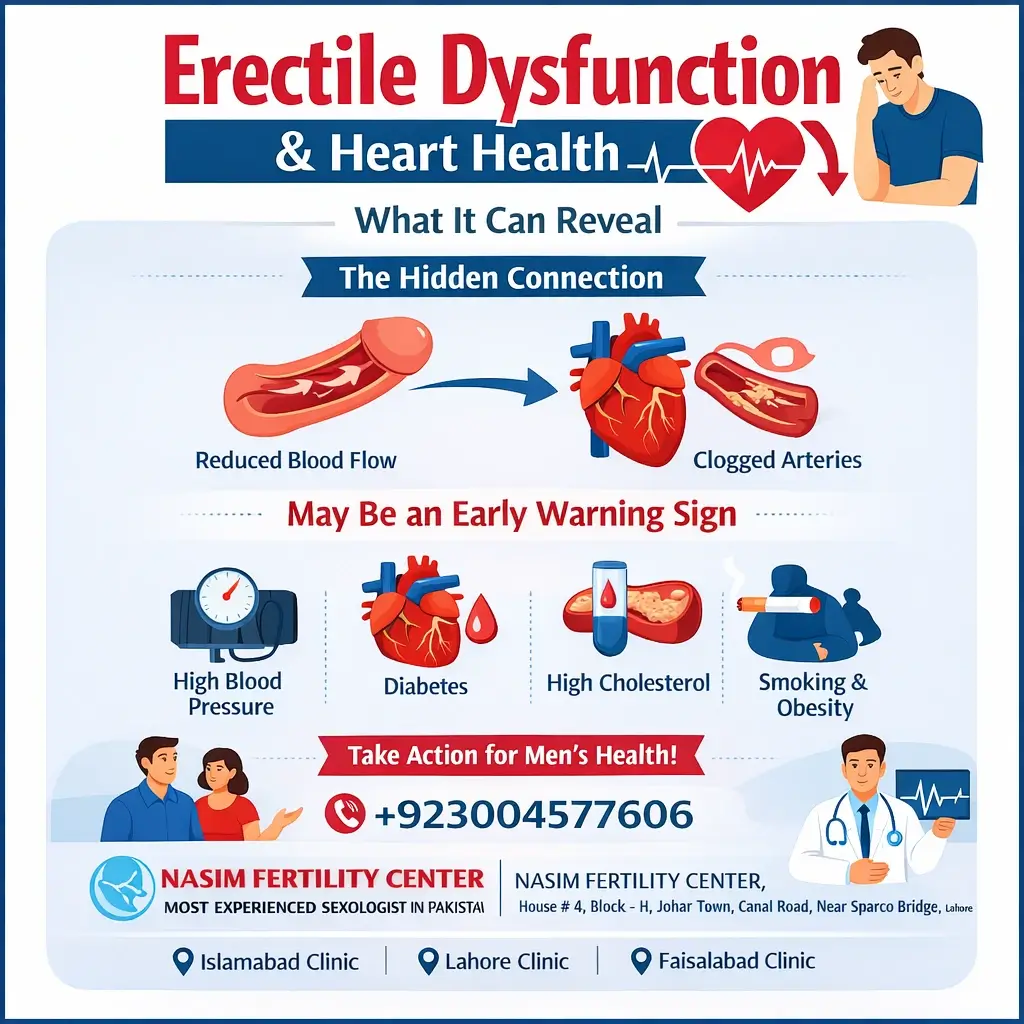
This is one of the main reasons erectile dysfunction and heart health are connected. The same vascular problems that can reduce blood flow to the heart may also reduce blood flow to the penis. In fact, the blood vessels involved in erections are smaller, which means problems may show up there earlier.
A man may not yet have chest pain or other obvious heart symptoms, but he may begin noticing weaker erections, difficulty maintaining firmness, or less reliable sexual performance. In that sense, erectile dysfunction can sometimes act as an early warning sign.
Can Erectile Dysfunction Be An Early Warning Sign Of Heart Disease?
Yes, it can be.
For some men, ED is one of the first noticeable signs of underlying blood vessel disease. If arteries are becoming narrowed or less flexible, blood flow can be affected throughout the body. Since erections depend on healthy circulation, problems may appear there before a heart problem is diagnosed.
This does not mean ED always signals heart disease. Many men develop erection problems because of stress, anxiety, poor sleep, medication side effects, low testosterone, relationship difficulties, or other non-cardiac causes. Still, when ED is persistent, especially in men with other risk factors, it is wise to consider the possibility that heart and vascular health should also be checked.
Ignoring ED as “just a bedroom issue” may cause men to miss an opportunity for earlier health evaluation.
What ED May Reveal About Your Blood Vessels
When erectile dysfunction has a vascular cause, it may reflect early changes in the blood vessels. These changes can include reduced flexibility, poor circulation, or plaque buildup that limits healthy blood flow.
Healthy blood vessels expand and respond properly when the body needs more circulation. If that response becomes weaker, erections may become less dependable. A man may notice that erections are softer than before, do not last as long, or require more stimulation to achieve.
This is why ED is often linked with broader cardiovascular concerns. It may be telling you that the body’s blood flow system is under strain. In some men, that strain is still mild. In others, it may be more advanced. Either way, the symptom deserves attention.
Common Heart-Related Risk Factors Seen With ED
Several health conditions can increase the risk of both erectile dysfunction and heart disease.
High blood pressure is one of the most common. Over time, it can damage blood vessels and reduce their ability to deliver steady blood flow. Cholesterol problems can also play a major role, especially when plaque starts to narrow arteries.
Diabetes is another major factor. It can damage both blood vessels and nerves, which makes erections more difficult and also increases cardiovascular risk. Smoking adds to the problem by harming circulation and reducing blood vessel function. Obesity, poor diet, lack of exercise, and long-term inactivity can also contribute to both ED and heart-related problems.
When these risk factors are present together, the chances of ED being linked to vascular health become stronger. That is why a good assessment should look at the full picture instead of treating erectile dysfunction in isolation.
Does ED Always Mean There Is A Heart Problem?
No, not always.
Erectile dysfunction is a symptom with many possible causes. In some men, the main issue is psychological. Performance anxiety, stress, depression, or relationship tension can strongly affect erections. In others, the cause may be hormonal, neurological, or medication-related.
Low testosterone can affect sexual desire and erectile quality. Certain medicines for blood pressure, mood disorders, or other conditions may contribute. Sleep problems, especially poor sleep quality over a long time, may also affect sexual performance.
So while ED can be a warning sign of heart health concerns, it should not automatically be taken as proof of heart disease. The key is proper evaluation. Instead of assuming the cause, men should understand that persistent ED is worth taking seriously because it can reflect a range of health issues, including cardiovascular ones.
Why ED In Younger Or Middle-Aged Men Can Matter
As men age, erectile changes become more common. But when ED shows up earlier than expected, especially in younger or middle-aged men, it may deserve even closer attention.
A younger man may assume stress is the only cause. Sometimes that is true. But if erections have become consistently weaker or less reliable without a clear explanation, it can be important to look at blood pressure, blood sugar, cholesterol, weight, and lifestyle factors.
Because many younger men do not expect a heart-related problem, ED may be the first clue that something needs to be checked. That does not mean the situation is severe. It means early evaluation can be useful before more obvious symptoms appear later.
Signs That Make A Heart Check More Important
Certain situations make it more important to think about heart health when ED is present.
If a man has erectile dysfunction along with high blood pressure, diabetes, cholesterol issues, smoking history, obesity, or a strong family history of heart disease, the connection becomes more relevant. The same is true if erections have changed suddenly or become worse over time.
Fatigue with exertion, shortness of breath, or reduced stamina may also be important clues. A man may not connect those symptoms to erectile problems, but they can sometimes be part of the same underlying picture.
Even when there are no other clear symptoms, persistent ED should still be discussed with a qualified doctor.
What Doctors May Evaluate When ED Raises Concern
When erectile dysfunction may be linked to overall health, doctors often look beyond the symptom itself.
A proper evaluation may include blood pressure, blood sugar, cholesterol levels, weight, medication history, sleep habits, and general cardiovascular risk. In some cases, hormone testing may also be appropriate, especially if low testosterone or other endocrine issues are suspected.
The purpose is not only to improve erections. It is to understand whether ED is revealing something bigger about circulation, metabolism, stress, or heart risk. Treating the symptom without looking at the cause can leave a larger health problem undiscovered.
Can Improving Heart Health Help Erectile Dysfunction?
In many men, yes.
Because erections depend on healthy blood flow, improving cardiovascular health may also improve erectile function. Better blood pressure control, improved cholesterol levels, healthier blood sugar, regular physical activity, weight management, and stopping smoking can all support circulation.
These changes are not overnight cures, and results vary from person to person. But when the body’s blood vessels function better, erections often benefit too. That is why ED treatment should sometimes include broader lifestyle improvement, not just a short-term solution.
Good sleep, lower stress, and better emotional health can also make a difference. Sexual health often improves when the body as a whole is functioning better.
What Men Commonly Ask Online
Many men worry privately about whether erection problems mean something serious. Online discussions often show the same repeated questions. Men ask whether ED can happen before heart symptoms. They ask whether high cholesterol or blood pressure could be causing weaker erections. Younger men often wonder if they should be worried even when they feel otherwise healthy.
These concerns are understandable. The challenge is that online advice can be confusing, extreme, or incomplete. Some men become overly frightened, while others dismiss the issue entirely.
The better approach is balanced and medical. ED does not always mean heart disease, but it can be an important signal. Instead of guessing, men should seek proper assessment and clear guidance.
How Nasim Fertility Center Helps
Nasim Fertility Center provides confidential evaluation and treatment for Erectile Dysfunction [مردانہ کمزوری], premature ejaculation [سُرعت انزال], and related sexual health concerns. Under the care of Dr. Farooq Nasim Bhatti, patients receive a professional assessment that looks at possible physical, emotional, hormonal, and lifestyle-related causes of ED. The goal is not just temporary relief, but a clearer understanding of what the symptom may be telling you about your sexual health and general well-being.
When To See A Sexologist Or Doctor
If erectile dysfunction happens occasionally, it may not always signal a major problem. But when it becomes persistent, affects confidence, disrupts married life, or continues for weeks or months, it should be evaluated.
This is especially important when ED appears alongside high blood pressure, diabetes, weight gain, smoking, fatigue, or other possible cardiovascular risk factors. Early attention may help protect not only sexual function, but overall health as well.
A qualified sexologist can help identify whether the problem appears more psychological, hormonal, vascular, or mixed. If needed, broader medical evaluation can also be recommended.
Final Thoughts
Erectile dysfunction can sometimes tell you more than you expect. For some men, it is mainly a sexual health issue. For others, it may be one of the earliest signs that blood flow and cardiovascular health need attention.
The important message is not to panic, and not to ignore it. ED does not always mean heart disease, but persistent erection problems deserve proper medical evaluation. In many cases, early action can improve both intimacy and long-term health.
If you are experiencing erectile dysfunction [مردانہ کمزوری], getting the right guidance can make a major difference. Understanding the cause is the first step toward effective treatment and better health.
FAQs
Can erectile dysfunction be the first sign of heart disease?
Yes, in some men it can be an early warning sign, especially when blood vessel problems are affecting circulation before other heart symptoms appear.
Does ED mean blocked arteries?
Not always. ED has many possible causes, but in some cases it may be related to narrowed or less healthy blood vessels.
Can high blood pressure cause erectile dysfunction?
Yes. High blood pressure can damage blood vessels over time and reduce healthy blood flow needed for erections.
Can high cholesterol affect erections?
Yes. High cholesterol can contribute to plaque buildup in arteries, which may reduce circulation and affect erectile function.
Should I get my heart checked if I have ED?
If ED is persistent, especially with risk factors like diabetes, smoking, obesity, high blood pressure, or family history of heart disease, it is sensible to discuss broader health screening with a doctor.
Can improving heart health improve erectile dysfunction?
In many men, improving cardiovascular health through exercise, weight control, smoking cessation, better diet, and blood pressure or diabetes management may help improve erections.
Is ED in younger men more concerning?
It can be. Persistent ED in younger or middle-aged men may deserve closer attention because it may be an early clue to underlying health issues.
When should I seek treatment for ED?
You should seek help when erection problems become frequent, affect your confidence or relationship, or continue over time rather than resolving on their own.