
Men’s sexual health is rarely discussed openly in Pakistan. Many men grow up hearing frightening claims about masturbation, infertility, erectile dysfunction, penis size, and physical weakness without receiving accurate medical information.
As a result, private concerns are often discussed with friends, anonymous social media accounts, or unqualified practitioners. These sources may increase fear instead of helping a man understand what is actually happening.
Sexual health problems do not make someone less masculine. They can be connected to physical health, emotions, stress, relationships, hormones, lifestyle, or a combination of factors. Separating myths from facts is the first step toward safer and more effective care.
Why Are Sexual Health Myths Common In Pakistan?
Sexual health education remains limited in many families, schools, and communities. Men may feel embarrassed about asking questions because they fear being judged, mocked, or labelled as weak.
This silence creates space for misleading advertisements, unregulated products, and unrealistic promises. A man may spend years using oils, powders, tonics, or tablets without receiving a proper diagnosis.
Common reasons these myths continue include:
- Lack of reliable sexual health education
- Social pressure linked to masculinity
- Fear of discussing private symptoms
- Misleading online claims and advertisements
- Confusion between fertility and sexual performance
- Easy access to unregulated medicines
Reliable medical care begins with understanding that sexual concerns are health concerns. They should be assessed without shame, blame, or exaggerated promises.
Myth 1: Sexual Problems Are Always In The Mind
Mental health can affect sexual performance, but it is incorrect to assume that every sexual problem exists only in a man’s mind.
Stress, depression, fear of failure, and relationship tension can contribute to erection or ejaculation difficulties. However, physical conditions such as diabetes, high blood pressure, obesity, hormonal changes, poor circulation, and medication side effects may also be involved.
In many cases, psychological and physical factors occur together. A man may first experience a physical erection problem and then develop anxiety about whether it will happen again.
Proper assessment is important because repeated erectile dysfunction should not automatically be dismissed as nervousness. Understanding the underlying cause allows treatment to address more than the visible symptom.
Myth 2: Erectile Dysfunction Only Affects Older Men
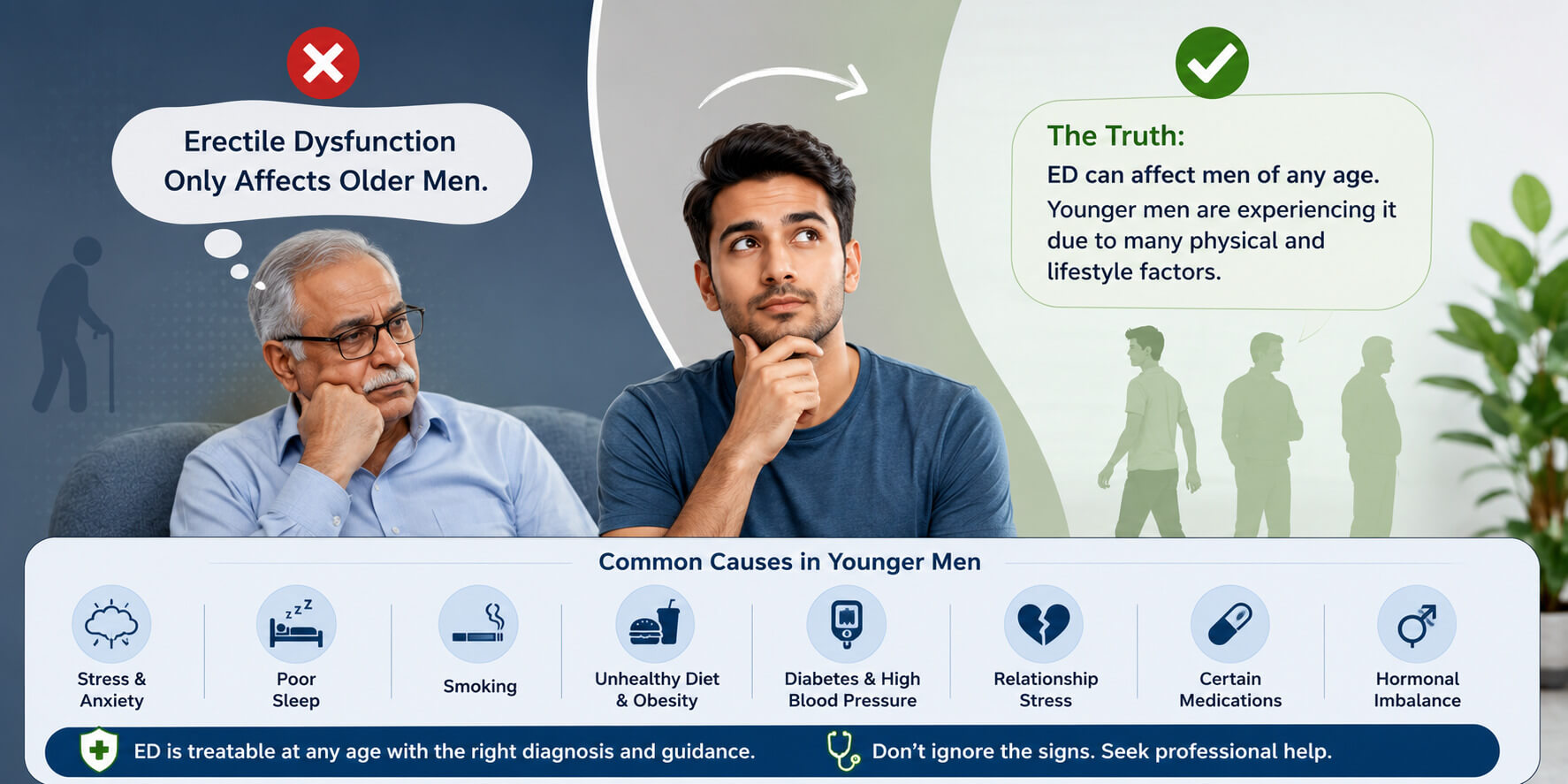
Erectile dysfunction becomes more common with age, but younger men can also experience difficulty achieving or maintaining an erection.
Younger men may be affected by performance anxiety, smoking, poor sleep, obesity, diabetes, relationship stress, hormonal issues, excessive pornography use, or certain medicines. A single difficult experience does not necessarily indicate a disorder, but repeated problems deserve attention.
Persistent ED may sometimes reflect changes in circulation or general health. The connection between erectile dysfunction and heart health is one reason men should not rely only on temporary performance tablets.
A qualified doctor can review symptoms, health history, lifestyle, and possible emotional factors before recommending treatment.
Myth 3: Masturbation Causes Permanent Weakness
One of the most common myths in Pakistan is that masturbation permanently drains energy, damages the body, or destroys masculinity.
A man may feel relaxed or temporarily tired after ejaculation. This is not the same as permanent weakness. Normal masturbation does not remove essential strength from the body or cause lifelong physical damage.
The stronger problem is often fear. A man who has repeatedly been told that masturbation has ruined his health may connect normal tiredness, stress, or sexual anxiety with past behaviour.
Understanding the medical facts about masturbation and sexual health can reduce unnecessary guilt. However, any habit that becomes compulsive, interferes with daily life, or creates relationship difficulties may still require professional support.
Myth 4: Masturbation Causes Male Infertility
Masturbation does not normally cause permanent infertility. The male body continues producing sperm, and ejaculation does not permanently empty or damage sperm production.
Frequent ejaculation may temporarily change semen volume or the sperm concentration in the next sample. That does not mean a man has become infertile.
Male fertility is influenced by sperm count, movement, shape, hormones, infections, testicular health, lifestyle, age, and other medical factors. A semen analysis is more useful than assumptions based on masturbation history.
The relationship between masturbation and male infertility is often misunderstood because cultural fear is treated as medical evidence. Men concerned about fertility should seek testing rather than blaming themselves.
Myth 5: Penis Size Determines Sexual Performance
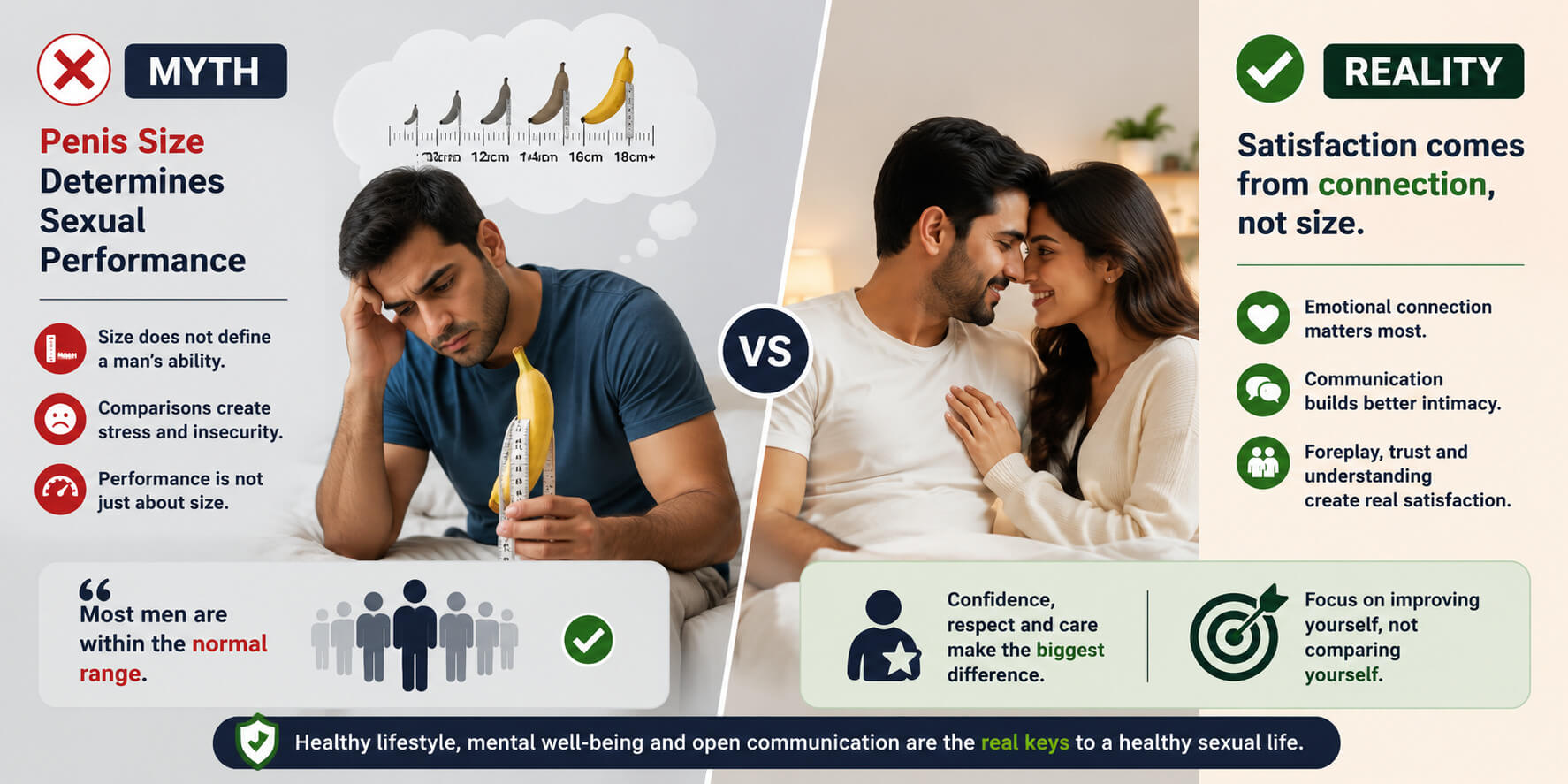
Many men believe that penis size decides masculinity, fertility, or a partner’s satisfaction. This belief is strengthened by misleading advertisements and unrealistic online content.
In reality, sexual satisfaction depends on much more than anatomy. Communication, trust, comfort, affection, foreplay, mutual understanding, and the ability to discuss preferences usually matter more.
Penis size also does not determine sperm quality or the ability to father a child. Fertility depends mainly on reproductive health and whether sperm can reach and fertilize an egg.
Pills, oils, injections, and stretching devices promoted for enlargement may be ineffective or harmful. A man worried about appearance or function should speak with a qualified professional instead of using unverified products.
Myth 6: A Healthy Man Must Always Be Ready For Sex
Sexual desire naturally changes. A man may feel less interested in sex during periods of stress, illness, tiredness, grief, poor sleep, relationship conflict, or heavy workload.
Low desire on a particular day does not mean a man has lost his masculinity. Sexual interest is affected by emotional and physical well-being, not just testosterone.
Persistent low desire may sometimes be connected to depression, hormonal changes, diabetes, medication side effects, or relationship concerns. It should be assessed in context instead of treated with random testosterone boosters.
Pressure to perform can make the situation worse. Healthy intimacy requires consent, comfort, communication, and mutual respect rather than constant readiness.
Myth 7: Premature Ejaculation Cannot Be Treated
Premature ejaculation is a common condition in which ejaculation happens sooner than a man or couple would like, often with limited control.
Some men believe they must live with it forever. Others depend on delay sprays, numbing creams, or unregulated tablets without identifying why the problem is happening.
Possible causes include performance anxiety, learned habits, relationship tension, increased sensitivity, stress, and erectile difficulties. Treatment may include behavioural techniques, counselling, couple support, lifestyle changes, or doctor-prescribed medicine.
Effective premature ejaculation treatment depends on the individual cause. A man with both PE and erection problems may need a different plan from someone whose symptoms are mainly linked to anxiety.
Myth 8: Condoms Cause Weakness Or Infertility
Condoms do not reduce testosterone, stop sperm production, damage the kidneys, or cause future infertility.
They provide a physical barrier during intercourse and can help reduce the risk of sexually transmitted infections and unplanned pregnancy. Once a condom is removed, it has no continuing effect on male fertility.
Some men say condoms reduce sensation. This is a matter of comfort and fit, not physical weakness. Selecting an appropriate size and using the product correctly may improve comfort.
Fear-based claims about condoms often discourage responsible family planning. Men should rely on accurate health guidance rather than rumours about permanent damage.
Myth 9: No Symptoms Mean No Infection
Some sexually transmitted infections can remain unnoticed for a period of time. A man may appear healthy while still carrying an infection.
When symptoms occur, they may include unusual discharge, burning during urination, sores, rashes, testicular discomfort, or pain during intercourse. However, the absence of these symptoms does not always rule out infection.
Testing may be appropriate after possible exposure, particularly when protection was not used. Taking random antibiotics can hide symptoms without fully treating the infection.
Honest medical consultation protects both the individual and the partner. Sexual infections should be treated as health conditions, not moral judgements.
Myth 10: Testosterone Boosters Fix Every Sexual Problem
Not every erection, desire, ejaculation, or fertility problem is caused by low testosterone.
A man may have normal testosterone levels while experiencing ED because of anxiety, diabetes, poor circulation, medication effects, or relationship difficulties. Premature ejaculation also does not automatically indicate low testosterone.
Unnecessary hormone products and supplements may cause side effects or disturb the body’s natural hormone production. Some products sold as natural boosters may not clearly disclose their ingredients.
The connection between testosterone and erectile dysfunction should be evaluated through symptoms, medical history, and appropriate testing rather than advertisements.
Myth 11: Desi Sex Tonics Are Always Safe
The word “natural” does not guarantee that a product is safe. Herbal powders, oils, capsules, and sex tonics may contain undisclosed ingredients or unsafe doses.
Some products can interact with medicines used for blood pressure, heart disease, diabetes, or other health conditions. Others may delay diagnosis by temporarily changing a symptom without treating its cause.
A product promising instant strength, permanent enlargement, guaranteed fertility, or a complete cure for every sexual problem should be approached carefully. Genuine treatment starts with a diagnosis, not a universal tonic.
Men should know what they are taking, why it has been recommended, and what possible side effects may occur.
Myth 12: Infertility Is Always The Woman’s Fault
Pregnancy depends on the reproductive health of both partners. Male factors can contribute to difficulty conceiving and should be evaluated without blame.
Male infertility may involve a low sperm count, poor sperm movement, abnormal sperm shape, hormonal problems, infections, varicocele, testicular conditions, smoking, obesity, or heat exposure.
Sexual performance and fertility are also not the same. A man may have normal erections but poor sperm quality. Another man may have healthy sperm but experience erection or ejaculation difficulties that make conception harder.
Understanding male infertility in Pakistan helps couples approach testing as a shared health process rather than treating one partner as responsible.
Myth 13: ED Medicine Is Safe For Every Man
Erectile dysfunction medicines can help some patients, but they are not suitable for everyone and do not treat every underlying cause.
Certain ED medicines may interact dangerously with heart medications, particularly nitrates. They may also cause headaches, flushing, indigestion, visual changes, or blood pressure problems.
Buying tablets without consultation can be risky because a man may not know the exact ingredients, dose, or possible interactions. Temporary improvement may also encourage him to ignore diabetes, high blood pressure, or another medical issue.
Treatment should be selected after understanding the cause, general health, current medicines, and individual risk factors.
Myth 14: A Sexual Problem Means The Marriage Has Failed
Sexual difficulties can occur in caring and otherwise healthy relationships. They do not automatically mean that love, attraction, or the marriage has ended.
Silence often creates more damage than the original problem. One partner may feel rejected while the other feels ashamed or afraid of disappointing them.
Open communication, medical assessment, counselling, and relationship support can improve understanding. Blaming either person usually increases pressure and makes sexual performance more difficult.
A condition such as non-consummated marriage may involve fear, pain, erection problems, vaginismus, limited sexual knowledge, or a combination of concerns. Couples often benefit from being assessed with respect rather than judgement.
What Does Men’s Sexual Health Include?
Men’s sexual health is broader than erections or the ability to have intercourse. It includes physical, emotional, mental, reproductive, and relationship well-being.
Important parts include:
- Healthy erections, ejaculation, hormones, and reproductive organs
- Emotional confidence and freedom from damaging fear
- Respectful communication, consent, and relationship comfort
- Fertility, contraception, and informed family planning
- Protection from infections and access to appropriate testing
A man can therefore have a sexual health concern even when there is no obvious physical symptom. Anxiety, guilt, relationship distress, and misinformation can also affect well-being.
When Should A Man Seek Medical Advice?
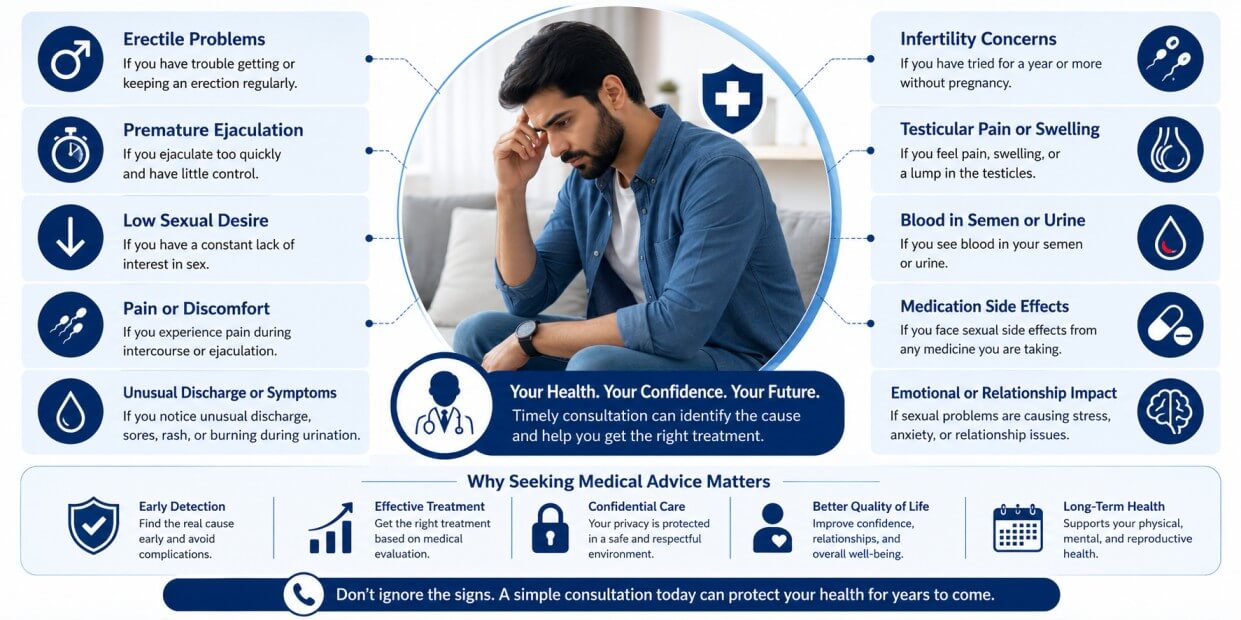
A medical consultation is recommended when symptoms continue, cause distress, or affect a relationship. Men should seek help for repeated erection problems, persistent premature ejaculation, very low desire, pain during erection or ejaculation, blood in semen, unusual discharge, testicular swelling, or fertility concerns.
Sudden symptoms, severe pain, injury, or an erection lasting several hours may require urgent medical attention. Internet advice cannot replace an individual examination and medical history.
Choosing the right professional is equally important. Patients should check medical qualifications, relevant experience, clinic details, confidentiality policies, and whether a proper assessment is completed before medicine is prescribed.
Confidential Sexual Health Care At Nasim Fertility Center
Nasim Fertility Center provides confidential consultation for erectile dysfunction, premature ejaculation, sexual dysfunction, non-consummated marriage, masturbation-related concerns, and male infertility. Dr. Farooq Nasim Bhatti offers patient-focused assessment through physical consultations in Lahore, Islamabad, and Faisalabad, along with online consultation options for men in other parts of Pakistan. Treatment is planned according to the patient’s symptoms, health history, emotional concerns, and reproductive goals rather than depending on myths or one solution for every patient.
Final Thoughts
Men’s sexual health myths create unnecessary fear, guilt, and delay in seeking treatment. Sexual problems are not proof of failed masculinity, and they should not be managed through shame or secret self-medication.
Accurate information, confidential discussion, and qualified medical care can help men understand the real cause of their symptoms. Many sexual and reproductive health concerns can be managed once myths are replaced with proper assessment and realistic treatment.
Frequently Asked Questions
What Are Common Myths About Men’s Sexual Health?
Common myths include the beliefs that masturbation causes permanent weakness, condoms cause infertility, penis size determines satisfaction, ED affects only older men, and every sexual problem is caused by low testosterone.
Does Masturbation Cause Male Weakness?
Normal masturbation does not usually cause permanent physical weakness. Temporary relaxation or tiredness after ejaculation is not evidence of lasting damage.
Can Masturbation Cause Infertility?
Masturbation does not normally cause permanent infertility. Men concerned about fertility should have an appropriate medical assessment and semen analysis.
Can Young Men Develop Erectile Dysfunction?
Yes. Younger men may experience ED because of anxiety, stress, smoking, diabetes, obesity, poor sleep, hormonal conditions, medicines, or relationship difficulties.
Do Condoms Affect Future Fertility?
No. Condoms do not reduce sperm production or damage a man’s future ability to father a child.
Can Premature Ejaculation Be Treated?
Yes. Treatment may include behavioural methods, counselling, relationship support, lifestyle changes, or prescribed medicine, depending on the cause.
Are Herbal Sex Medicines Safe?
Not always. Unregulated products may contain hidden ingredients, unsafe doses, or substances that interact with other medicines.
When Should A Man Visit A Sexologist?
A man should seek help when sexual symptoms continue, create significant anxiety, affect a relationship, or occur alongside pain, infertility, discharge, hormonal symptoms, or another medical condition.