

Retrograde ejaculation is a male sexual and reproductive condition in which semen travels backward into the urinary bladder during orgasm instead of leaving the body through the penis. A man may still have a normal erection and feel an orgasm, but very little semen or no visible semen comes out.
For some men, this causes little concern. For others, the first sign is a dry orgasm, cloudy urine after sex, or difficulty getting their partner pregnant. Retrograde ejaculation is usually not physically harmful, but it can have an important effect on fertility and may sometimes point to diabetes related nerve damage, medication effects, or changes following prostate or bladder surgery.
What Is Retrograde Ejaculation?
During normal ejaculation, semen moves through the reproductive tract and exits through the urethra. At the same time, a muscle at the neck of the bladder closes. This prevents semen from entering the bladder and directs it forward through the penis.
In retrograde ejaculation, the bladder neck does not close effectively. Some or all of the semen therefore moves backward into the bladder. It later leaves the body naturally when the man urinates.
The condition may be complete, with almost no semen appearing during orgasm, or partial, where a smaller than usual amount of semen comes out while the rest enters the bladder.
What Are The Symptoms Of Retrograde Ejaculation?
Retrograde ejaculation does not usually cause pain, which is why some men may not initially realise that anything has changed. The most noticeable difference is usually related to the amount of semen released during orgasm.
Common symptoms include:
- Very little or no semen during orgasm
- A dry orgasm despite normal sexual sensation
- Cloudy or milky urine after ejaculation
- Difficulty achieving pregnancy with a partner
Some men first seek medical advice because of infertility rather than the ejaculation problem itself. A man may have normal sexual desire, erections and orgasms while sperm are simply not reaching the vagina during intercourse.
Why Does Urine Become Cloudy After Ejaculation?
When semen travels into the bladder, it mixes with urine. The next time a man urinates, the urine may therefore appear cloudy, whitish or milky because sperm and seminal fluid are present.
Cloudy urine can occur for several other medical reasons as well. However, if it repeatedly occurs immediately after orgasm and is associated with little or no semen coming from the penis, retrograde ejaculation becomes an important possibility that should be evaluated.
What Causes Retrograde Ejaculation?
Anything that affects the nerves or muscles controlling the bladder neck can potentially interfere with normal ejaculation. The cause is particularly important because it determines whether normal forward ejaculation can be restored.
Diabetes And Nerve Damage
Long term diabetes can damage the nerves that control many automatic functions of the body, including the muscles involved in ejaculation. This is known as diabetic autonomic neuropathy.
When the nerves controlling the bladder neck are affected, the muscle may not close properly during orgasm. Semen can then move into the bladder rather than forward through the urethra.
Diabetes can affect male sexual health in several ways. Men experiencing erection problems alongside ejaculation changes may also benefit from understanding the connection between diabetes and erectile dysfunction, particularly when blood sugar has remained poorly controlled for a long period.
Prostate And Bladder Surgery
Retrograde ejaculation can occur after procedures involving the prostate or bladder neck. One well known example is transurethral resection of the prostate, commonly called TURP, which is performed to relieve urinary symptoms caused by an enlarged prostate.
Surgery can change the structure or function of the bladder neck. If it can no longer close normally during orgasm, semen may enter the bladder.
Whether normal ejaculation returns depends on the type of procedure and the extent of the changes. In some men the problem may persist after surgery.
Medicines That Affect Ejaculation
Certain medicines can interfere with bladder neck function. Alpha blockers used to treat an enlarged prostate are among the medicines associated with reduced or absent visible ejaculation.
Tamsulosin is commonly discussed in relation to ejaculation problems. Other medicines used for prostate symptoms, blood pressure or some psychiatric conditions may also affect ejaculation in certain patients.
A prescribed medicine should never be stopped simply because ejaculation changes occur. The prescribing doctor can determine whether the medicine is responsible and whether adjusting the dose or changing treatment is appropriate.
Neurological Conditions
The ejaculation process depends on functioning nerves between the brain, spinal cord and reproductive organs. Spinal cord injury, multiple sclerosis, pelvic nerve damage and other neurological conditions can therefore interfere with normal ejaculation.
The symptoms vary depending on which nerves are affected. Some men develop retrograde ejaculation, while others may experience delayed ejaculation or an inability to ejaculate.
Retrograde Ejaculation Vs No Ejaculation
A dry orgasm does not automatically mean that a man has retrograde ejaculation. Another condition called anejaculation can also cause orgasm without visible semen.
With retrograde ejaculation, semen is generally produced but travels into the bladder. With anejaculation, semen may not be expelled because the normal ejaculation process itself is disrupted.
This distinction matters because treatment differs. A post ejaculation urine examination can help determine whether sperm are travelling backward into the bladder.
How Is Retrograde Ejaculation Diagnosed?
Diagnosis usually begins with a detailed medical and sexual history. The doctor may ask when the change started, whether the man has diabetes, which medicines he takes, and whether he has previously undergone prostate, pelvic or bladder surgery.
The amount of semen released during orgasm may also be assessed. In men concerned about fertility, semen analysis can provide information about semen volume and sperm characteristics.
Post Ejaculation Urine Test
One of the most useful tests involves examining urine shortly after ejaculation. The patient is usually asked to empty his bladder, have an orgasm, and then provide a urine sample.
If a significant number of sperm are found in the urine, this supports a diagnosis of retrograde ejaculation. The test also helps distinguish the condition from other causes of dry orgasm.
Is Retrograde Ejaculation Dangerous?
Retrograde ejaculation itself is usually not harmful to the bladder or general health. Semen that enters the bladder mixes with urine and is removed naturally during urination.
Medical assessment is still important if the condition appears suddenly. The change could be associated with a medicine, diabetes related nerve damage, surgery, or another condition affecting the reproductive or urinary system.
Men who are not trying to have children and are otherwise comfortable may not always require treatment. Fertility goals often determine how actively the condition needs to be managed.
Can Retrograde Ejaculation Cause Infertility?
Retrograde ejaculation can make natural conception difficult because sperm are travelling into the bladder instead of reaching the female reproductive tract. Importantly, this does not necessarily mean that the testicles have stopped producing healthy sperm.
Male infertility can result from many different problems involving sperm production, sperm movement, reproductive tract obstruction and sexual function. A broader understanding of male infertility in Pakistan can help couples understand why proper testing of both sperm production and ejaculation is important.
Men concerned about sperm production itself can also review how the sperm regeneration cycle works and why sperm quality, count and motility need to be evaluated separately from ejaculation.
Can A Man With Retrograde Ejaculation Become A Father?
Many men with retrograde ejaculation may still have biological children. The chances depend on the cause of the condition, sperm quality, whether forward ejaculation can be restored, and the fertility health of the female partner.
If sperm production is healthy but semen continues to enter the bladder, fertility specialists may be able to recover sperm from urine collected after ejaculation. The sperm can then be processed for assisted reproductive treatment when appropriate.
For some couples, intrauterine insemination may be considered if enough suitable sperm can be recovered. In other situations, IVF or ICSI may be recommended depending on sperm numbers, motility and additional fertility factors.
How Is Retrograde Ejaculation Treated?
There is no single treatment suitable for every patient. Treatment depends on whether the cause is medication related, neurological, associated with diabetes, or due to structural changes following surgery.
Reviewing Current Medicines
If symptoms begin after starting a particular medicine, the doctor may review whether an alternative treatment is possible. Ejaculation may improve after a causative medicine is changed or discontinued under medical supervision.
Patients should not change blood pressure, prostate or psychiatric medicines without first consulting the doctor who prescribed them.
Medicines For Retrograde Ejaculation
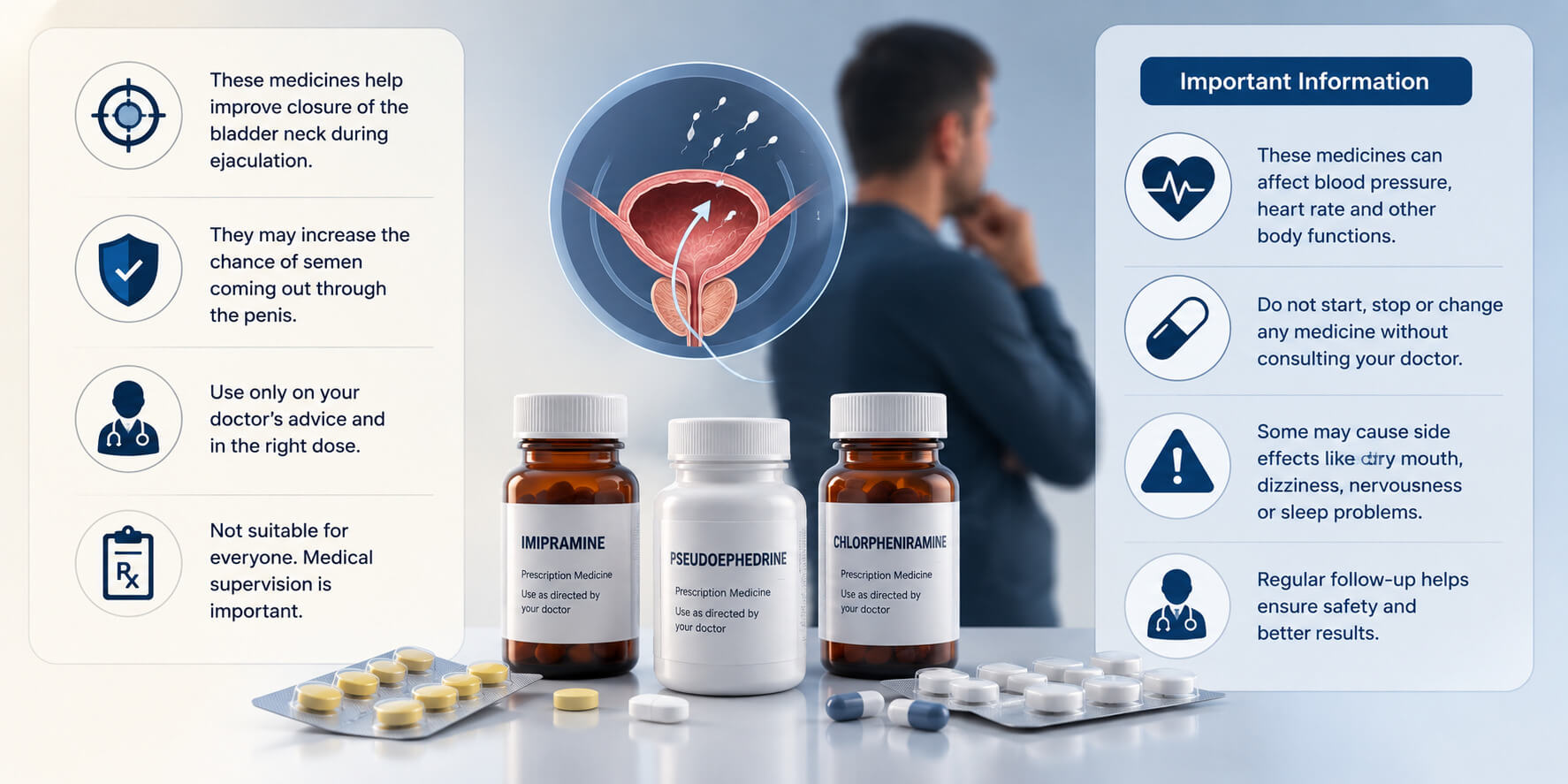
In selected patients, doctors may prescribe medicines intended to improve closure of the bladder neck during ejaculation. Medicines such as imipramine or pseudoephedrine may be considered in certain circumstances.
These treatments are not suitable for everyone. They can affect blood pressure, heart rate and other body systems, which is why self medication should be avoided.
Managing Diabetes
When diabetic nerve damage contributes to retrograde ejaculation, good blood sugar management becomes an important part of overall treatment. Better diabetic control can help reduce further nerve damage, although established nerve damage may not always completely reverse.
Men with diabetes may require evaluation of erections, ejaculation, hormones and fertility rather than treating only one symptom.
Treatment After Surgery
When surgery has permanently changed the bladder neck, medicines may be less likely to restore forward ejaculation. If fertility is not desired, no further treatment may be necessary.
If the couple wishes to have children, treatment may instead focus on retrieving sperm and choosing an appropriate fertility technique.
Can Retrograde Ejaculation Be Fixed Naturally?
There is no proven natural remedy that can reliably make a damaged or surgically altered bladder neck close normally during ejaculation. Herbal products and unverified supplements should therefore not be considered substitutes for proper diagnosis.
Healthy habits still matter. Regular exercise, good diabetes control, avoiding smoking, maintaining a healthy weight and following a balanced diet support general reproductive and sexual health. However, they cannot necessarily reverse structural damage or significant nerve injury.
Pelvic floor exercises may improve pelvic muscle function in some men, but they are not a guaranteed treatment for retrograde ejaculation. The underlying cause should first be identified.
When Should You Consult A Doctor?
A medical assessment is worthwhile when a clear change in ejaculation persists, especially if the man is trying to conceive. Early evaluation can also identify whether medication, diabetes or previous surgery is contributing to the problem.
Consider seeking medical advice if:
- Orgasm repeatedly produces little or no semen
- Urine is regularly cloudy immediately after sex
- The change started after prostate or bladder surgery
- Symptoms began after starting a new medicine
- You have long standing diabetes
- You and your partner are having difficulty conceiving
Men experiencing infertility alongside ejaculation concerns may require both sexual health evaluation and fertility testing rather than assuming that low visible semen means low sperm production.
Retrograde Ejaculation Treatment In Pakistan
Nasim Fertility Center provides evaluation for male sexual dysfunction and infertility under Dr. Farooq Nasim Bhatti, who has more than 30 years of experience in sexual and reproductive health and training in Assisted Reproductive Technology. Men with dry orgasm, ejaculation problems or fertility concerns can be assessed to identify whether the difficulty is related to ejaculation, sperm quality, diabetes, medication or another reproductive factor. Physical consultations are available in Lahore, Islamabad and Faisalabad, along with online consultation options where appropriate.
Conclusion
Retrograde ejaculation occurs when semen travels into the bladder rather than exiting through the penis during orgasm. It may cause a dry orgasm, cloudy urine after sex and difficulty conceiving, while erections and orgasm can remain otherwise normal.
The condition is usually not dangerous, but persistent ejaculation changes should be properly evaluated. Identifying whether diabetes, medicine, surgery or nerve damage is responsible allows treatment to be tailored to the individual. For couples trying to conceive, sperm recovery and assisted fertility options may also make biological parenthood possible even when normal forward ejaculation cannot be restored
Frequently Asked Questions
What Is The Best Treatment For Retrograde Ejaculation?
The best treatment depends on the cause. Medication related cases may improve after a doctor changes the causative medicine, while some men may benefit from prescribed medicines that improve bladder neck closure. Fertility treatment may be required when ejaculation cannot be restored.
Can Retrograde Ejaculation Be Fixed?
It can improve in some men, particularly when caused by medicines or certain functional problems. Retrograde ejaculation caused by permanent changes after prostate or bladder neck surgery may be more difficult to reverse.
Does Tamsulosin Cause Retrograde Ejaculation?
Tamsulosin and other alpha blockers can cause ejaculation changes in some men. Patients should not stop tamsulosin themselves. A doctor can review whether another treatment is appropriate.
Is Retrograde Ejaculation Painful?
Usually not. Most men can still experience orgasm without pain, although little or no semen may come out.
Does Retrograde Ejaculation Affect Erections?
Retrograde ejaculation and erectile dysfunction are different conditions. A man can have a normal erection despite retrograde ejaculation, although conditions such as diabetes may contribute to both.
Can Diabetes Cause Retrograde Ejaculation?
Yes. Long term diabetes can damage the nerves that control the bladder neck, preventing it from closing normally during ejaculation.
Can Retrograde Ejaculation Cause Infertility?
Yes. Natural conception may become difficult because sperm enter the bladder instead of travelling through the penis into the female reproductive tract.
Can IUI Be Used For Retrograde Ejaculation?
In selected cases, sperm can be recovered and prepared for IUI. Whether IUI is appropriate depends on the number and quality of sperm recovered and the fertility assessment of both partners.