
Premature ejaculation (PE) and erectile dysfunction (ED) can affect more than physical intimacy. They may influence confidence, communication, expectations, and emotional closeness between husband and wife.
A supportive partner can reduce pressure, improve communication, and help a man stay engaged with treatment. However, a wife or partner is not responsible for curing PE or ED, and emotional support should not replace proper medical assessment.
Why PE And ED Often Become A Couple’s Concern
PE and ED are different conditions, but both can affect a relationship when they happen repeatedly. PE involves ejaculating sooner than desired with difficulty controlling it, while ED involves difficulty getting or maintaining an erection firm enough for satisfactory sexual activity.
Persistent symptoms may require proper assessment and an individualized approach to premature ejaculation or erectile dysfunction rather than relying on assumptions or self-treatment.
When the problem continues, the man may worry about the next intimate encounter. His wife may feel rejected or assume there is a lack of attraction.
Does Partner Involvement Help With PE And ED Treatment?
Partner involvement can be helpful when both people are comfortable with it. Treatment is often easier when the couple understands that PE or ED should not be treated as a personal failure or a source of blame.
A partner may help by reducing pressure, supporting treatment recommendations, and sharing useful observations. Partner involvement should complement professional care rather than make the wife responsible for managing the condition.
How A Partner Can Help During Premature Ejaculation Treatment
PE can quickly become linked with timing, pressure, and fear of disappointing a spouse. The partner’s response can either reduce that pressure or unintentionally increase it.
Reduce Pressure Around Timing
Constantly focusing on how many minutes intercourse lasts can increase performance anxiety. A man may begin monitoring himself rather than responding naturally to intimacy.
A supportive wife can avoid comparisons, deadlines, or repeated questions about whether PE will happen again. The goal is not to ignore the condition, but to reduce the feeling that every encounter is a test.
Communicate Without Blame
Criticism, teasing, or comments that question masculinity can create shame and avoidance. It is more useful to discuss how the problem affects both partners without assigning fault.
A calm conversation can make it easier for both partners to explain their concerns and develop more realistic expectations around treatment and recovery.
Participate In Treatment When Recommended
Some PE treatment plans may include counseling, behavioral strategies, anxiety management, or couple-based exercises alongside medical treatment.
Dr. Farooq Nasim Bhatti has presented research on an integrated approach to premature ejaculation in Muslim men in Pakistan, reflecting the importance of considering psychological, marital, and cultural factors when relevant.
How A Partner Can Help During Erectile Dysfunction Treatment
ED can easily be misunderstood as rejection or loss of interest. In reality, erections depend on several physical and psychological processes, so the partner’s response should be based on understanding rather than assumptions.
Do Not Assume ED Means Lack Of Attraction
An erection can be affected by anxiety, diabetes, cardiovascular problems, hormonal issues, medication effects, fatigue, stress, and other factors.
Men who repeatedly lose an erection during sex may need proper assessment to understand whether the cause is physical, psychological, or mixed.
Help Reduce Performance Anxiety
After experiencing ED, a man may start checking whether his erection is firm enough or worrying about losing it. That self-monitoring can increase anxiety.
Supportive communication can reduce this cycle. The partner can focus less on immediate performance and more on emotional safety and cooperation while the underlying problem is evaluated.
Encourage Medical Evaluation
A partner can encourage professional assessment instead of suggesting unprescribed tablets or supplements.
Anxiety can contribute to ED, but it should not automatically be assumed to be the only cause. The relationship between stress and erectile dysfunction is important, but physical causes may also need investigation.
What A Partner Should Avoid Doing
Certain reactions can increase shame, conflict, and pressure. A partner should try to avoid:
- Mocking or criticizing sexual performance
- Comparing the man with another person
- Treating every intimate encounter as a test
- Assuming ED means loss of attraction
- Repeatedly blaming the man for PE
- Pressuring him to use unprescribed medicines
- Threatening the relationship whenever symptoms occur
These responses may increase anxiety and discourage a man from discussing the problem honestly or seeking appropriate treatment.
Why Partner Support Can Be Especially Important In Pakistan
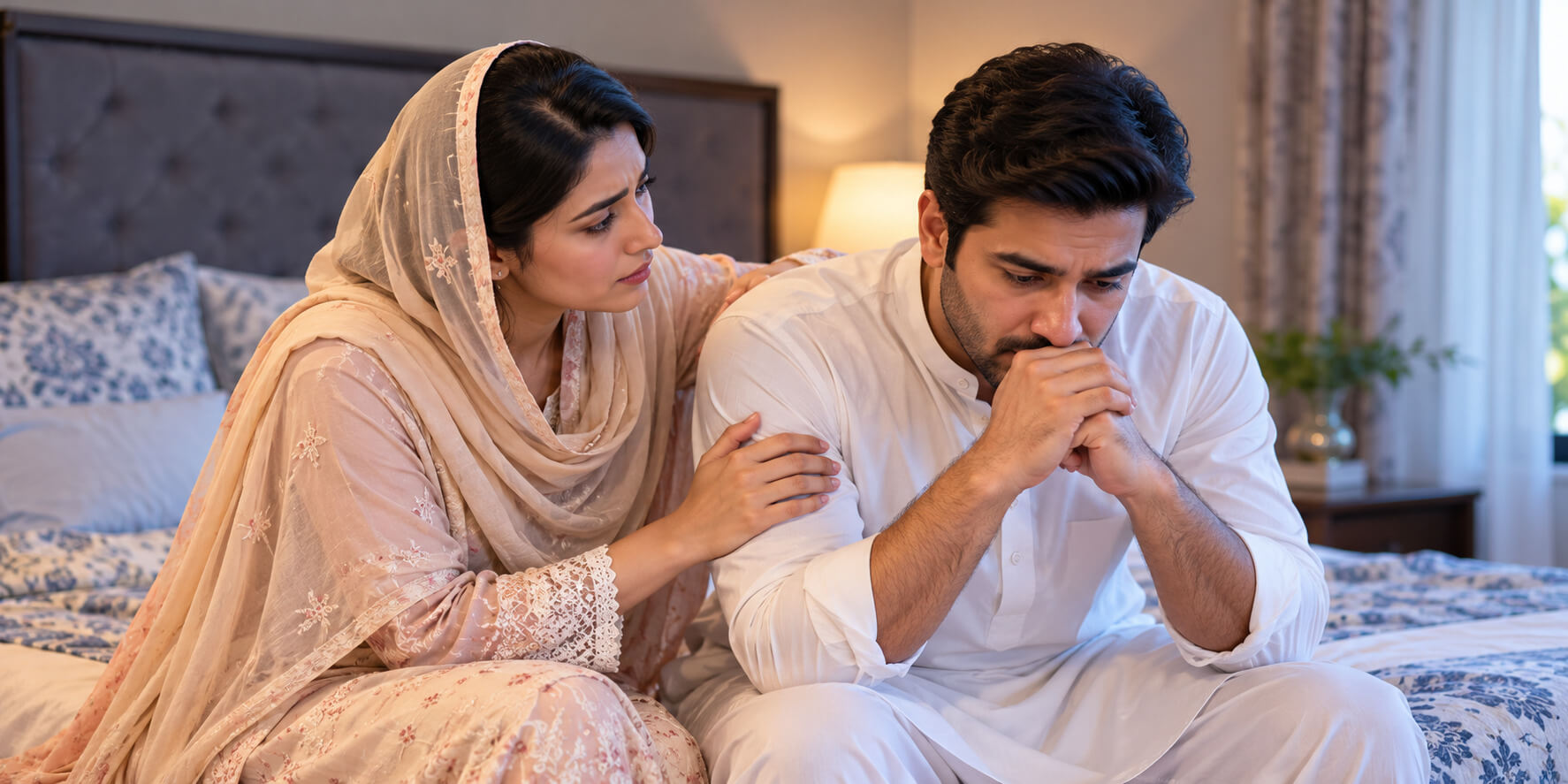
Many Pakistani couples find sexual health difficult to discuss openly. Embarrassment, limited sexual education, cultural expectations, and fear of judgment can delay professional consultation.
In newly married couples, expectations may become especially intense. A man may feel he must perform successfully from the beginning, while the wife may not understand why repeated difficulties are occurring.
This is one reason some couples continue struggling with a non-consummated marriage without knowing whether anxiety, ED, pain, lack of sexual knowledge, or another factor is contributing.
Better communication does not mean discussing every private detail with family or friends. It means creating enough trust between husband and wife to recognize the problem and seek appropriate professional help when needed.
When Should The Partner Attend The Consultation?
A partner does not need to attend every appointment. Joint involvement may be useful when PE or ED is causing repeated conflict, performance anxiety is strong, symptoms are mainly situational, or the couple is struggling to consummate the marriage.
For some couples, sex therapy services can help address communication, anxiety, expectations, and relationship patterns alongside medical treatment when appropriate.
Partner participation may also help when the doctor needs to understand differences in expectations or how the problem is affecting the relationship. However, a man should still be able to discuss sensitive concerns privately with his doctor.
Can Partner Support Replace Medical Treatment?
No. A supportive partner can reduce stress and help the man remain engaged with treatment, but a spouse cannot diagnose the cause of PE or ED.
ED may involve vascular, hormonal, neurological, metabolic, medication-related, psychological, or mixed factors. PE may also be associated with anxiety, relationship stress, erection problems, or other clinical factors.
Depending on the cause, care may include counseling, behavioral treatment, medication, treatment of an underlying health issue, or a combination of approaches.
Dr. Farooq Nasim Bhatti’s Approach To PE, ED And Couple Factors
Dr. Farooq Nasim Bhatti approaches male sexual problems through a biopsychosocial perspective. Physical health, psychological factors, relationship dynamics, cultural pressure, and sexual knowledge may all be considered when relevant.
His conference-presented work has included premature ejaculation, psychogenic erectile dysfunction, sexual difficulties in conservative cultural settings, and non-consummated marriage. His research on psychogenic ED in non-consummated marriages also reflects the role of anxiety, communication, counseling, and partner participation in selected cases.
Partner involvement does not mean placing responsibility on the wife. The purpose is to identify whether relationship pressure, communication difficulties, anxiety, or unrealistic expectations are contributing to the problem and whether addressing them could support treatment.
When Should A Man Seek Professional Help?
Occasional difficulty does not always mean a man has a chronic sexual disorder. Repeated PE or ED deserves assessment when it causes distress, affects the relationship, or leads to avoidance of intimacy.
Professional evaluation is particularly important if the problem begins suddenly, becomes more frequent, occurs alongside another sexual concern, or is associated with diabetes, cardiovascular risk, medication use, or significant anxiety.
Men should also seek help if they are repeatedly using unprescribed sexual performance medicines. Treating symptoms without understanding the cause can delay appropriate care.
Facing PE Or ED Together Without Blame
PE and ED can become more difficult when either partner treats the condition as proof that something is wrong with the man or the marriage. A healthier approach is to see it as a problem that can be assessed and managed without blame.
A supportive partner can make communication easier, reduce unnecessary pressure, and participate in treatment when appropriate. Proper assessment is still important so treatment addresses the actual cause rather than assumptions.
ManHealth provides confidential consultation for men dealing with PE, ED, performance anxiety, and marriage-related sexual concerns. Dr. Farooq Nasim Bhatti can assess whether medical, psychological, relationship, or combined factors are contributing and recommend an appropriate treatment approach.
Frequently Asked Questions
Can A Wife Help Her Husband With Premature Ejaculation?
Yes. A wife can help by reducing pressure around timing, avoiding criticism, communicating openly, and participating in counseling or behavioral treatment when recommended. Persistent symptoms should still be professionally assessed.
How Can A Wife Support A Husband With Erectile Dysfunction?
She can avoid interpreting ED as rejection, reduce performance pressure, encourage medical evaluation, and support the treatment plan. Emotional reassurance may be useful when anxiety is contributing.
Should My Wife Come With Me For ED Or PE Treatment?
She can attend if both partners are comfortable and the clinician believes her involvement may help. This can be useful when there is performance anxiety, relationship conflict, or difficulty consummating marriage.
Does Erectile Dysfunction Mean A Husband Is Not Attracted To His Wife?
Not necessarily. ED can have physical, psychological, medication-related, or mixed causes. Lack of attraction should not automatically be assumed.
Can Relationship Stress Make PE Or ED Worse?
Yes. Conflict, criticism, fear of disappointing a partner, or repeated pressure can increase anxiety and may worsen sexual performance in some men.
Can PE Or ED Be Treated Without Involving The Partner?
Yes. A man can seek confidential assessment and treatment individually. Partner involvement may be added later if it is appropriate, useful, and acceptable to the patient.